

World Teachers' Day
World Teacher's Day has been celebrated annually on October 5th since 1994. It is celebrated on the anniversary of the adoption of the 1966 ILO/UNESCO Recommendation concerning the Status of Teachers, which sets benchmarks regarding the rights and responsibilities of teachers, as well as standards for their initial preparation and further education, recruitment, employment, and teaching and learning conditions. The document consists of 146 points in 13 sections: it covers the preparation […]
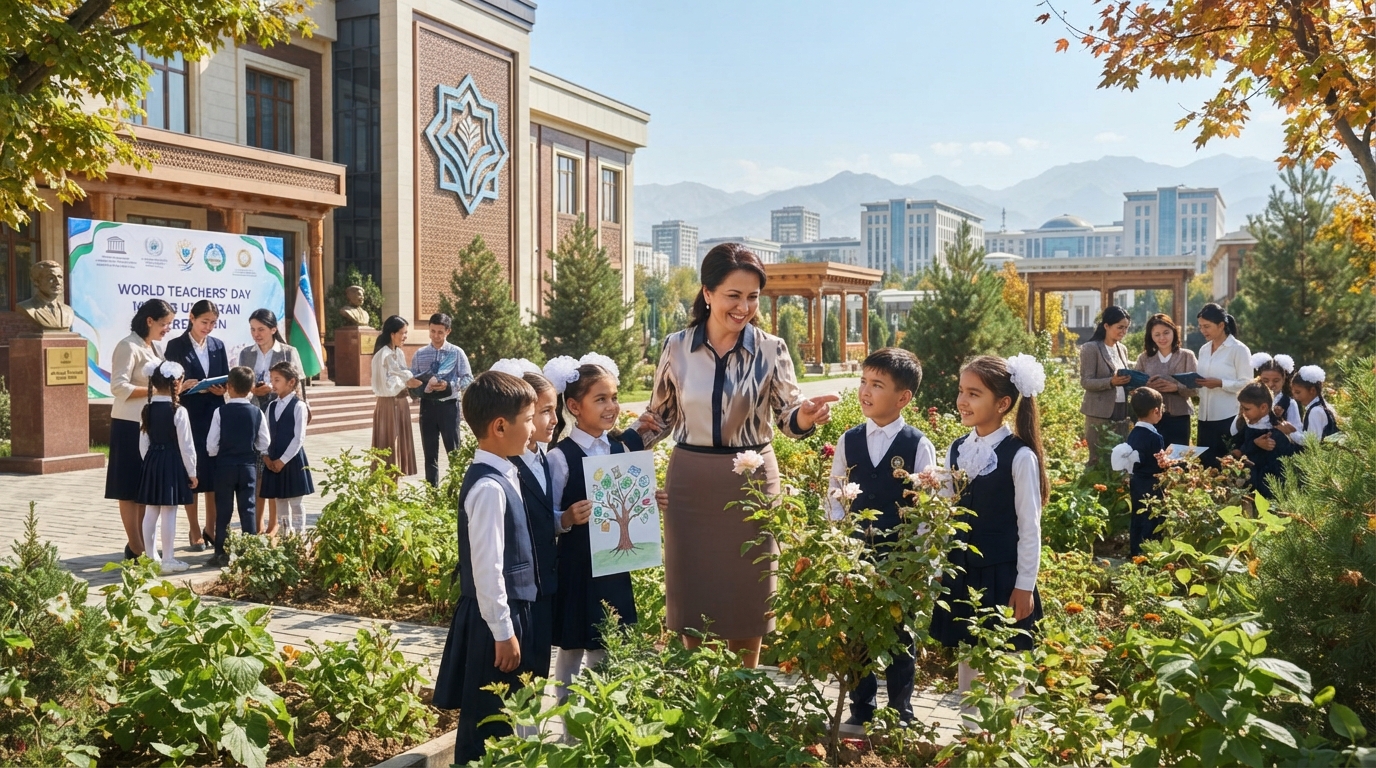
World Teacher's Day
World Teachers' Day has been celebrated annually on October 5 since 1994. The date commemorates the anniversary of the adoption of the 1966 ILO/UNESCO Recommendation concerning the Status of Teachers, which sets benchmarks regarding the rights and responsibilities of teachers, as well as standards for their initial preparation and further education, recruitment, employment, and teaching and learning conditions.
The document includes 146 points grouped into 13 sections. It addresses the preparation and professional development of teachers, recruitment and career, rights and responsibilities, working conditions, salaries, social security, and measures to address teacher shortages. Monitoring the application of the Recommendation is entrusted to the UNESCO Executive Board.
— the "status" of teachers is understood as both the respect for the profession and the working conditions, salaries, and benefits in comparison with other professional groups;
— teaching is a profession and a form of public service requiring specialized knowledge and continuous learning;
— the profession enjoys academic freedom in the performance of its duties;
— salaries and working conditions are determined through negotiations between teachers' organizations and employers; salaries should reflect the importance of the profession and compare favorably with other occupations requiring similar qualifications;
— the best remedy for teacher shortages is the improvement of their socio-economic status.
The Recommendation concerning the Status of Higher-Education Teaching Personnel was adopted in 1997 to complement the 1966 Recommendation and extend it to higher education teaching staff.
This day is not only an occasion to congratulate teachers and celebrate how they are transforming education, but also an opportunity to reflect on how to provide them with the support they need to fully realize their talent and calling, as well as to rethink the future paths of the profession on a global scale.
World Teachers' Day is convened jointly with the International Labour Organization (ILO), UNICEF, and Education International.
In 2026, this day marks the 60th anniversary of the adoption of the 1966 ILO/UNESCO Recommendation concerning the Status of Teachers. Six decades later, as the Recommendation is being revised, the profession faces new challenges — from digital technologies and climate change to issues of inclusion, migration, and displacement. These challenges affect several aspects of teachers' status: their social standing — a lack of proper recognition and respect; their professional status — restricted autonomy, insufficient support, or lack of voice in public policy-making; and their material status, which is deteriorating due to low salaries, excessive workloads, and difficult working conditions that prevent them from fully performing their duties.
The theme of this year's World Teachers' Day is "Valuing teacher voices: 60 years of defending the profession, elevating its status, and shaping our shared future." The 2026 events will focus on analyzing current challenges related to the status of teachers and finding ways to address them. The main goal of these events is to call on society and authorities to protect, support, and elevate the status of the profession.
As part of the global event organized at UNESCO Headquarters, high-level discussions dedicated to protecting and elevating the status of the teaching profession will take place, along with the award ceremony for the ninth UNESCO-Hamdan Prize for Teacher Development.
In Uzbekistan, Teachers and Mentors Day has been celebrated since 1997 as a national holiday and a non-working day. In the country, special attention is paid to the continuous improvement of the education system, strengthening the role and status of the teacher, which is enshrined at the constitutional level.
In President Shavkat Mirziyoyev's congratulatory message to the teachers and mentors of Uzbekistan, it is noted that "School is like a garden of the future, which means the teacher is a gardener skillfully nurturing the sprouts of hope, a spring of kindness and care, a beacon of enlightenment. Therefore, we will never tire of elevating and valuing the work of employees in such a responsible sphere." Moreover, on the initiative of the head of state, the Abdulla Avloni State Prize is being established to incentivize leading educators.
It should be noted that in New Uzbekistan, great attention is paid to the close integration of school education with professional and higher education, and higher education with science. Over the past ten years, the most important positive results have been an increase in the number of higher education institutions from 77 to 205, and achieving a 45 percent enrollment rate in universities. In the republic's higher education institutions, 185 educational programs have received international accreditation, and 441 joint educational programs with foreign universities have been implemented.
In order to organize the system of continuous education, upbringing, and science in the country based on modern requirements, bring human capital development to a new level, and ensure interconnectedness between all types of education, a new Ministry of Education and Science has been created, which will now implement a unified state policy, development, and regulation in the fields of preschool, secondary, professional, and higher education, as well as the training of scientific personnel.