

What is the scale and honor of the responsibility of training teachers?
As we provide education at the pedagogical university, in the person of each of our students, we influence the lives of hundreds of children in the future
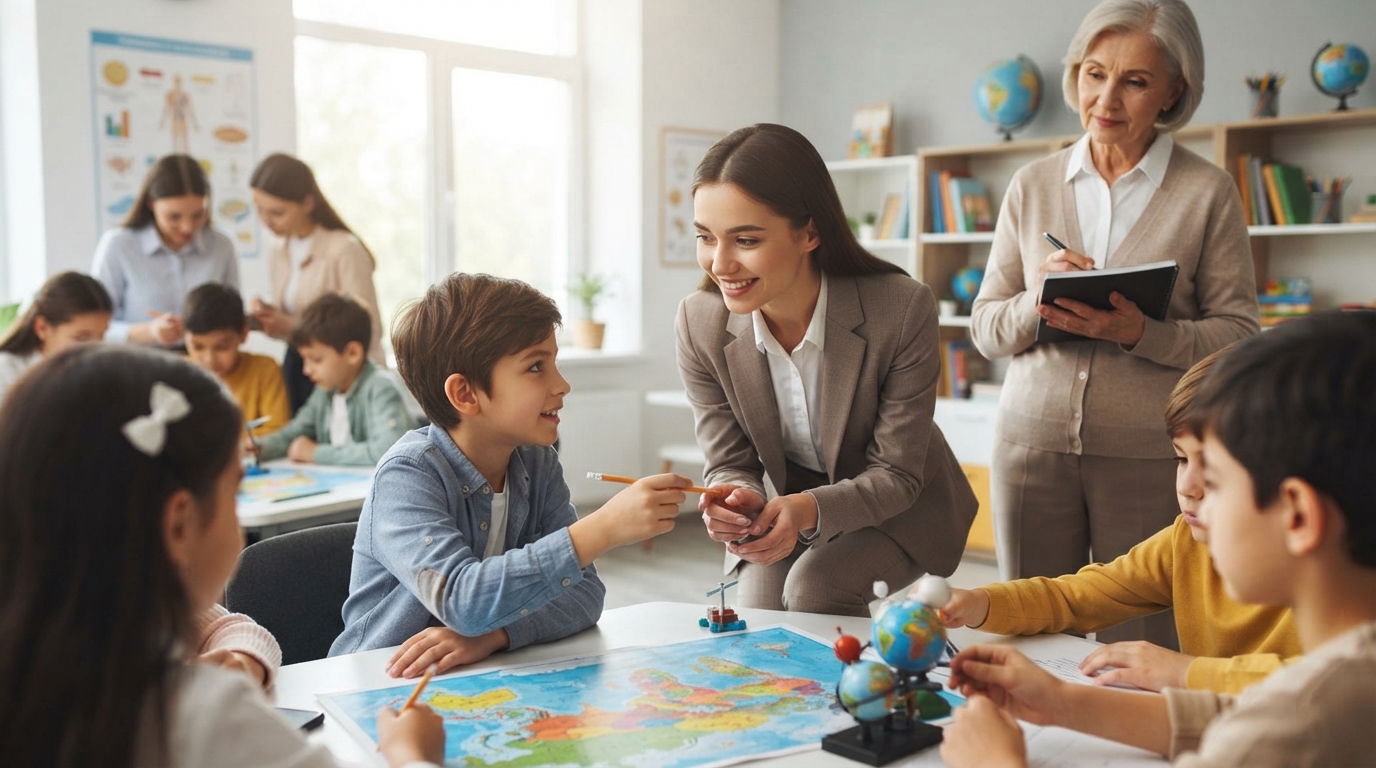
What is the scale and honor of the responsibility of training teachers?
A child's attitude toward knowledge is often shaped by a single question, explanation, or expression of trust from their teacher. Discerning a student's ability, listening to their thoughts, explaining their mistakes, and inspiring them to try again require deep knowledge as well as pedagogical skill from a teacher.
As we provide education at a pedagogical university, we must see in each of our students a future teacher who will influence the lives of hundreds of children. In this sense, in the process of training teachers, we also take upon ourselves the responsibility for the future development of the country.
At the heart of the attention paid to education under the leadership of our President Shavkat Mirziyoyev lies the goal of creating conditions for individuals to realize their potential and lead a decent life through their knowledge and labor.
In the address of the head of our state to school students and teachers on September 1, 2026, it was emphasized that priority importance will continue to be given to the development of education and upbringing. Ensuring that young people acquire thorough knowledge, master modern professions, deeply know their mother tongue and national culture, and at the same time, assimilate the achievements of world science defines the essence of the tasks before us. These requirements, first of all, concern the training of teachers who are capable of raising such a generation.
A solid foundation of respect for the teacher
Respect for the teacher occupies a special place in the life of our people. Today, this respect is also reinforced by the legal guarantees of the state. Article 52 of our Constitution recognizes the role of the teacher's work in the development of society and the upbringing of generations, and defines protecting their honor and dignity, and caring for their well-being and professional growth as a duty of the state.
The Law "On the Status of the Teacher," adopted on February 1, 2024, also established important guarantees for pedagogical activity. It provides guarantees against unlawful interference in the professional activity of a teacher, their involvement in work unrelated to their profession, and the imposition of reports not related to their duties. The essence of this is simple: the teacher's time and potential should be spent on lessons, working with students, and self-improvement. However, along with rights and guarantees, a teacher also has responsibilities. Respecting the child's dignity, being fair in assessment, not discriminating against the student, and maintaining calm communication with parents are inseparable criteria of the teaching profession.
A future teacher must realize this from their student years. Fair assessment at the university, the professor's respect for the student, and academic integrity serve as a professional model for the young specialist. In the future, the student will bring the treatment and teaching culture they experienced to the school.
New responsibility before pedagogical education
The decree of our President dated April 28, 2025, "On measures to further improve the system of training pedagogical personnel," defined important directions for renewing pedagogical education. In accordance with the decree, the Uzbekistan National Pedagogical University named after Nizami was established on the basis of the Tashkent State Pedagogical University named after Nizami, and it was assigned the task of being the leading higher education organization for training pedagogical personnel.
The document pays special attention to improving educational programs based on international experience, widely using the opportunities of dual education, and ensuring the harmony of science and practice. It is also specified to introduce a system of external diagnostics of the knowledge of students studying in the field of pedagogy starting from the 2026/2027 academic year.
These requirements pose a question to the university: what will our graduate be able to perform independently when they go to school?
In training teachers, it is important that every part of the curriculum is connected to the future profession. A student who has studied child psychology should be able to analyze the reasons behind a student's shyness or inattentiveness, and a student who knows the theory of assessment should be able to identify a child's mistake and design a task that helps correct it. The quality of professional preparation manifests itself when knowledge turns into practical action.
Preparation linked to school needs
The school expects the teacher not only to know their subject but also to be able to explain this knowledge to children with different abilities and levels of preparation. For this reason, the student's school internship must be organized on the basis of specific professional tasks: observing the lesson of an experienced mentor, preparing a specific part of a lesson, and then conducting an independent session.
It is important for the student to analyze their own activity after each stage. Which question made the child think, which explanation was unclear, which method was effective — through these questions, the internship turns into real professional preparation.
In this process, the university teacher and the school mentor must rely on the same professional criteria. Whether the student was able to define the lesson objective, allocate time correctly, engage all students, and check comprehension — their professional growth must be assessed through such specific criteria.
The professional image of the new generation teacher
A specialist of the new generation must be a teacher who has deeply mastered their subject, thinks independently, understands the child, and continues to learn. They should not limit themselves to delivering ready-made answers to the student, but should help them understand the essence of the question, search for evidence, and explain their own conclusion.
For this, along with thorough preparation in the subject, it is necessary to deeply master the methodology of teaching it. The teacher's speech is also considered a part of professional skill. Expressing a complex concept simply, posing a question clearly, and listening patiently to the child's answer are developed through practical exercise.
Digital literacy is also necessary for today's teacher. Artificial intelligence tools can help in designing task options or searching for additional materials. However, the responsibility for verifying the accuracy of information, protecting the child's personal data, and treating authorship with respect remains with the teacher. Technology should serve to enhance the teacher's thinking and responsibility.
Being able to see the potential of every child
When talking about the quality of education, it is necessary to take into account the potential and needs of every child. The pace of development and life circumstances of students in a classroom can vary. A teacher must notice these differences and, if necessary, cooperate with psychologists and other specialists.
Therefore, it is important to teach the inclusive approach in pedagogical education through practical situations. Adapting a task to the child's needs, giving instructions in an understandable form, and monitoring individual growth must become practical skills of the future teacher.
The cooperation of school and family is also important in raising a child. A conversation with parents should not consist only of listing the child's shortcomings, but should be aimed at showing their achievements and defining tasks to be performed together.
The destination of scientific research must be the school
Scientific activity at a pedagogical university is valuable because it provides new solutions to educational practice. Which method helps the student understand the text? Why is it difficult to master certain topics? What kind of support does a young teacher need in their first year of activity?
Such questions provide a clear direction for scientific research. The methodology proposed in the research must be tested in school, and its effectiveness and limitations must be studied. If the result of a scientific work turns into a specific recommendation, task, or assessment tool that a teacher can use in class, its practical value increases.
This criterion is also important when using international experience: it is necessary not to simply copy a foreign method, but to adapt it to our language, curriculum, and school conditions.
Renewal in higher education also requires continuous learning from the professor-teacher. Being aware of school curricula and students' needs, following innovations in one's subject, and trying out teaching methods must become daily professional activities. A mentor who teaches a student to search must also be a researcher and a learner themselves.
Justifying trust with quality education
Responsibility for the quality of teacher training concerns all levels of the university. The leadership must create the necessary conditions, departments must update the educational content, and professors-teachers must monitor the student's professional growth.
The most important question for us is this: what contribution can our graduate make to children's education when they go to school? If they can listen to the student, assess their knowledge correctly, organize their lesson thoroughly, and look for solutions when faced with difficulties, the work at the university will show its results.
The state policy aimed at restoring and strengthening the prestige of the teacher places great trust in us. Justifying this trust worthily requires training knowledgeable, well-mannered teachers who are dedicated to their profession.
A student sitting in a university lecture hall today may tomorrow become the most important teacher in a child's life. The knowledge they give, the trust they express, and the example they show will continue in that child's future.
This is both the scale and the honor of the responsibility of training teachers.