

World Summit in Samarkand: Reforms, the world of childhood, and investment in the future
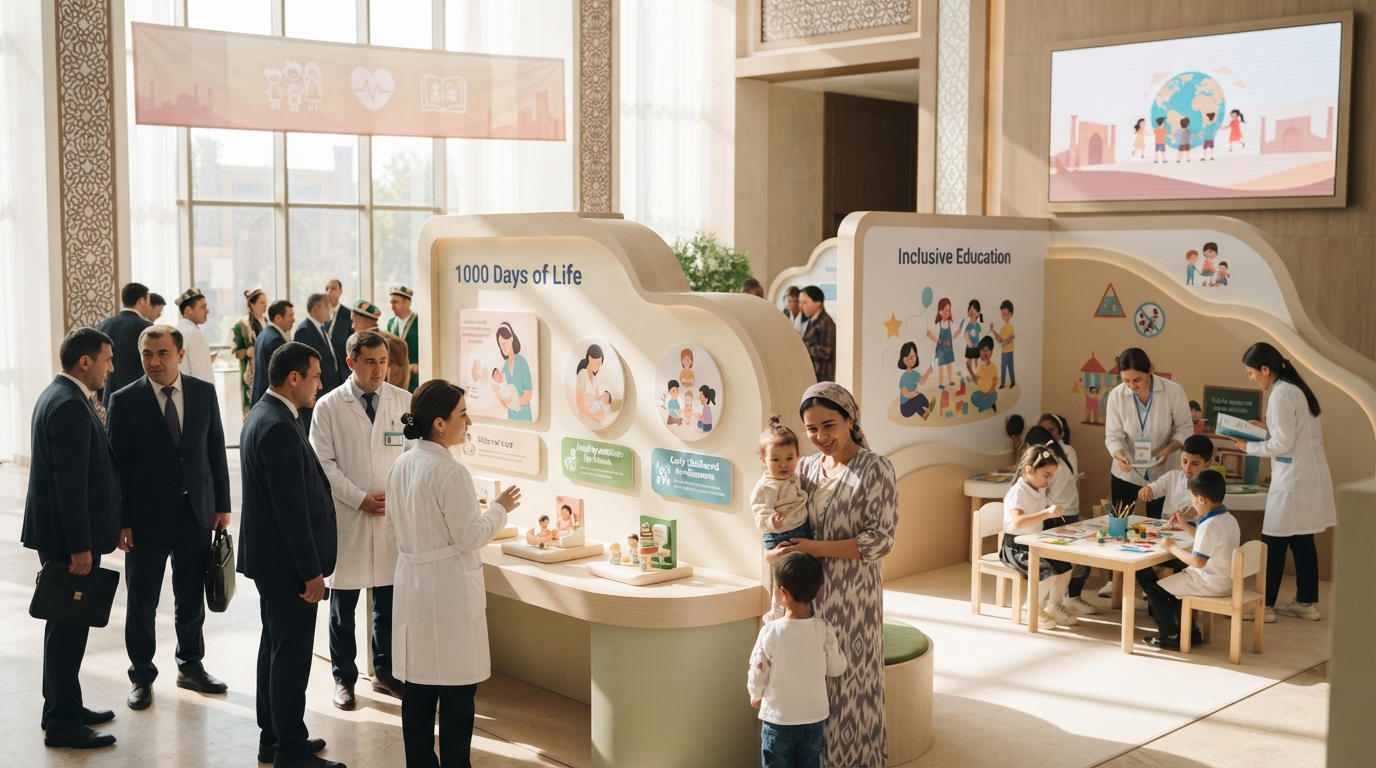
The special exhibition organized as part of the summit reveals the true essence of the reforms in Uzbekistan through the examples of human lives
**World Summit in Samarkand: Reforms, the World of Childhood, and Investment in the Future**
As you know, these days the ancient and youthful city of Samarkand is hosting the World Summit on the topic "Investing in Child Wellbeing: A Path to Sustainable and Equitable Development for Future Generations." A special exhibition organized as part of the summit has turned into a lively platform revealing the true essence and significance of Uzbekistan's reforms through the examples of human destinies.
The main idea of the exhibition is based on the concept "The World Through the Eyes of a Child." The politicians, doctors, and international experts participating here can clearly see the child's lived experience behind state reforms, their sense of safety, being in the warmth of a family, receiving quality education, and the opportunities to freely choose their future.
Through the exhibition, child wellbeing is demonstrated as a continuous responsibility of the state and society. That is, it covers a chain-link system starting from caring for the expectant mother to safe childbirth, receiving education, and stepping into independent life.
At the opening of the summit, the First Deputy Director of the National Social Protection Agency, Shahnoza Mirziyoyeva, emphasized a very important thought regarding the world of childhood and the true meaning of protecting them:
The exhibition exposition consists of several important chain links that reveal the essence of the reforms. One of them is the "1000 Days Where Life Begins" project.
The exposition shows that the support system begins before pregnancy, with the preservation of a woman's reproductive health. Continuous pre-hospital and postpartum medical monitoring, proper nutrition, early identification of risks, and care for premature infants—this is the most long-term and effective investment for the healthy generation of the future.
For information: While giving an interview to journalists at the summit in Samarkand, Minister of Health Eldor Adilov disclosed how much funding is being allocated by the state for the sector. According to him, 50 trillion UZS will be allocated to healthcare; the minister also touched upon medical projects launched for children.
A family should not be left alone in caring for a child. The exhibition demonstrates targeted benefits for children with disabilities or those in difficult life situations, rehabilitation at "Imkon" centers, and mechanisms to prevent a child's separation from the family through "Mother's House" resource centers. The main goal is for the child to grow up in a family environment, not in an orphanage.
Support at the mahalla level and the assistance of "Inson" centers must reach children in their place of residence, that is, within the mahalla itself. Today, the system enters households through social workers and the digital Social Registry not after a problem arises, but before it turns into a crisis.
UN representatives also note that children's interests should be a priority when forming national budgets. Speaking at the conference, UN Deputy Secretary-General Amina Mohammed spoke about the global responsibility facing states and parents as follows:
“It is necessary to advance the idea of the 'SDG stimulus', which ensures making child wellbeing a priority of national budgets and creating budget space for such investments in countries. We must also listen to the children themselves. If a child studies but is hungry, or is terrified of coming to school, the school and the conditions do not matter at all. No parent should be forced to choose between treating their child and meeting their basic needs.”
The exhibition presents a special comprehensive approach to issues of combating childhood cancer, drug supply, and establishing high-tech medical care. Also, providing equal opportunities for every child to showcase their talents through protection from violence and inclusive education was recognized as the main criterion of state policy.
Touching upon the medical and international scale of precisely this issue, Vitaliy Semyonov, a medical specialist from the World Health Organization (WHO) Regional Office for Europe, revealed the urgent tasks regarding child health preservation:
Childhood is today, and for this very reason, this idea is extremely relevant. Due to high birth rates in the Central Asian republics, in the near future, particularly by 2030 and 2050, the total number of children diagnosed with cancer and deaths may increase in absolute numbers. Therefore, we are at a very important stage, and we all must unite to change the situation for the better. Unlike adults, childhood cancer cannot always be prevented, so the primary task is to make a diagnosis as quickly and accurately as possible and to start quality treatment without delay.
On the second day of the summit, it is planned to adopt an important historical document—the Samarkand Declaration on investments in child wellbeing.
After all, the ultimate goal of both the exhibition and the conference of experts gathered from all over the world is one: to evaluate the effectiveness of state policy not by the scale of dry reports, but by the practical opportunities created in the life of each child, the smiles on their faces, and the peace of mind of families.
The World Summit in Samarkand continues its work.