

The World Summit on Children's Wellbeing Kicks Off in Samarkand
On October 21–22, the World Summit on Investing in Children’s Well-being will take place in Samarkand. Representatives from more than 100 countries are expected to participate. The main goal of the event is to bring child protection, health, education, and social support for families to the international agenda. The summit is organized on the initiative of Uzbekistan jointly with UNICEF, […]
World Summit on Children’s Well-being Begins in Samarkand
On October 21–22, Samarkand will host the World Summit on Investing in Children’s Well-being. Representatives from more than 100 countries are expected to attend. The main task of the forum is to bring the topics of child protection, health, education, and social support for families to the international level.
The summit is held at the initiative of Uzbekistan together with UNICEF, the World Health Organization, the World Bank, and the Special Representative of the UN Secretary-General on Violence against Children.
The program includes a plenary session, three thematic panel sessions, the Second International Congress on Pediatric Oncology, and a number of side events. The adoption of the Samarkand Declaration is expected as an outcome of the summit.
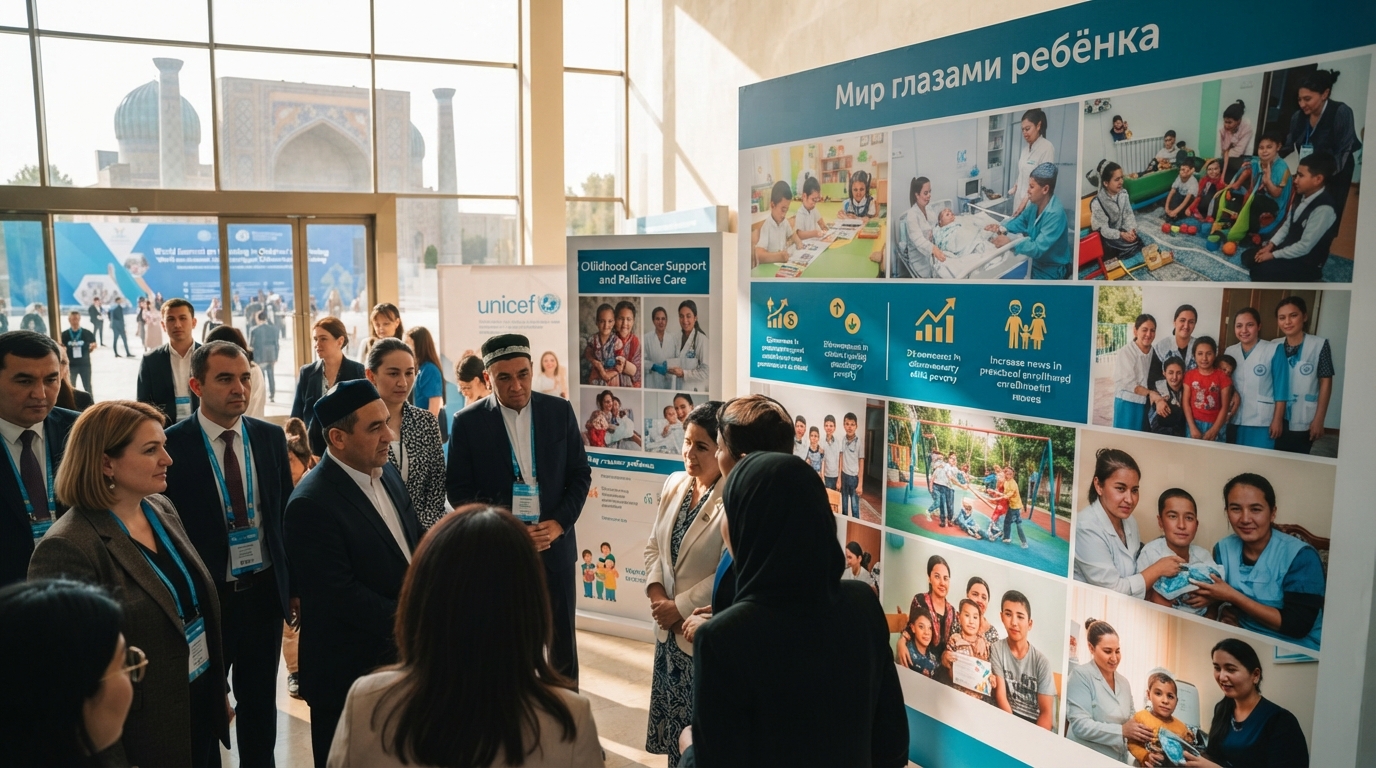
A special focus will be placed on reforms in Uzbekistan. According to the presented materials, the number of types of social services in the country has grown from 26 to 140, the child poverty rate has decreased from 21.5% to 5.4%, and preschool education coverage has increased from 27.7% to 78%.
Today, 208 "Inson" social service centers operate in the country, and nearly 9,000 social workers assess and support the needs of families. This mechanism aims at early detection of problems and targeted assistance to children and families.
As part of the summit, the exhibition "The World Through the Eyes of a Child" is also taking place, dedicated to reforms in the sphere of maternal and child health, education, rehabilitation, inclusion, and the protection of children's rights. Separate expositions are dedicated to supporting children with cancer and developing the palliative care system.
According to the presented data, in Uzbekistan, the period from suspicion of cancer in a child to the start of treatment has decreased from 130–160 days to 10–18 days. The one-year survival rate of children with cancer has risen from 37% to 44.5%.
The organizers note that the main indicator of the effectiveness of the reforms should be a real improvement in the quality of life of every child. The summit is intended to promote the international exchange of experience and the development of cooperation in early childhood development, protection from violence, inclusive education, treatment of pediatric cancers, and family support.