

“The conditions created for a child will serve as a solid foundation for the country’s long-term development” — Shavkat Mirziyoyev
In his congratulatory message to the participants of the international summit dedicated to children, Shavkat Mirziyoyev proposed strengthening international cooperation on child protection, medical care, and expanding educational opportunities. "The conditions created for a child serve as a solid foundation for the country's development," he said.
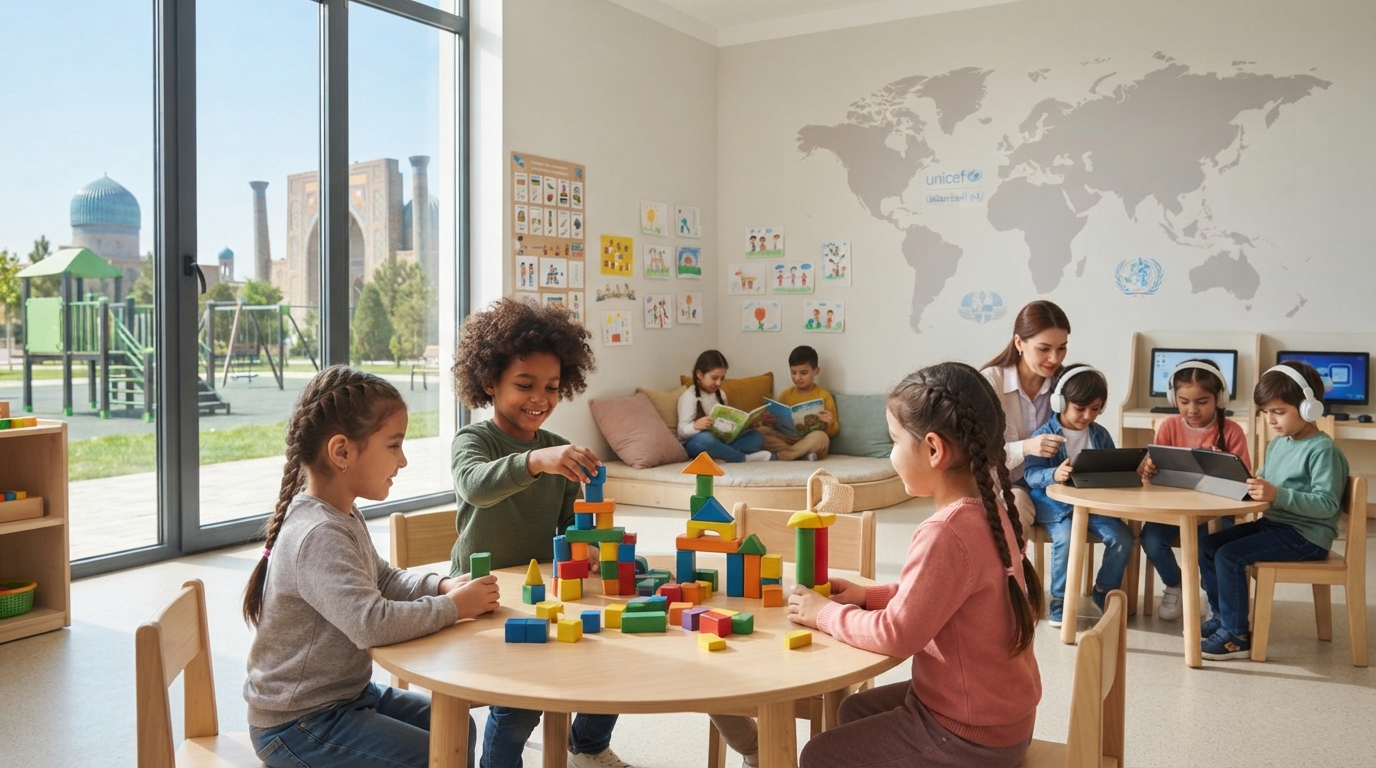
“Conditions created for a child will serve as a solid foundation for the long-term development of the country” — Shavkat Mirziyoyev
President Shavkat Mirziyoyev sent a message of congratulations to the participants on the occasion of the opening of the global summit titled “Investing in Children’s Wellbeing: Path towards Sustainable and Equitable Development of Future Generations” in Samarkand.
The head of state expressed gratitude to the United Nations and its Children's Fund — UNICEF, the World Bank, the World Health Organization, the International Social Security Association, and other partners collaborating in organizing the conference.
Mirziyoyev emphasized the necessity of prioritizing children's present needs in ensuring their wellbeing. According to him, every child has the right to receive affection, safety, quality education, and necessary medical care. A child's worth should not be measured by their future profession or income.
“The conditions created for a child's healthy growth and realization of their potential will also serve as a solid foundation for the country's long-term development. Therefore, funds allocated to childhood must occupy a consistent and stable place in state policy,” the president said.
The head of state stressed that reforms are continuing in Uzbekistan regarding the protection of maternal and child health, expansion of preschool education opportunities, bringing social services closer to families, education for children with disabilities, and the protection of children from violence and exploitation.
According to the data he provided, as a result of the implemented reforms, maternal mortality during childbirth and child stunting have been halved. Preschool education coverage has increased from 27.7 percent to 78 percent, with nearly 100 percent of six-year-old children involved in school preparation. Meanwhile, higher education coverage has risen from 9 percent to 45 percent, that is, a fivefold increase.
In addition, child poverty has decreased nearly fourfold over the last five years through a social protection system aimed at early detection and assistance for family and child needs. Over the past two years, the number of inclusive schools has increased fivefold, and more than 85 percent of children with disabilities have been brought into educational services.
The president emphasized that the results of the reforms should be felt in the life of every family, citing criteria such as a doctor reaching a child on time, the presence of necessary conditions for studying at school, and a child who has suffered violence being able to ask for help with confidence as essential.
The head of state noted that supporting the family means ensuring the safety and best interests of the child. This requires providing timely assistance to parents, preventing the separation of the child from the family, and finding safe, stable family-based care for the child when necessary.
According to the head of state, 100 percent of orphans and children deprived of parental care in Uzbekistan are currently being raised within family settings.
“We have a wise saying: ‘Seven neighborhoods act as parents for one child.’ It embodies the meaning of not being indifferent to a child and not leaving a family alone. Today, this tradition must be reinforced with firm state guarantees, services of qualified specialists, and respect for the personal inviolability of each child,” the president said.
According to his words, it is important to enrich the affection and solidarity of national experience with advanced international knowledge, and to teach children to draw strength from their language and cultural roots while also treating other nations with respect. Every child, regardless of nationality, language, beliefs, health status, or family income, should have the opportunity to think independently, create, and gain knowledge.
The president emphasized that armed conflicts, forced displacement, climate change, and economic difficulties are having a severe impact on children's lives, stating that countries must fulfill their responsibilities and that international cooperation should complement national capabilities.
The first direction proposed for discussion at the summit consists of strengthening continuous support from the early stage of a child's life. For this purpose, the importance of linking maternal health, proper nutrition, early development, and preschool education, as well as detecting child and family needs as early as possible, was noted.
Additionally, it was proposed to expand international cooperation in the early detection and treatment of severe childhood diseases. In particular, the need for experts to exchange experience in the field of pediatric oncology, as well as the necessity to improve diagnostic capabilities and access to quality medications, was emphasized.
“A child's place of residence should not limit their access to assistance,” Mirziyoyev said.
The president expressed support for the first ladies' initiative on international cooperation in pediatric oncology. He stressed that the public and charitable potential of this initiative should be harmonized with the recommendations of medical experts, needs-based assistance, and transparent spending of funds. The cooperation must serve to strengthen national healthcare systems.
Another priority direction at the summit is ensuring a safe educational and digital environment for children. The president stressed the need to strengthen international cooperation against cyberbullying, exploitation, and abuse of personal data.
At the same time, it was proposed to expand opportunities for children to learn, create, and communicate safely, as well as to provide practical assistance to them, parents, and educators on digital literacy.
Mirziyoyev also noted the importance of involving children's opinions in the decision-making process. According to him, it is necessary to hear their own views about the services being created for children. In doing so, participation must be organized in an age-appropriate, voluntary, and safe manner.
The president expressed interest in establishing the Samarkand platform as a practical dialogue mechanism to continue international cooperation. This platform, in cooperation with existing organizations, can serve to exchange effective practices, prepare voluntary joint projects, and discuss results.
Mirziyoyev emphasized the importance of developing plans with specified responsible parties, resources, and timelines to transform the general goals in the summit's final declaration into practical actions. He also noted that openly discussing results based on agreed indicators would strengthen mutual trust.
“In this regard, our attention must be focused particularly on children who are being left out of assistance. Progress towards wellbeing becomes our shared achievement when it is felt in the life of every child,” the head of state said.
Emphasizing that children cannot choose where and in what kind of family they are born, but that creating conditions for them to grow up safely, discover their talents, and build their future depends on the decisions of states, the president expressed hope that the cooperation started in Samarkand will continue with concrete actions that improve children's lives.