

Winners of the competition aimed at developing children's literature were awarded
At a time when characters on phone screens are capturing children's attention, how much can those in books interest them? What kind of works are needed to engage children in reading? The "Best Fiction Work for Children" national contest focused on this very issue. Out of 198 creative works submitted to the contest, 23 works were selected, based on which three literary collections were published for children and adolescents.
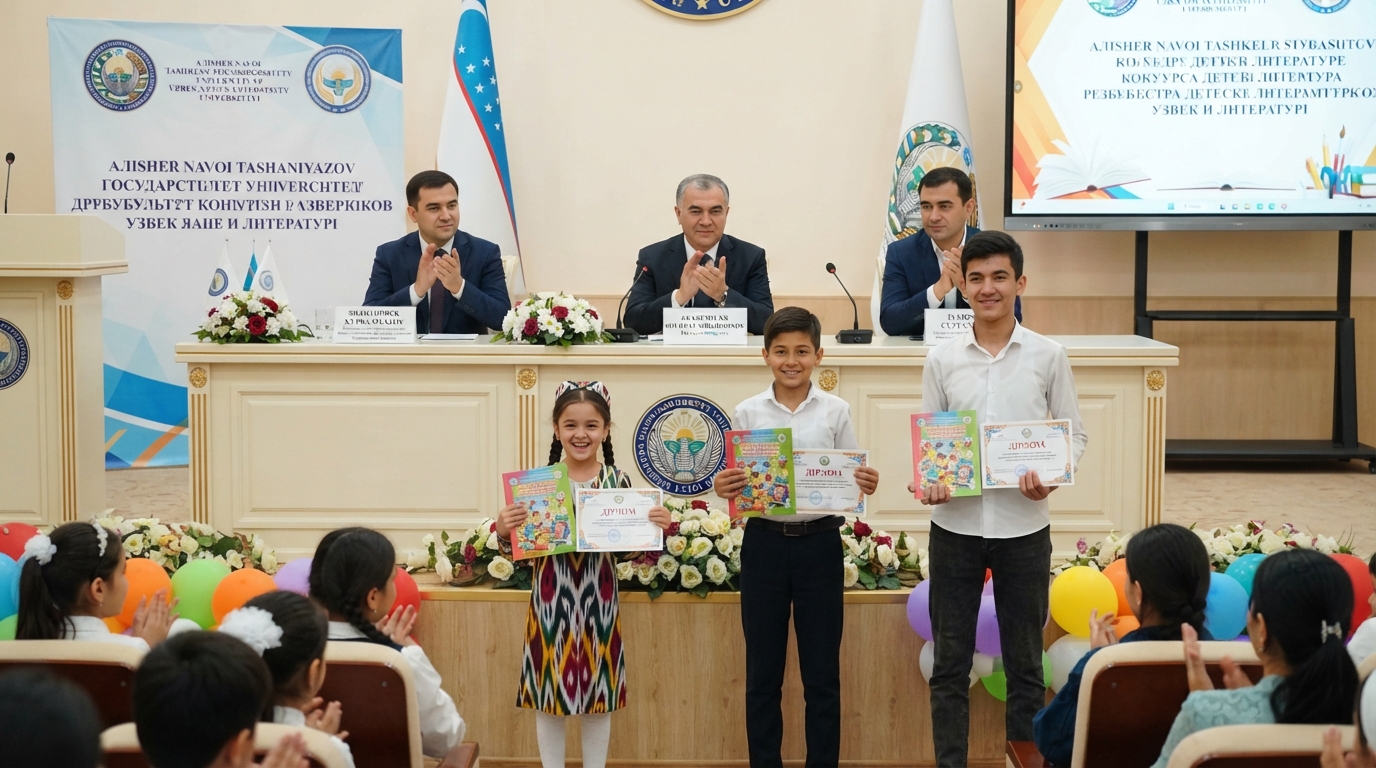
Winners of the competition aimed at developing children's literature awarded
On October 23, 2026, an award ceremony for the winners of the competition was held at Tashkent State University of Uzbek Language and Literature named after Alisher Navoiy. The competition was organized in cooperation with the Republican Scientific-Methodological Center for Development of Education, the Ministry of Education and Science, and the university.
Shahzodbek Kurbaniyazov, Director of the Republican Scientific-Methodological Center for Development of Education, emphasized the importance of creating works that suit children's age and interests in order to get them interested in reading books.
“We demand that children read books. But are we offering enough works suitable for their age, interests, and today's life? The interests of today's children are changing. To attract them to books, they need new themes, interesting plots, and relatable characters,” he said.
The rector of the university, Academician Shuhrat Sirojiddinov, noted that works read in childhood remain in a person's memory for a lifetime. According to him, based on the results of the competition, a separate collection was formed for each age category, and a total of three collections were published.
“Works presented to children must match their age, interests, psychological world, and worldview, and be artistically mature,” said Shuhrat Sirojiddinov.
According to Isajon Sultonov, advisor to the Minister of Education and Science on spirituality and state language issues, a good work should not be limited to giving a ready-made conclusion to a child. It should raise questions, encourage thinking about the characters' actions, and allow the child to connect the events with their own experience.
“A six-year-old child and a sixteen-year-old teenager differ from each other in life experience, attention span, vocabulary, and expectations from literature,” he said.