

Wind and erosion have created an unusual landscape on Mars
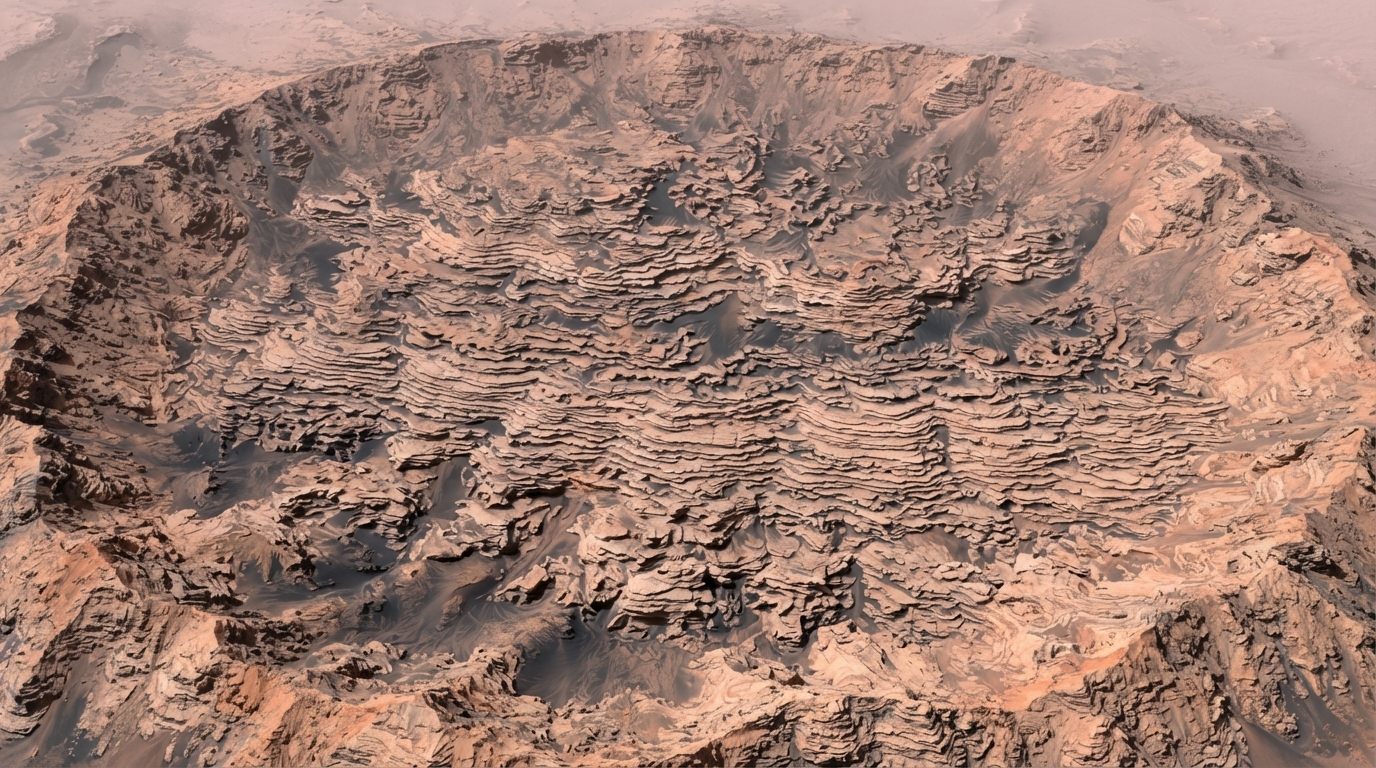
NASA's Mars Reconnaissance Orbiter has captured images of layered deposits resembling coral reefs in the Arabia Terra region of Mars. Scientists say these structures could provide information about past periodic climate processes on the Red Planet.
Wind and erosion have created an unusual landscape on Mars
According to Naked Science, the image was captured using the HiRISE high-resolution camera mounted on an orbital spacecraft. It depicts light-colored sedimentary layers formed on top of large structures located inside impact craters on Mars.
The phrase "coral reefs" describes the appearance of these structures. This does not refer to corals or living organisms, but rather to geological deposits with a wavy appearance.
Layers may be linked to periodic processes
According to HiRISE project researcher Katie Weitz, the regularly repeating structure of the layers and their distribution across a large part of Arabia Terra suggest that they may be related to global periodic processes.
Researchers also mention dust storms among such processes. The potential involvement of groundwater is also being considered. For now, these are merely hypotheses aimed at explaining the origin of the layers.
Currently, the sedimentary deposits are being worn away by erosion. As a result, grooves, tooth-like shapes, and uneven edges have appeared on them.
Later, dark-colored materials and rock fragments brought by the wind partially covered the layers, filling some of the depressions.
Such images help scientists study the processes that shaped the surface of Mars and understand how its climate has changed over time.
By analyzing the structure, distribution, and signs of erosion of the sedimentary layers, researchers are reconstructing the Red Planet's distant geological past step by step.