

Was Noah's Ark found? Extraordinary structures detected beneath a mysterious object in Turkey
Was Noah's Ark found? Unusual structures detected beneath mysterious object in Turkey
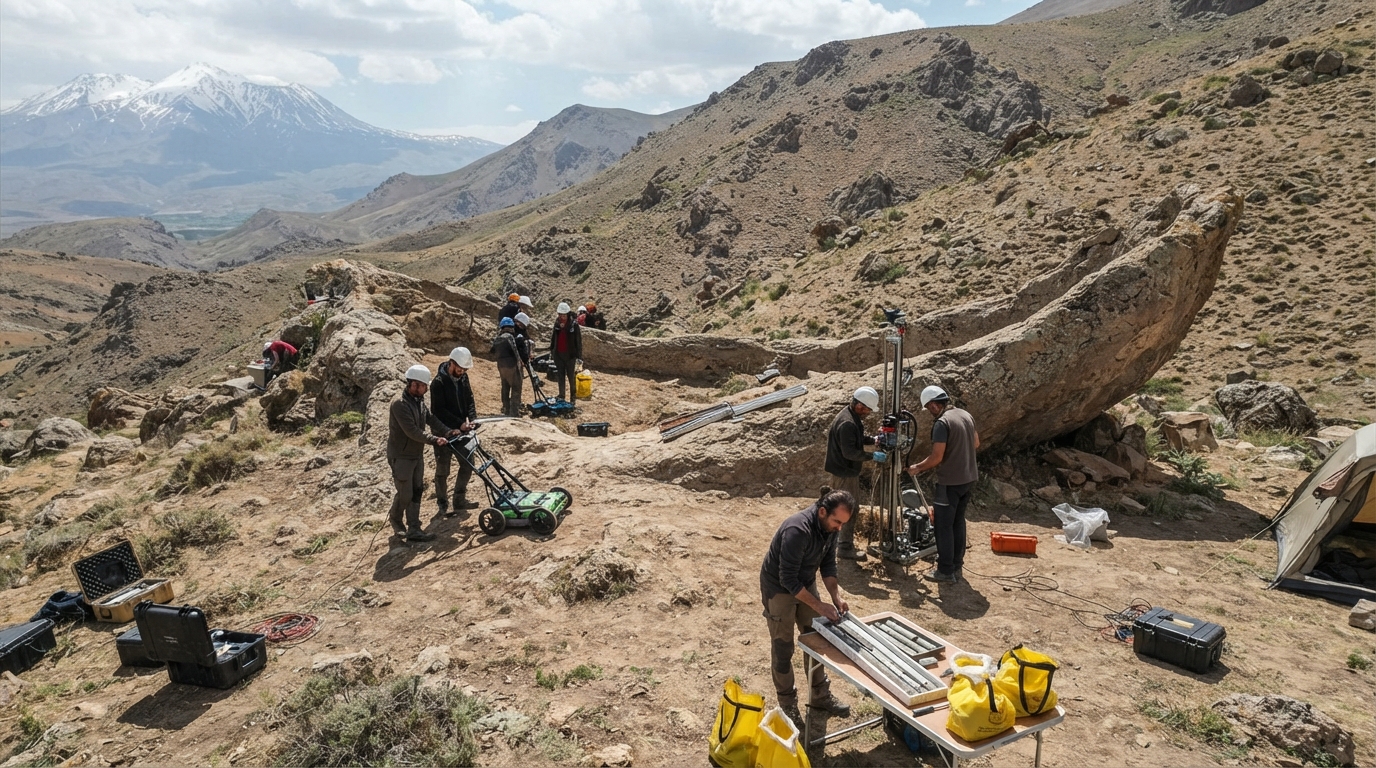
The results of the latest research conducted at the Durupinar structure near Mount Ararat in Turkey have been announced. According to them, straight lines, right-angled intersections, and large cavities have been detected beneath the mysterious object suspected to be Noah's Ark. Researchers suggest that these could be the internal parts, corridors, or rooms of the ship.
The research was carried out using GPR radars designed for underground scanning. Scientists now plan to start drilling operations and even lower a special robot inside the object.
During the studies, a number of anomalies were detected inside the Durupinar structure. According to some reports, a structure resembling a corridor or tunnel about 70 meters long was found in the central part of the object.
In addition, the research also utilized the BakhtarRadar underground radar system, developed for the US Air Force. The system allowed for a three-dimensional analysis of the underground layers and anomalies beneath the object.
As a result, it was noted that the object does not consist of a solid rock mass of uniform density, but rather has several layers and anomalies beneath it. However, these are preliminary results, and the data must be fully analyzed. This is because radar anomalies can also be caused by various geological layers, moisture, or other natural factors. Scientists will start drilling operations to clarify this.
But this is not the only research that has fueled rumors around the object. For example, as part of another study conducted this year, approximately 1,000 soil samples were taken from 150 points and sent to the laboratory. Their composition, presence of organic matter, and potential wood remains were examined.
The research is led by Cenker Atila, a professor of archaeology at Sivas Cumhuriyet University. According to him, the soil taken from the inner part of the Durupinar structure showed about 40 percent more carbon compared to the sample taken from the outside. Scientists are investigating whether this difference could be related to organic matter, including ancient wood remains.
Located about 30 km from Mount Ararat, this structure was discovered in 1959 by Turkish captain Ilhan Durupinar. Its length is 157 meters. Scientists studied aerial photographs and found that this object resembles Noah's Ark as described in holy books.
In addition, the dimensions of the structure also matched the figures given in religious sources. In particular, the biblical Book of Genesis states that the length of Noah's Ark was 300 cubits. According to various calculations, this could be around 135–157 meters.
Some scientists participating in the research have already announced their conclusions. In particular, Andrew Jones, a representative of the Noah's Ark Scans project, made a statement emphasizing that the views on the structure being man-made have been "one hundred percent confirmed." However, other scientists are in no hurry to put an end to the matter. In their opinion, there is currently no evidence that completely rules out the possibility that the radar anomalies were formed due to natural factors.
For this reason, researchers are pinning their hopes on physical samples obtained through drilling and laboratory results. Soil and core samples will be analyzed during the coming winter. Researchers plan to present the final conclusion in 2027. If ancient wood or any man-made structural element is detected in the process, the long-standing debate about Durupinar will reach a new level.