

Scientists left the field to nature - after 11 years it turned into a flower garden
A two-hectare field in the UK that was abandoned for agricultural use has naturally transformed into a diverse meadow in just 11 years. Scientists have not sown the field with special seeds or spent a lot of money - human intervention has been limited to mowing the grass every autumn. As a result, the number of plant species has doubled, and thousands of orchids have appeared in the field.
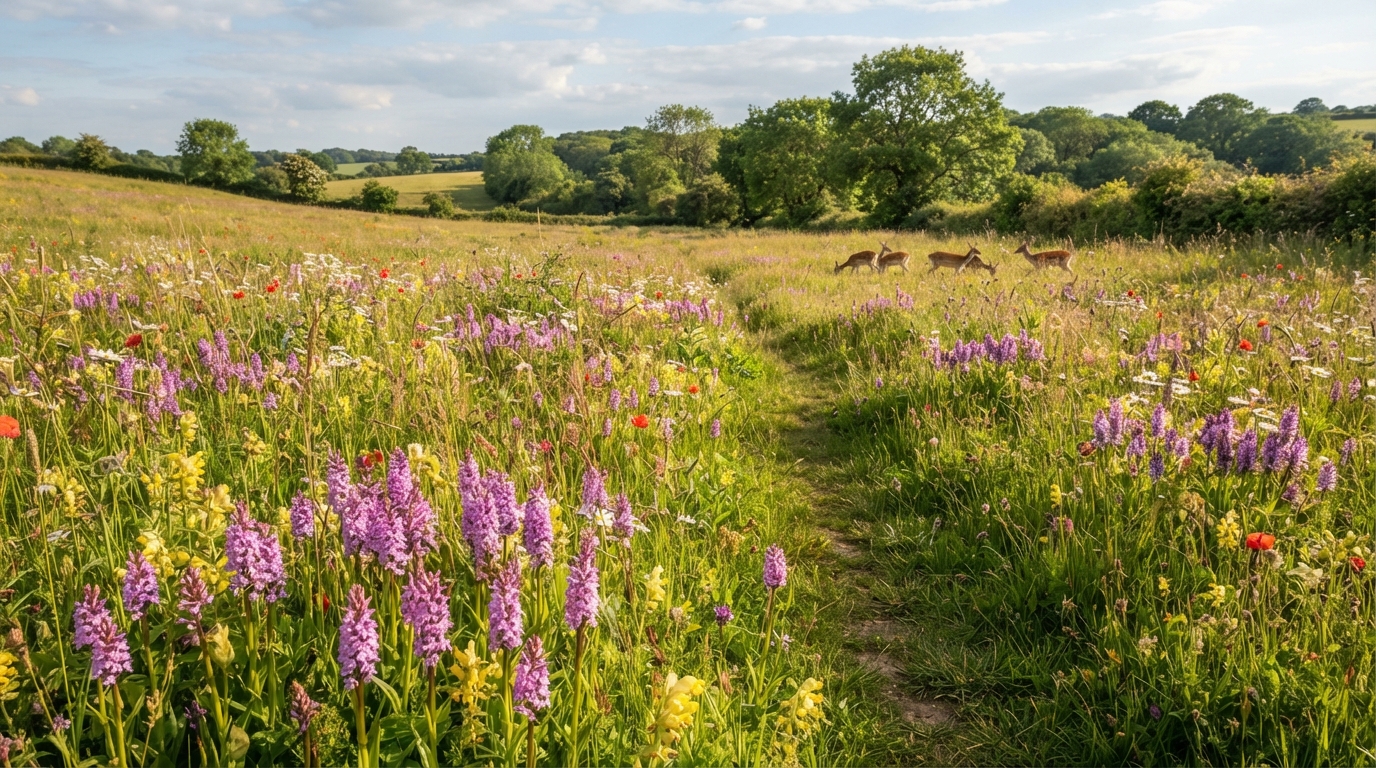
Scientists left the field to nature and watched it blossom into a flower garden after 11 years.
The experiment, which was conducted on a two-hectare plot of land in Bodham, England, belonged to the family of University College London professor Karl Sayer.
After the harvest in 2005, it was decided not to plant any more crops on the field due to problems with heavy clay soil and natural drainage. Although professional agronomists advised the scientists to buy and sow expensive commercial seed mixtures of meadow flowers, Sayer decided to abandon this path and test the extent to which the ecosystem could recover without active human intervention.
The only major human activity on the field was the traditional autumn harvest. The results of the experiment are described in a study published in the scientific journal Restoration Ecology.
Scientists regularly monitored changes in the field from 2011 to 2022. Biologists recorded all plant species growing in the same plots every two to three years.
As a result, the average number of plant species in each observation plot doubled - from 10 to 20. The land, which was previously used for agriculture and was exhausted, over time naturally turned into a meadow rich in various grasses and flowers.
Most interestingly, a number of rare plants also appeared in the field, which are considered a sign of a healthy ecosystem. Among them, species such as the swamp orchid, the sedge and the small pogremok were recorded.
According to the authors of the study, the seeds of rare plants arrived in the field naturally. They may have been brought in the fur and hooves of wild animals. In particular, deer regularly entered the field. Birds and wind may also have played a role in the dispersal of seeds.
Now, thousands of orchids bloom in this field every year. What was once a simple agricultural area has become a local landmark.
Professor Carl Sayer says that walking through this meadow is like traveling back in time. When the scientists saw the first orchids growing naturally in the field, they were extremely surprised by the results.
The authors of the study noted that this experiment shows that restoring natural meadows does not always require expensive and complex measures. In some circumstances, giving nature enough time and minimal management can produce significant results.