

Who can't sleep at night in Afghan
The foggy future of Afghanistan. Internal opposition against the Taliban is expanding
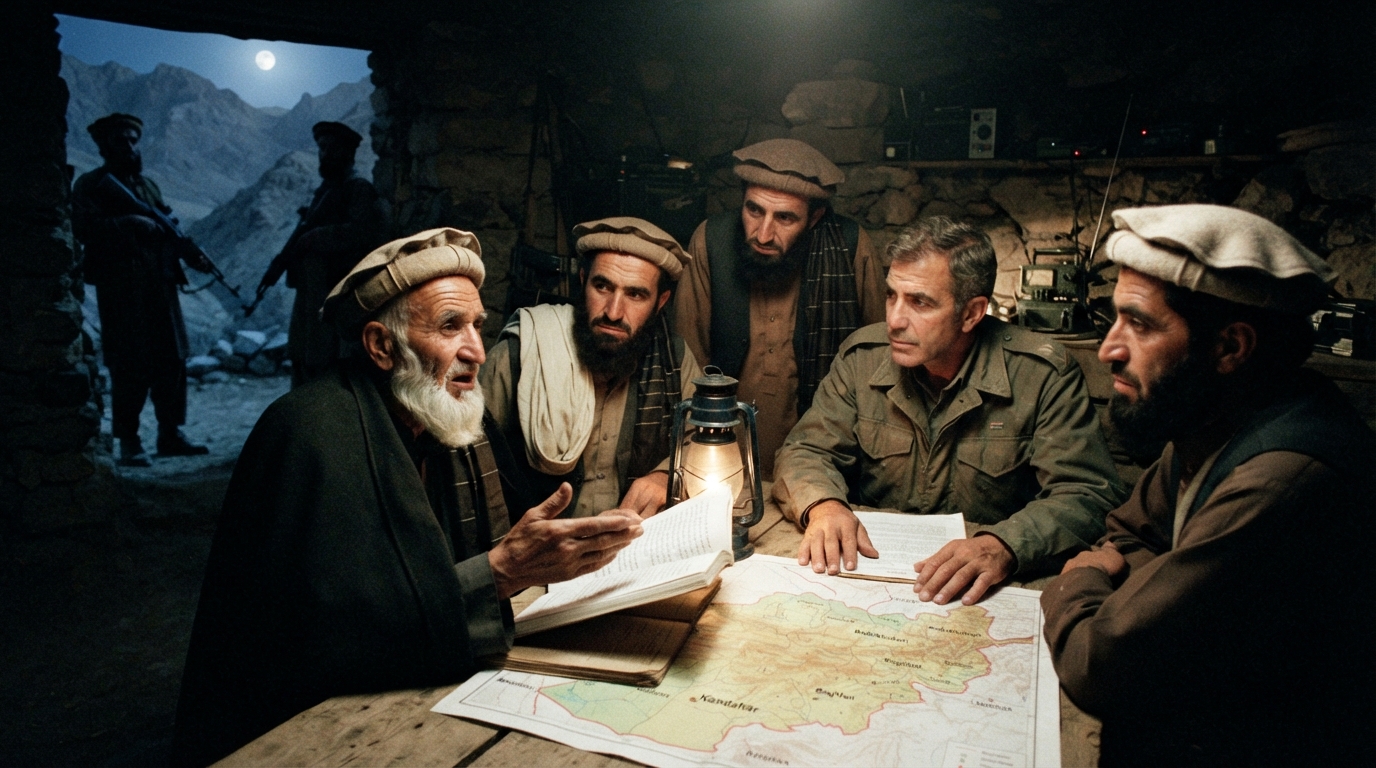
Who Can't Sleep at Night in Afghanistan
In late August, the anti-Taliban United Front of Afghanistan reported that at least 180 Afghan religious figures, Islamic scholars, and researchers had issued a fatwa supporting war or armed action against the Taliban movement.
According to the Front's statement, this religious ruling was prepared by a council of scholars established back in 2015 to interpret Islamic teachings and laws. This council included specialists from across Afghanistan, including experts in Quranic exegesis, Islamic theology, Hadith, jurisprudence, the biography of the Prophet Muhammad, Islamic creed, and other areas of Islamic studies. These Muslim theologians characterized the current situation in Afghanistan as "tyranny" and declared that liberating Afghans from oppression is their religious duty.
The fatwa has the potential to become a significant source of religious legitimacy for armed groups opposing Taliban rule in Afghanistan. Sami Sadat, who heads the United Front and previously commanded the Afghan army with the rank of lieutenant general, stated that he welcomes the scholars' decision and reaffirms his commitment to armed resistance against the Taliban.
In early August, the same group announced Operation Muharib, aimed against Taliban forces in the country. Immediately after the announcement, the United Front carried out a series of attacks in several provinces, including Kandahar, Helmand, Ghor, Baghlan, and Badakhshan.
The National Resistance Front and the Afghanistan Freedom Front — two other opposition forces — are also striking Taliban positions, particularly in northern Afghanistan.
Against this backdrop, the religious legitimacy associated with the issued fatwa is of great importance, as the Taliban largely builds its political identity through the interpretation of Islamic law and positions itself as an Islamic government.
Now, this legitimacy is being directly challenged. At the same time, the armed opposition is seeking to gain broader support both inside the country and abroad by establishing contacts with foreign critics and opponents of the Taliban regime.
There are other internal difficulties as well. In August, protests by mining sector workers began. According to a decree by Taliban leader Hibatullah Akhundzada on gold mining, state lands for gold mining were categorized as protected, and the Ministry of Mines and Petroleum was instructed to lease them to approved private individuals and companies. On paper, this looks orderly. But in practice, it reflects a policy of clan connections and nepotism. The sites placed under protection are those where certain individuals associated with the Taliban have interests. Gold, like other natural resources, simultaneously serves as a source of patronage, coercion, and territorial power.
The Taliban movement has formed a special mining force of one thousand fighters to secure mining operations and is displacing the influence of local commanders while centralizing revenues from gold mining. According to official Taliban data, about one hundred thousand people are directly or indirectly involved in gold mining in Badakhshan province alone. But in countries with medium- and high-intensity conflicts where precious metals are mined, revenues from them also go toward funding paramilitary groups, and sales are typically carried out through gray schemes and on the black market. The UAE has held leading positions in this business for many years.
Pakistan has also repeatedly stated that Afghanistan remains a serious security threat due to the Taliban regime, which is failing to meet its obligations to prevent its territory from being used as a springboard for attacks on neighboring countries. This has led to border skirmishes with the Taliban themselves, including the use of heavy weaponry.
It is worth noting that many countries are in no hurry to recognize the Taliban government and move toward normalizing relations. The most significant argument against improving ties with the Taliban remains their treatment of women and girls. UNESCO and UNICEF also warn that low educational indicators threaten another generation. This problem is institutional rather than temporary. According to UN Women, nearly eight out of ten young Afghan women lack access to education, employment, or vocational training. A separate legal warning for 2026 states that criminal laws enacted by the Taliban further undermine the legal status of women and their access to justice.
A number of Western countries, notably Australia and Canada, have made this a cornerstone of their policy and are trying to maintain pressure on the Taliban. The US State Department, in line with its policy, asserts that any future normalization of relations or official recognition will depend on whether the Taliban improves the human rights situation, fulfills counterterrorism commitments, and releases unlawfully detained Americans.
While there are certain positive decisions from Russia regarding relations with the Taliban regime, looking objectively, the Taliban themselves would like normalization with Western countries. They need Afghan assets frozen in Western countries, as well as the absence of any legal consequences from the institutions of these countries. After all, in July 2025, the International Criminal Court (ICC) issued arrest warrants for the Taliban's supreme leader, Haibatullah Akhundzada, and Chief Justice Abdul Hakim Haqqani following charges of gender persecution as a crime against humanity.
The UN Secretary-General has also identified terrorism, inclusive institutions, and the rights of women and girls as unresolved key issues in Afghanistan. UNDP adds an economic dimension, warning that the exclusion of women, weak job creation, and declining international aid are damaging the country's recovery.
And while negotiations through diplomatic channels are a public process, the successes of the armed opposition inside Afghanistan could push Western countries to provide all kinds of support to the Taliban's opponents, up to and including weapons supplies. This fits within the framework of political warfare, at least according to US manuals, where any means can be used to overthrow an adversary. It is no coincidence that in the joint declaration after the last SCO summit, the problems of Afghanistan were highlighted separately. Eurasian countries would like to resolve the accumulated knot of contradictions and problems on their own, without external interference, which, as a rule, always leads to negative, prolonged consequences.