

Taliban has failed to curb terrorist threat in Afghanistan - UN
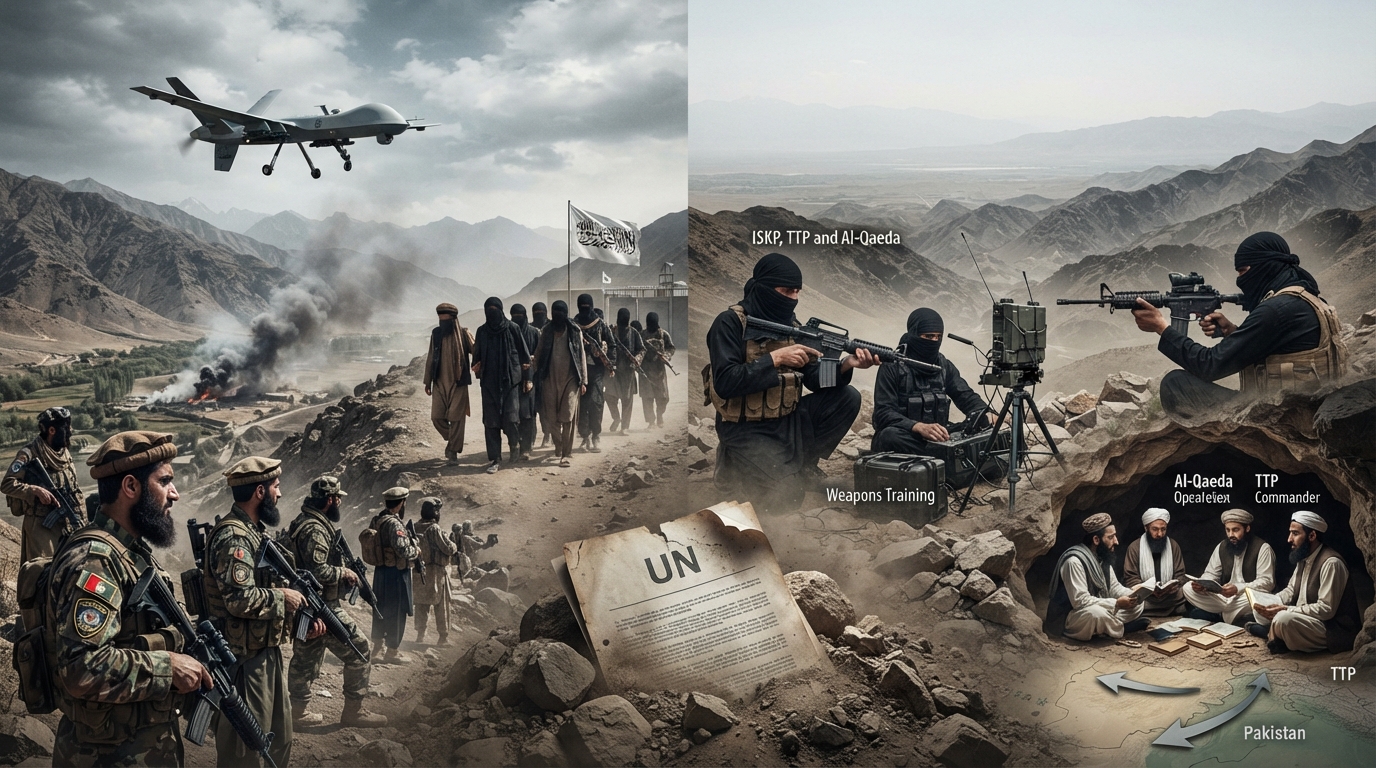
**UN: Taliban has failed to fully eliminate terrorist threat in Afghanistan**
The Taliban has been actively fighting ISIS (ISIS-K) and other militants, but has failed to fully contain the terrorist threat in Afghanistan, according to a new report released by the United Nations Sanctions Monitoring Group.
The 38th report, published on August 10, notes that Afghanistan remains a constant source of threat to neighboring countries in the region and Central Asia. The conclusions of the UN experts are based on intelligence information provided by member states and an analysis of events up to June.
**ISIS-K is resurgent**
The report identifies ISIS-K as the greatest threat to the Taliban government and the region as a whole. Despite the fact that the operations of the Taliban and Pakistani special forces have dealt a serious blow to the group, the organization has managed to restore its capabilities. They have regained the ability to carry out large-scale and deadly attacks.
The group has reduced the number of attacks inside Afghanistan and focused its attention on Pakistan. However, in response to the pressure of the Taliban in Kabul and the northern provinces, the militants have moved their camps to the north of the country and to the border areas with Pakistan. They also maintain their positions in the vicinity of Kabul.
According to information provided by regional countries, the group's members have modern tactical equipment. They use drones, night vision devices and thermal detectors. The militants have undergone special training in urban combat and drone control. The document cites the January 19 bombing near a Chinese restaurant in Kabul that killed 12 people and the April 10 shooting near a Shiite shrine in Herat that killed 11 people.
**The Taliban in Pakistan (TTP) and Al-Qaeda alliance**
Another serious problem is the resurgence of the Tehrik-i-Taliban Pakistan (TTP). The group has sharply increased its attacks against Pakistani forces, which has strained relations between Kabul and Islamabad. The TTP has announced new formations, including two new divisions and even a TTP Air Force unit. In March, they launched their spring offensive, Operation Khyber, against civilians and the military.
According to the monitoring group, the TTP claimed responsibility for a February 16 bombing in Pakistan's Bajaur district that killed 11 soldiers and a child. The group's fighters operate freely in Afghanistan.
The Taliban have moved about 2,000 TTP fighters and their families from the Pakistani border into the interior of Afghanistan to control the situation. Taliban leader Hibatullah Akhundzada has also warned TTP leaders through behind-the-scenes communications to stop attacks on Pakistan. Despite this, border clashes have not stopped.
Al-Qaeda's position in Afghanistan has also not changed. It continues to provide ideological, military, and logistical support to the TTP. On April 28, al-Qaeda's official media for the first time openly supported the TTP's operations against Pakistan. According to a UN member state, al-Qaeda trainers in Afghanistan are also training members of the Balochistan Liberation Army (BLA) along with the TTP.
Al-Qaeda in the Indian Subcontinent (AQIS) is also becoming a regional group. The group's leaders are living in Kabul and have been issued Afghan identity documents (tazkira). This indicates that close cooperation between the Taliban and al-Qaeda remains.
**Other militants and modern weapons**
The UN report also mentions the East Turkestan Islamic Movement (ETIM/TIP). Its militants are said to be gathering in Badakhshan, the Wakhan Corridor and Kunduz. Some of them are undergoing training at a newly established al-Qaeda camp in the Bargi Matal district of Nuristan province and are investing in drone technology.
Another serious threat is the huge military arsenal left over from the US and the former government. These modern weapons and night vision devices, which are under Taliban control, are falling into the hands of the TTP and other groups. This is increasing their combat capabilities.
In addition, the ISIS-K group is interested in chemical and biological weapons, in particular, the production of the highly toxic substance ricin. They are also using artificial intelligence technologies to quickly translate and distribute their propaganda materials.
**Taliban response**
In a statement to Amu TV, the Taliban's chief spokesman, Zabihullah Mujahid, completely rejected the allegations in the UN report. He stated that all the terrorist groups mentioned in the report have no connection with Afghanistan and do not operate on the territory of the country.
_The extremist group ISIS has been designated a "terrorist organization" by a number of countries and international organizations._
_Earlier, it was reported that the Taliban had captured two UN employees in Afghanistan. It was not disclosed what charges they were charged with. The international organization was not allowed to meet with the employees._