

Who can enter temporary detention facilities without obstacles? Changes to the rules are being proposed
In Uzbekistan, it is proposed to expand the list of persons who have the right of unimpeded access to temporary detention facilities. The internal regulations are intended to specifically define this right for the Deputy Ombudsman, regional representatives, and the Children's Ombudsman.
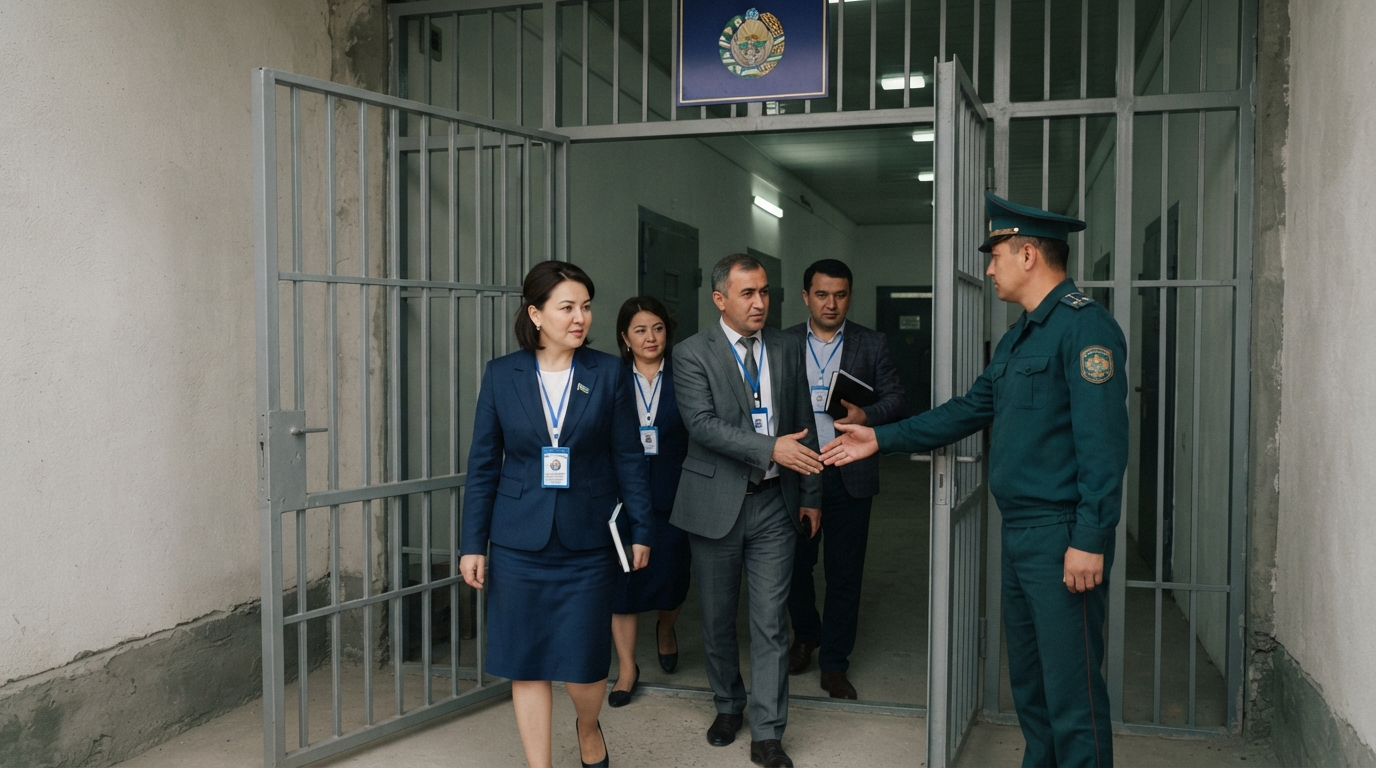
**Who can access temporary detention facilities without hindrance? Proposed changes to the rules**
Through a draft order of the Minister of Internal Affairs, it is planned to introduce additions and amendments to the internal regulations of temporary detention facilities approved in 2017.
According to the draft, the Deputy Ombudsman, regional representatives in the Republic of Karakalpakstan, regions, and the city of Tashkent, as well as the Children's Ombudsman, will be added to the list of persons with the right of unhindered access to detention facilities.
Under the current rules, this right is granted to the Ombudsman, the Business Ombudsman, the National Center for Human Rights, and employees of the Anti-Corruption Agency.
In the proposed edition, ensuring the safety of these persons is entrusted to the administration of the detention facility.
The draft also clarifies the procedure for transferring detainees from pre-trial detention centers to temporary detention facilities.
Such a transfer is applied when it is necessary to conduct investigative actions or court hearings outside the settlement where the pre-trial detention center is located, in cases where it is impossible to transport the person there daily. The temporary transfer period is intended to be a maximum of ten days within a month.
The basis for the transfer will be the decision of an inquirer, investigator, or prosecutor to relocate the person, or a court ruling. In this regard, the decision of an inquirer is being added to the list of grounds in the current rules.
Additionally, the inquirer is also being included in the rule regarding cases where it is impossible to transport a detained person to a pre-trial detention center due to distance or the lack of appropriate transport routes. In these cases, based on their decision agreed with the prosecutor, it is envisaged to keep the person in a temporary detention facility for up to thirty days.
In the clauses related to the formalization of the detention protocol, it is proposed to replace references to Article 227 of the Criminal Procedure Code with Article 225.
The document currently remains a draft, and the date and number of the order are not specified. If adopted, it is set to enter into force from the date of its official publication.