

WHO assessed threats after first person died from Oropouche virus
For the first time in history, the Thottapalayam virus has been detected in a human in France. Although the patient has died, the World Health Organization currently assesses this as a single case and is monitoring the situation.
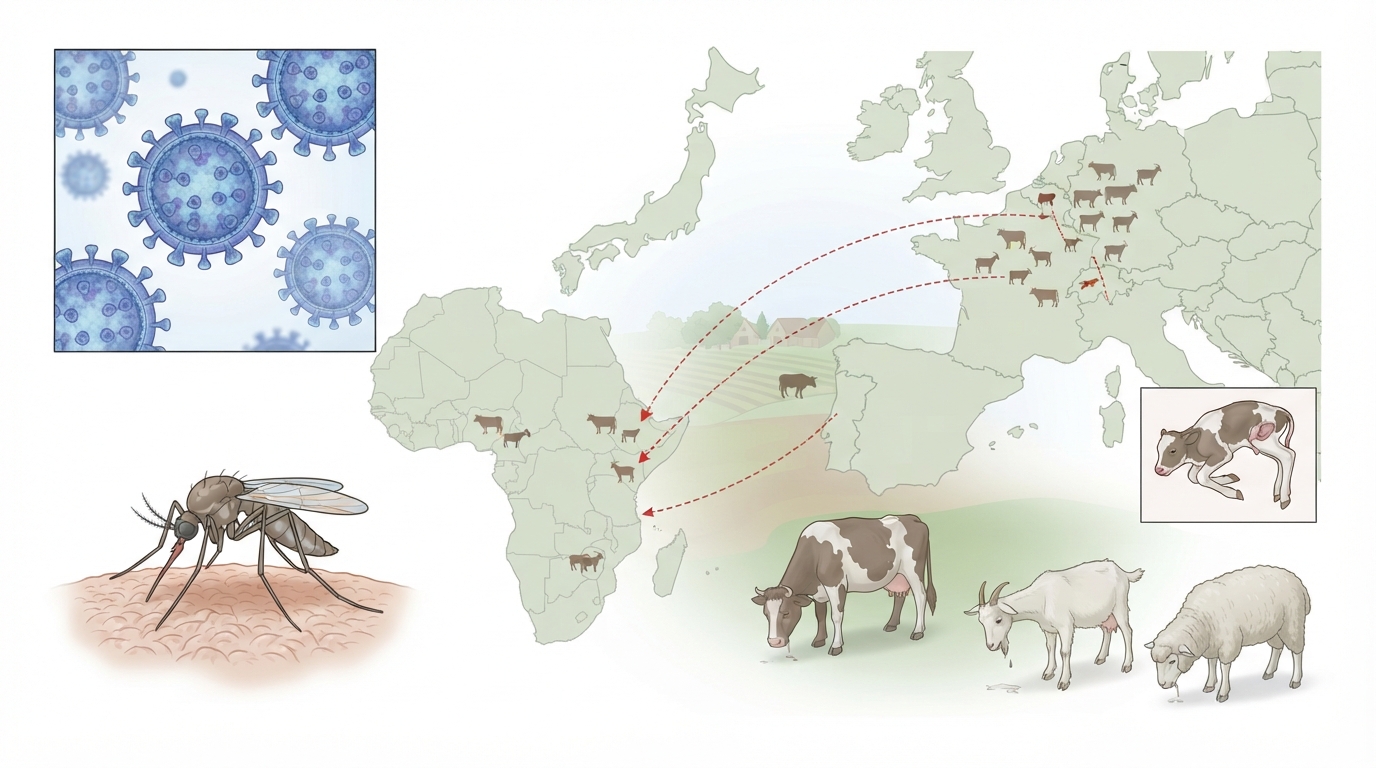
WHO assessed threats after first human death from Shamonda virus
Earlier, the first known case of human infection with the Shamonda virus was recorded in the city of Lyon. The virus was detected in an elderly man undergoing treatment for another severe illness.
The patient died, but the WHO describes what happened as an isolated case. Grégory Émery, head of the French Directorate General for Health, stated that "an unprecedented event has occurred," but assured that the patient's death was primarily linked to his severely weakened immune system.
"For now, this is an isolated case. WHO is monitoring the situation and will provide updated information as new data becomes available," the organization's statement said.
The WHO also stated that it is in close contact with French authorities.
Shamonda virus (SHAV) is an infectious agent of animal diseases belonging to the genus Orthobunyavirus and the Simbu serogroup, which also includes the Schmallenberg and Akabane disease viruses.
According to the WHO, the virus was first detected in cattle in Nigeria in 1965. It mainly affects livestock: cows, sheep, goats, horses, and alpacas. Infected animals may experience fever, diarrhea, and reduced milk yield, as well as malformations in newborn calves.
The virus is mainly transmitted to animals through the bites of midges belonging to the genus Culicoides. There is no vaccine or medication against the Shamonda virus.
Previously, most cases among animals were recorded in Africa and Japan. However, in the summer of this year, the virus began to be detected in Europe: first in Germany and Switzerland, and then in Austria, Belgium, and France.