

Shamonda virus detected in a human for the first time in France
In France, the first case of human infection with the Chamonix virus, which usually occurs in cattle, has been confirmed. The patient died, but country officials stressed that this is an "extraordinary exception" and that there is no risk to the population.
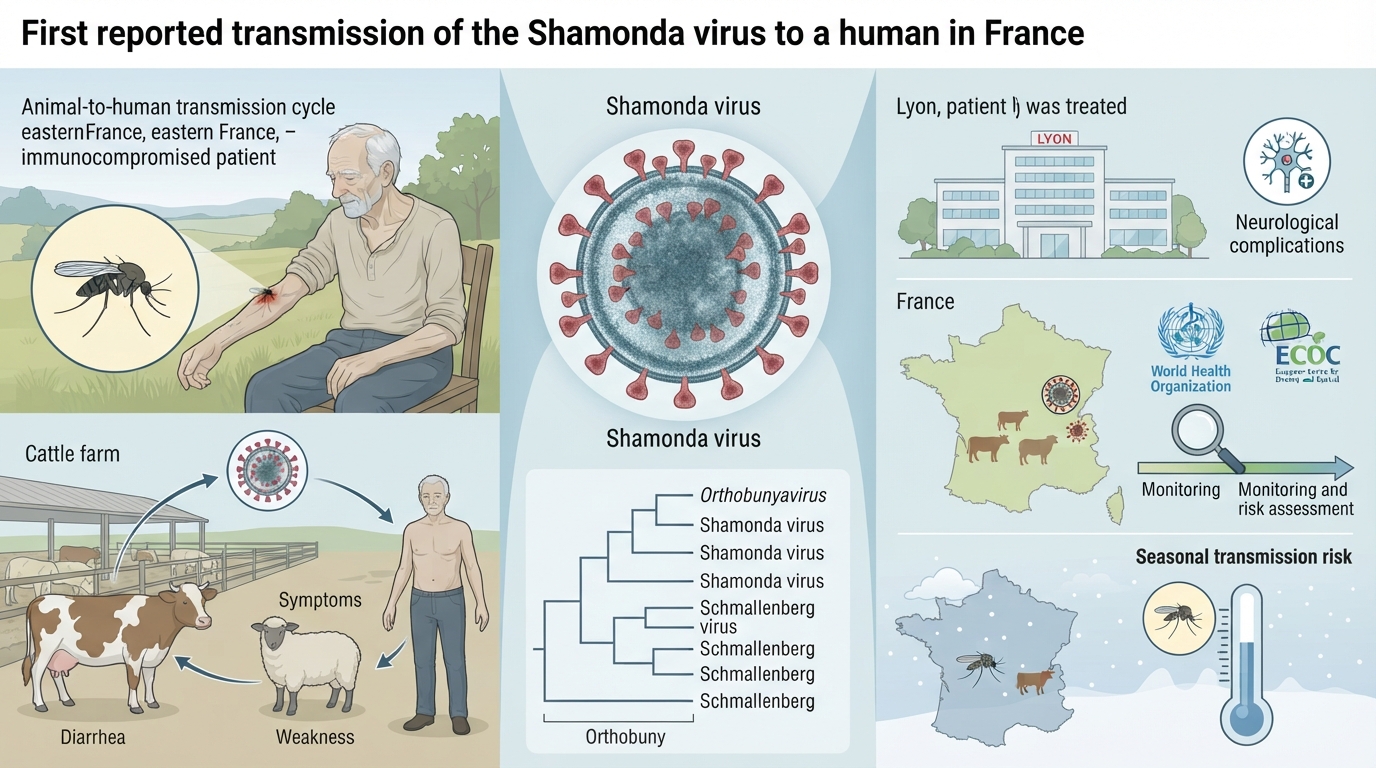
First human case of Shamonda virus reported in France
The French government announced that for the first time in history, the Shamonda (SHAV) virus has been transmitted to a human. It is reported that the patient died in a hospital in early October.
Shamonda belongs to the genus of orthobunyaviruses. It mainly affects cattle and can be transmitted through the bites of midges (biting midges). The disease has also been recorded in sheep, goats, alpacas, and horses. In livestock, the virus causes severe diarrhea, fever, weakness, and a sharp drop in milk production.
The virus was first identified in Nigeria in the 1960s, later spreading to Asia, and was also recorded in Europe in the summer of that same year. Until now, the Shamonda virus was believed not to infect humans.
Relying on preliminary data, the French Ministries of Health and Agriculture reported that the deceased patient contracted the virus in the eastern part of the country, in an area where the virus was circulating among animals, as a result of a midge bite.
Authorities called this an "exceptional anomaly" because the patient suffered from severe immunodeficiency and was being treated for a "serious illness" at a hospital in Lyon. The patient most likely developed neurological complications associated with the Shamonda virus. The ministries noted that the patient's severely weakened immune system made them susceptible to the infection. Furthermore, the agencies specifically emphasized that there is no risk to the general public.
The World Health Organization (WHO) and the European Centre for Disease Prevention and Control (ECDC) stated that they are monitoring the development of the situation.
The WHO noted that no official risk assessment has been conducted yet, but available data and experience in studying similar diseases indicate that this is an isolated case and that "the likelihood of widespread transmission of the virus at present is very low."
"In addition, the transmission capacity of viruses carried by midges usually drops significantly during the colder seasons of the year," the WHO added.