

Uzbekistan aims for $20 billion in remittances by 2027: How technology is changing the remittance market in Central Asia
Remittances remain a key source of income for Central Asian households, with the market shifting from bank branches to mobile apps and digital wallets.
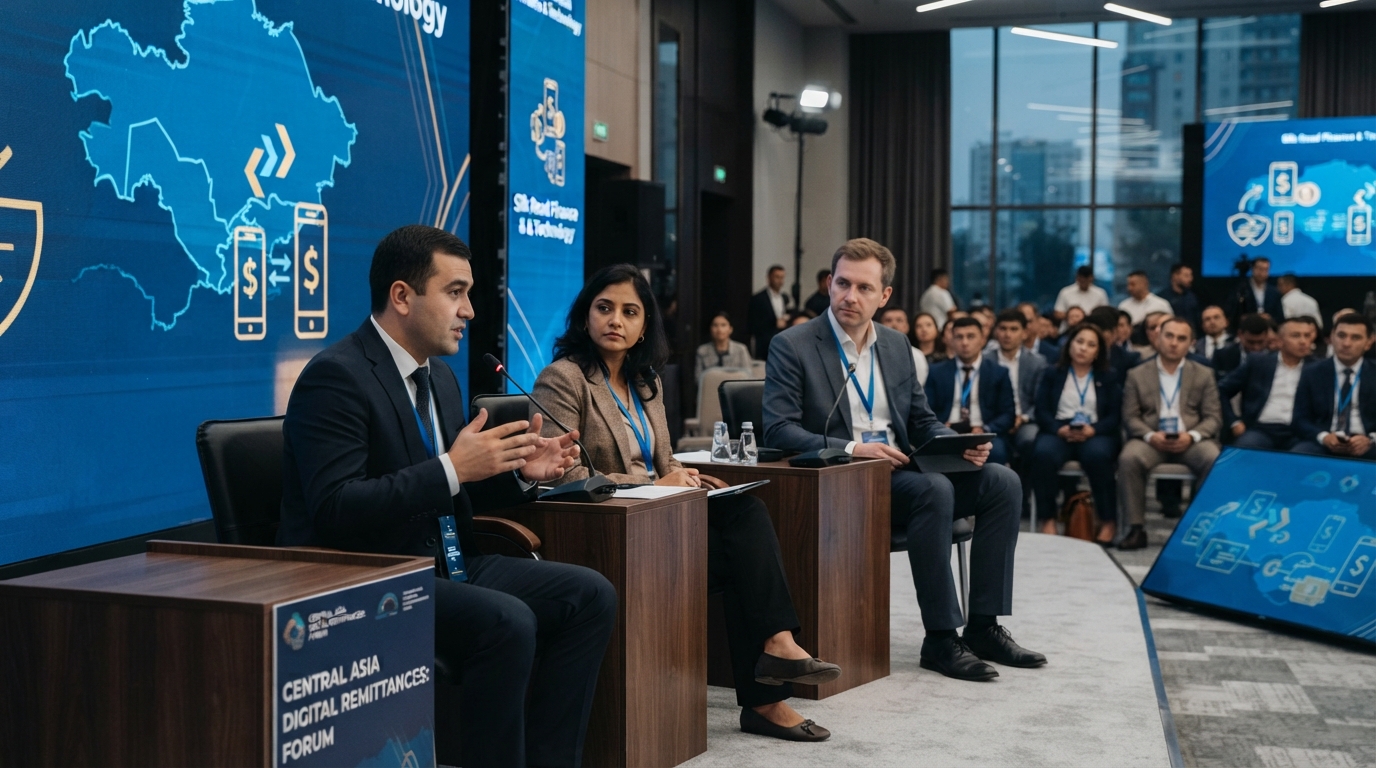
Uzbekistan plans to increase remittances to $20 billion by 2027 as the Central Asian market shifts from traditional banking services to digital platforms. This transformation was the central topic of discussion at the Silk Road Finance & Technology Forum, held on August 24 in Tashkent, which brought together payment industry experts from around the world.
**Size of the Remittance Market**
The forum noted that last year, Uzbekistan received approximately $15 billion in remittances, with almost 40% of these being person-to-person transfers. This amount is projected to reach $20 billion by 2027.
According to Prajit Nanu, co-founder and CEO of payments company Nium, Central Asia receives approximately $33 billion in remittances annually, which he called a "very significant" amount, facilitating his company's entry into the regional market.
The dependence of the region's economies on remittances from migrant workers was also highlighted. The moderator of one panel reported that transfers account for approximately 15% of Uzbekistan's GDP, 17.6% of Kyrgyzstan's GDP, and a "staggering" 46% of Tajikistan's GDP.
**Transition from branches to apps**
Anvar Isamukhamedov, CEO of Paynet, noted that traditional methods of receiving transfers, such as visiting bank branches or currency exchange offices, are giving way to mobile apps.
"The next breakthrough, I hope, will be receiving transfers through mobile apps. Users will need to complete the KYC procedure, link a phone number, and access funds at any time," he stated.
According to him, for self-employed entrepreneurs and small businesses with small transaction amounts, e-wallets are becoming a more convenient and cost-effective alternative to traditional account-to-account and card-to-card transfers.
National Payment Systems and Regional Integration
Alexey Maslov, Advisor to the Chairman of the Board of the Humo payment system, explained that the national card system was created from scratch over five years, but was conceived from the outset as a potential regional and international player.
"From the very beginning, we decided not to create another local payment player... our goal from the very beginning was to create a player that could be at least regional initially, and then move on to international cooperation," he noted.
Humo cards are co-branded with Visa, functioning as Humo domestically and as Visa internationally. The system has also established partnerships with payment systems in neighboring countries, including Kyrgyzstan's Elcart and Kazakhstan's payment system, as well as Alipay, expanding Humo card acceptance to over 50 countries.
**Transfer Costs and Payment System Interoperability**
Jamshid Usmanov, Director of the Payment Systems Development Department at the Central Bank of Uzbekistan, emphasized that the main challenge of cross-border transfers lies not in a single payment transaction, but in the need for interaction between multiple jurisdictions, banks, and payment infrastructures.
"Countries have different payment standards, different AML/CFT, KYC, and currency regulation requirements... each correspondent bank conducts additional checks and settlements, and this is where additional time and costs arise," he stated.
The Central Bank's next goal is to make cross-border transfers as fast as domestic ones by unifying data exchange standards (including QR codes) and direct interaction between payment systems in the region.
Discussion participants also noted that transfer costs in Central Asia are already relatively low compared to other regions of the world, due to the intense competition among operators in the market.
**A Global Player's Perspective**
Ari Sarker, former President of Mastercard's Asia-Pacific region, identified five to six key factors in cross-border payments: speed, transparency, cost, security, and data. He noted that addressing these challenges hinges on the issue of interoperability and uniform standards across countries.
Arif Khan, Chief Innovation Officer at Razorpay, shared his experience building the UPI payment system in India, which processes 20 billion transactions per month. The system's success, he explained, is based on three elements: national digital identity (Aadhaar), a universal bank account coverage program, and widespread mobile penetration.
David Kleiman, CEO of Klearium, highlighted the issue of correspondent banks, estimating that approximately 3,000–3,500 banks worldwide have lost access to correspondent relationships and are unable to independently process international payments for their clients.
The Role of Stablecoins
Sergio Mello, Global Head of Stablecoin Solutions at Anchorage Digital, noted that blockchain and stablecoin technology have the potential to connect the organically developed grassroots digital finance market with the centralized system built around central banks.
At Alif Bank (Tajikistan), the issue is no longer so much about further reducing the cost of transfers, but rather about what happens to the funds once they arrive in the country, including the potential of programmable money to automate savings and create transparent financial histories for clients.
A study by Fireblocks, presented at the forum, showed that approximately 88% of financial institutions globally have announced plans to allocate budgets for digital asset infrastructure, but only 15-16% have actually brought these projects to commercial operation.