

US's new "spy" aircraft takes to the skies for the first time
The US Army has flown an experimental prototype of the HADES reconnaissance aircraft designed for long-range intelligence gathering for the first time. The new system is being developed to monitor the situation over large areas, detect potential threats in advance, and provide military command with necessary information.
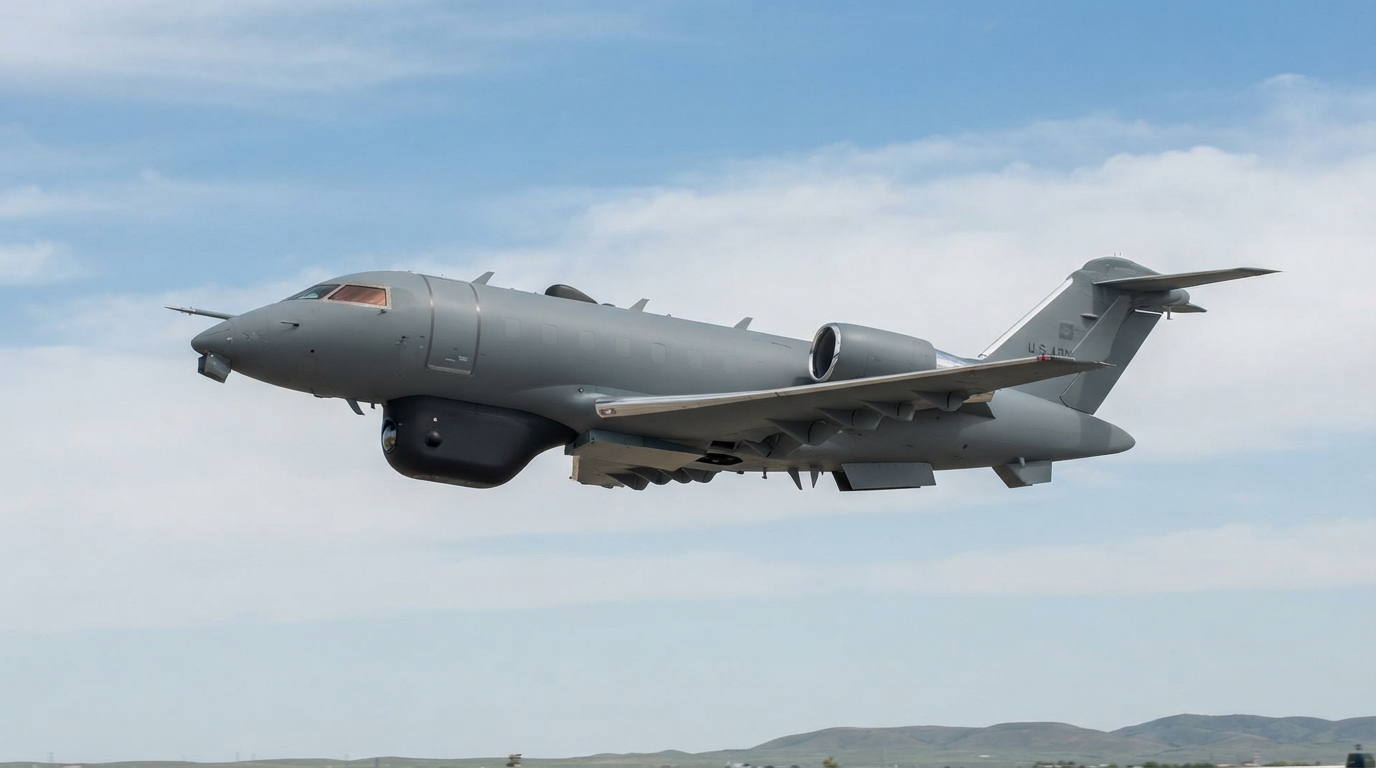
US's new "spy" plane takes to the air for the first time
HADES — High Accuracy Detection and Exploitation System — is a program aimed at updating the US Army's airborne intelligence, surveillance, and reconnaissance capabilities. The complex being created within its framework must provide information support for large-scale military operations covering various combat environments.
A modern commercial jet platform was chosen as the base for the aircraft. It allows for faster and longer flights, carrying a larger payload, and flying higher than older turboprop reconnaissance aircraft. For a reconnaissance aircraft, these features are important in terms of expanding on-board equipment and operational capabilities.
Preparations for and the execution of the first flight were led by the US Army's aircraft project office — the Fixed Wing Project Office. The program's industrial partner, Sierra Nevada Corporation, also took part in the process. Prior to the flight, the aircraft's readiness for testing was checked.
The maiden flight brought the HADES program to the next stage. This stage envisages the integration of mission-specific on-board systems into the aircraft and conducting flight tests as part of development work. Therefore, for now, we are talking about the first flight of a prototype, while the installation and testing of specialized reconnaissance systems are among the upcoming tasks.
One of the main features of the program is that priority is given to long-range reconnaissance. Traditional tactical reconnaissance aircraft usually gather information about relatively limited areas of military operations. HADES, on the other hand, is being developed to detect much more distant targets and analyze data about them.
The task is not limited to merely increasing the surveillance distance. The new complex is designed to work simultaneously with data related to multiple combat environments. This is expected to help the command assess not only the situation in an isolated sector, but also the processes taking place across a broader region.
Plans call for equipping the aircraft with reconnaissance tools for various environments, as well as signals intelligence — SIGINT — systems. They should make it possible to collect and analyze information about the electromagnetic environment. The complex also provides for the use of information obtained from other sources.