

Instead of a million-dollar missile against a drone - Helsing presented a new air defense system
Germany's Helsing company presented the Contra air defense system, which combines two types of interceptor missiles and artificial intelligence-based control software. According to the company, the cost of intercepting and destroying a fast attack drone will be less than $100,000.
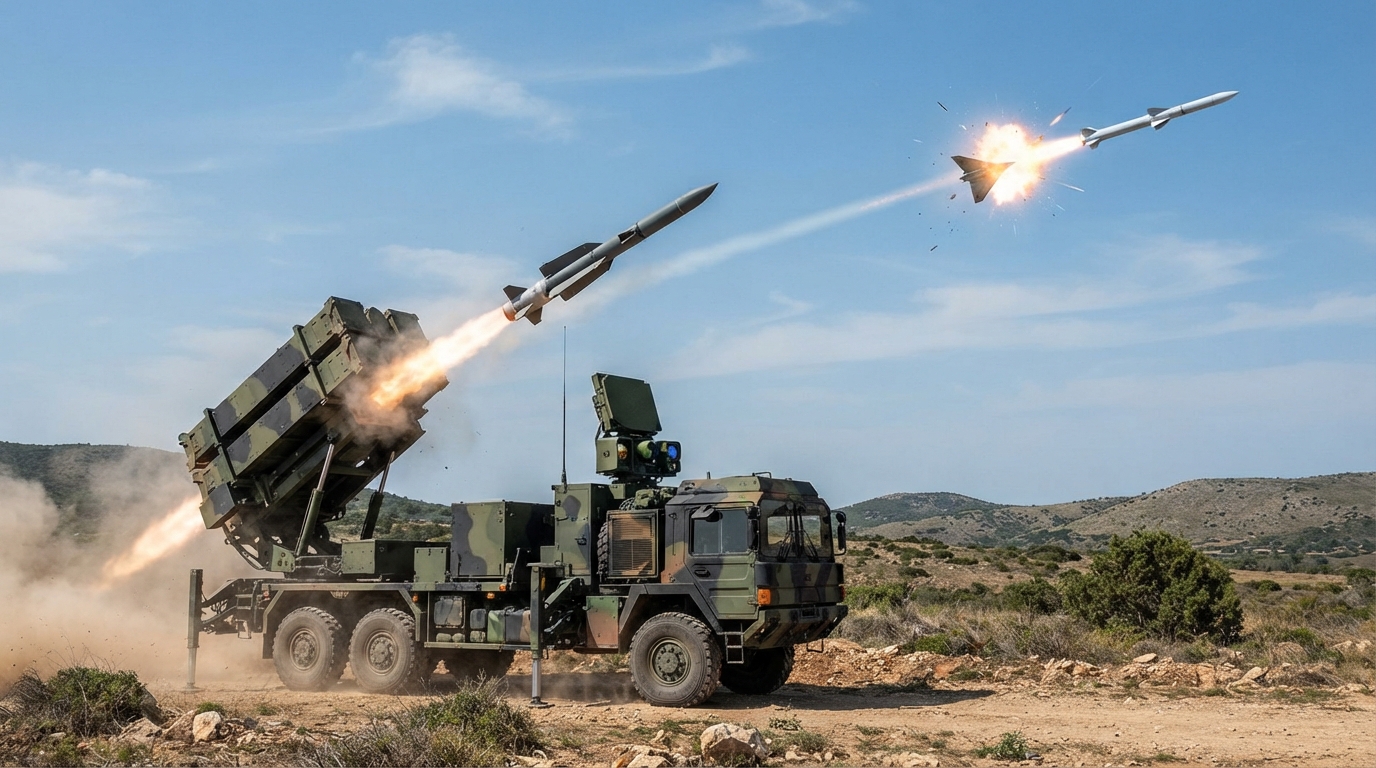
Instead of multi-million dollar anti-drone missiles, Helsing presented a new air defense system. The system is currently being tested. Helsing CEO Gundbert Scherf said at a presentation for journalists that Contra is planned to be launched on the market in the second half of 2027.
The project aims to reduce the costs of shooting down relatively cheap drones with missiles worth several million dollars. The announced price and capabilities are currently the manufacturer's estimates.
Contra includes the AD-1 Inferno and AD-2 Ambush interceptor missiles. They are intended to be used together against a new generation of high-speed attack drones.
The jet-powered Inferno is said to reach speeds of up to 700 kilometers per hour and operate at a range of 20 kilometers. The company sees it as the primary tool against most airborne threats, except for the most complex targets.
The Ambush, which has a solid-fuel rocket motor, can fly at speeds of nearly 3,000 kilometers per hour. It was developed to quickly intercept and destroy drones that have breached the main defense lines.
Artificial intelligence-based software serves to coordinate the target interception process.
The company stated that it developed the new missiles taking into account changes in the attack drones Russia is using in its war against Ukraine.
In particular, the system is designed against devices such as the "Geran-4" and "Geran-5", which are said to fly at speeds of 400–700 kilometers per hour. Such high-speed drones are increasingly approaching cruise missiles in terms of their characteristics.
According to Helsing representatives, the missiles' active radar homing heads are made from components widely available on the market. This solution is expected to make it easier to launch large-scale production.
Company leadership emphasized that this approach will reduce dependence on China-related supply chains and help bypass difficulties associated with US export restrictions.