

The US allocated funds for a new unmanned aircraft project
The US Air Force has allocated $3.5 million to the Natilus company to develop the KONA regional cargo aircraft. Designed to be operated both with and without a pilot, the aircraft is intended to carry 3.8 tons of cargo. The company states that its fuel consumption will be approximately 30 percent lower than that of similar aircraft with a conventional design.
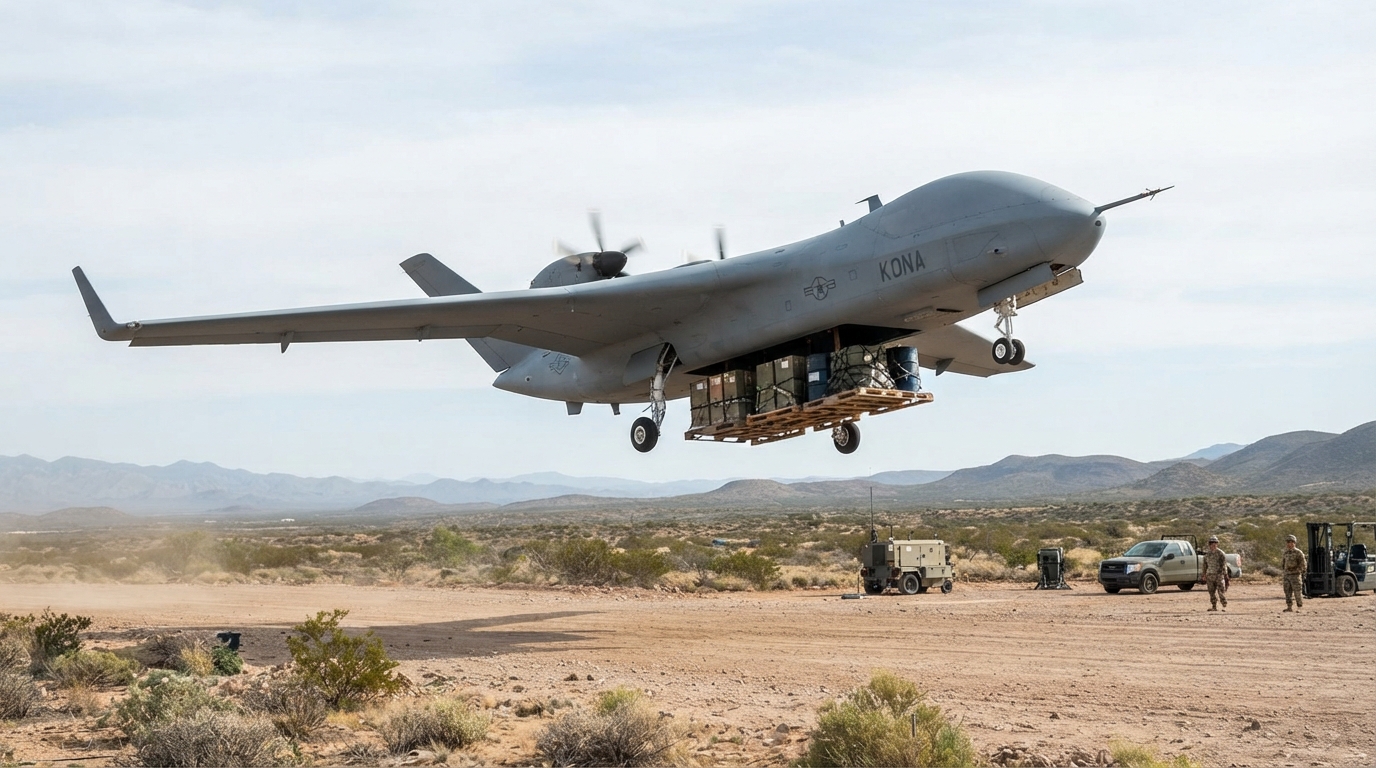
The US has allocated funding for a new unmanned aircraft project
The funding was provided under the Operational Energy – Innovation program. It will be directed toward bringing the project closer to flight tests of a full-scale aircraft and demonstrating its capabilities in military logistics.
KONA is being considered as a means to deliver supply cargo between distant military facilities. In particular, the possibility of using the aircraft in conditions of limited fuel supply will be evaluated.
The main feature of the vehicle is that the fuselage and wings are combined into a single aerodynamic structure. In traditional aircraft, however, separate wings are attached to a tubular fuselage.
According to Natilus, the integrated design helps reduce fuel consumption. However, the 30 percent savings is currently a figure stated by the company, and future tests of the full-scale vehicle will be important to evaluate its practical capabilities.
KONA's flight range is expected to be approximately 1,480 kilometers, with a payload capacity of 3.8 tons. Therefore, it is primarily intended for regional cargo transport tasks.
The aircraft is expected to occupy a category between the Cessna C-208 light multi-role aircraft and the larger C-130 tactical transport aircraft.
The project also provides for the possibility of using short takeoff and landing runways. This could create conditions for operating KONA at a greater number of airfields and sites.
Additionally, compatibility with existing cargo infrastructure should make it easier to integrate the aircraft into current logistics networks. Such capabilities could help the US military reduce reliance on large transport aircraft when supplying remote facilities.
The allocated funds are aimed not at procuring the aircraft, but at its further development and testing its capabilities.