

Under international control
IAEA verified Kazakhstan's readiness to begin construction of its first nuclear power plant
Under International Control
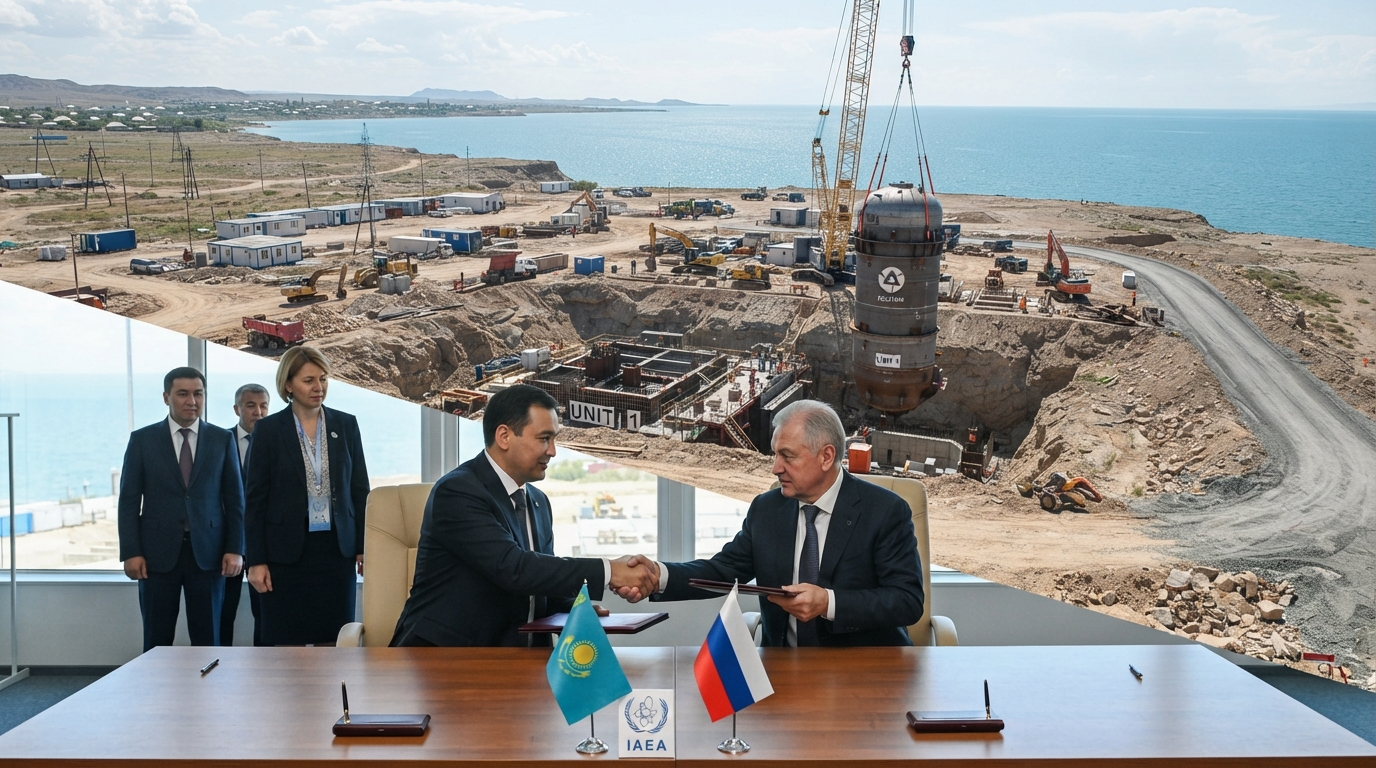
Kazakhstan has entered an active stage of preparation for the construction of its first nuclear power plant. From October 12 to 15, a special mission of the International Atomic Energy Agency (IAEA) worked in Astana. International experts conducted a comprehensive analysis of the republic's nuclear infrastructure across 19 key areas, including the legislative framework, safety issues, financing mechanisms, and grid readiness.
The Russian state corporation Rosatom became the general contractor for the construction of the first NPP in Kazakhstan, beating competitors from China, France, and South Korea in the tender. The official contract for engineering design and equipment supply was signed between the Kazakh side and Atomstroyexport on September 3, 2026. The preliminary cost of the project is estimated at 16.4 billion dollars, with a state export credit from Russia expected to serve as the main financial instrument.
Although the project is proceeding according to plan, specialists point to potential risks associated with international restrictions. The introduction of sanctions by the UK against several Rosatom entities in early 2026 could complicate financial settlements or the procurement of foreign components, although no direct evidence of sanctions impacting the Kazakh construction project has been recorded so far.
The need for the plant's construction is felt particularly acutely in the southern regions of the country. Against the backdrop of growing industrial consumption and rapid urban expansion, southern Kazakhstan regularly faces a generation deficit and depends on energy transfers from the northern regions and neighboring countries. The historical vulnerability of Central Asia's integrated power system already led to large-scale blackouts in 2022 and 2026, when power supply restrictions reached critical levels.
The NPP, planned for construction near the village of Ulken on the shores of Lake Balkhash, will have a capacity of 2,400 MW. The commissioning of two power units is expected to significantly stabilize the energy system in the south; however, the first nuclear energy will not enter the grid before 2035–2036. Thus, over the coming decade, the republic will have to address the capacity deficit using existing resources.