

There is progress
UzAuto Motors No Longer Dictates the Rules? How the Uzbek Auto Market is Changing
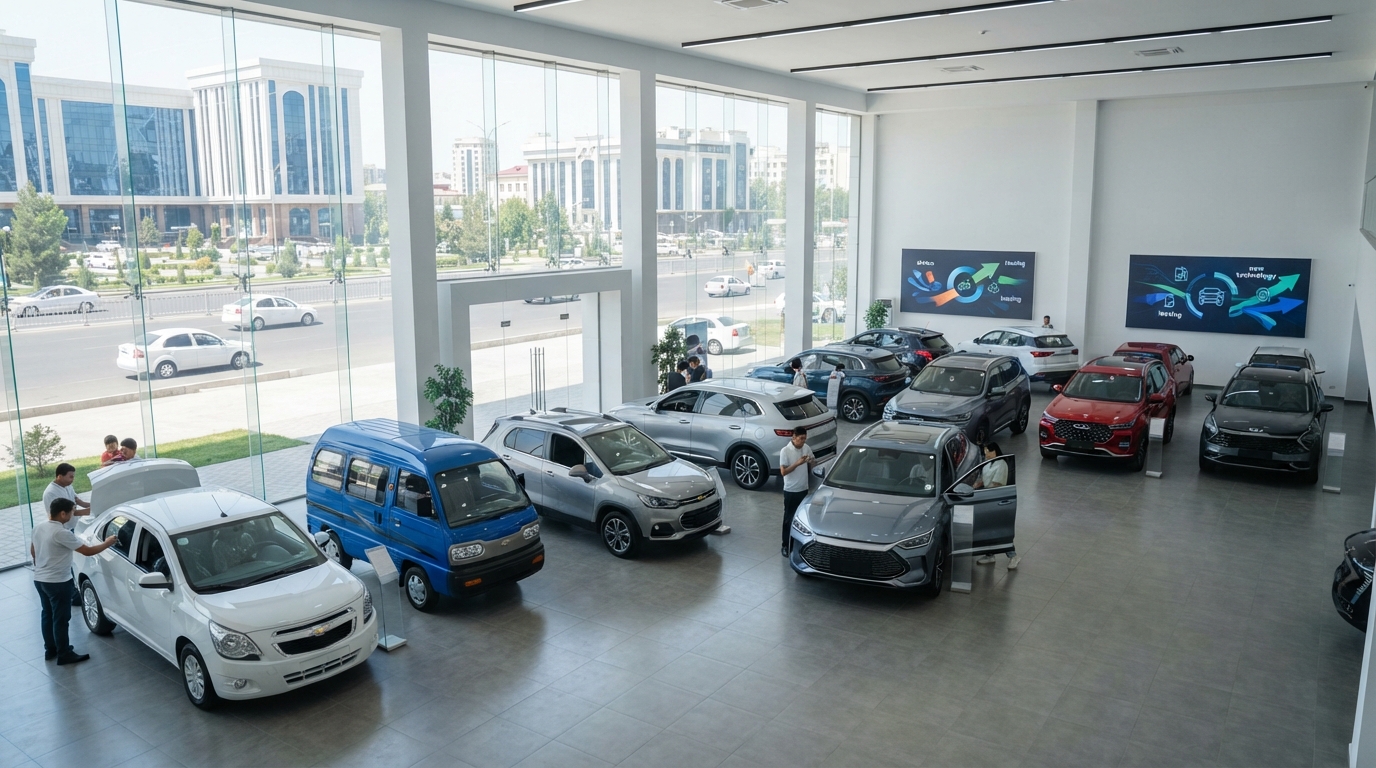
**Progress in the Uzbekistan Automotive Market: From Dictatorship to Competition**
For decades, Uzbekistan's auto market was dominated by sellers. High customs duties, complex certification procedures, and non-tariff barriers nearly doubled the cost of cars. Meanwhile, the choice of models was limited, and demand was constantly growing.
Until recently, closed showrooms, opaque contract terms, artificial hype, and long lines were commonplace. Opportunities to purchase a car only appeared twice a year and lasted only a few hours, which was perceived as normal.
However, this is changing.
**Changes in UzAuto Motors' Trade Policy**
UzAuto Motors, a key player and de facto monopoly in the domestic market, has begun implementing new sales strategies. Initially, the company offered installment plans for the Tracker and Onix models with a down payment, and later expanded this option to the Damas.
A real breakthrough was the introduction of installment plans for the country's most popular car, the Cobalt. The buyer pays 50% of the price upfront and pays the remaining balance over eleven months, with no overpayments.
Furthermore, the company has introduced direct discounts: the price of the Cobalt has been reduced by 15 million soums, and the Captiva by 45 million.
Why did an auto giant with a nearly thirty-year history suddenly make such concessions? This isn't an act of generosity, but the result of profound economic factors.
**Factor One: Growing Supply and Market Saturation**
Market supply is growing at an unprecedented rate. In 2017, 135,000 vehicles were produced, and by 2025, this figure will reach almost 458,000, an increase of almost 3.5 times in eight years. With the exception of the pandemic year of 2021, the domestic auto industry has been developing almost continuously.
This has affected the level of car ownership. In 2010, one in five families owned a car; by 2015, nearly one in two; and by 2026, statistics showed 61 cars per 100 households.
Today, the majority of families in the country own their own vehicles, indicating market saturation. The shortage is a thing of the past, and a fierce battle for every buyer is beginning in Uzbekistan.
**Factor Two: The Car as a Consumer Good**
Cars in Uzbekistan have ceased to be an investment vehicle. For a long time, the used car market was characterized by a paradox: a car fresh from the showroom would immediately appreciate in value by 10-15%. Moreover, after a year or two of use, it could often be sold for the price of a new one. This made buying a car a reliable way to hedge against inflation and grow capital.
Now the situation has changed. The car has returned to its true essence – it is a regular consumer good. Market logic has been restored: a car begins to lose value immediately after purchase. Analytical calculations confirm that over the past three years, used car prices on the secondary market have steadily decreased, by an average of 30%.
**Factor Three: Shifting Priorities Due to the Fuel Market**
The traditional fuel market is facing systemic risks and price shocks. Rising methane prices, hours-long queues at gas stations in winter, and sharp increases in propane and gasoline prices are changing buyer priorities. More and more consumers are choosing hybrids and electric vehicles, as confirmed by customs statistics.
In the first seven months of 2026 alone, nearly 47,000 electric vehicles were imported to Uzbekistan, valued at $527 million, a 61% increase compared to the same period last year (29,000 units). Meanwhile, the average price of an imported car decreased from $12,400 to $11,300.
The rapid growth and expansion of the Chinese auto industry is putting significant pressure on pricing in the domestic market of Uzbekistan.
Factor Four: Emerging Competition and Expanding Choice
Real competition is emerging and choice is expanding in the domestic market. These processes are in their early stages, but the dynamics are clear.
Comparing the first six months of last year to the current year, BYD brand sales grew by 75%, Haval by 19%, Chery by almost 4.5%, and Kia by 3.5%.
Consumers, previously limited to the Tracker model, are now actively considering alternatives from Asian manufacturers.
Key Factor Five: Growing Purchasing Power
Purchasing power has grown significantly faster than car prices.
In 2020, the Cobalt sold for approximately 115 million soums. Today, its base price without discounts is approximately 156 million. Over six years, the nominal price of a model has increased by approximately 35%, while overall cumulative inflation in the country over the same period exceeded 80%. Thus, the real increase in car prices has significantly lagged behind the rate of inflation.
At the same time, according to official statistics, the average salary in Uzbekistan has almost tripled over the same period.
Previously, purchasing a car required 45 average monthly salaries; today, it is only 22. The affordability of personal transportation has doubled.
All this is a game-changer. Expanding choice and eliminating shortages are forcing automakers to abandon their previous rigid dictatorship and adapt to the market. Today's buyers no longer simply buy the first car they see, but evaluate the balance between price, quality, fuel efficiency, safety, and maintenance costs.
**The Future of the Automotive Market**
Based on current trends, competition in the domestic auto market will continue to intensify in the coming years. A key factor is Uzbekistan's upcoming accession to the World Trade Organization (WTO). WTO membership entails a gradual reduction in customs duties.
According to calculations by the international network KPMG, the average import duty on automobiles could fall from 15% to almost 11%. This will have a direct impact on the price of new cars.
However, a sharp drop in the price of used foreign cars is not expected. The WTO primarily regulates customs tariffs, while the recycling fee, which serves to protect the domestic market, will likely remain in place. At the same time, a reduction in duties on components could stimulate the entry of new foreign brands into the country.
Therefore, integration into the global trading system will become a powerful incentive for price reductions in the near future.
The second key driver is the state Strategy "Uzbekistan 2030," which sets an ambitious goal: to increase the country's passenger car production to one million units per year. Given fierce competition in foreign markets, the auto industry will have to sell a significant portion of this volume within the country. To avoid warehouse overflows, UzAuto Motors will be forced to radically revise its sales policy and strive for sales volumes, even at the cost of reduced profits.