

The viral season has begun: 4 important recommendations to boost immunity in autumn
The viral season has begun: 4 important recommendations to boost immunity in autumn
Autumn is a period that intensifies the onslaught of viral diseases, during which the immune system needs protection. There are several ways to effectively support it when the cold weather starts. If you know how to strengthen your immunity, there is no need to worry about illnesses. To do this, it is enough to follow a few simple rules.
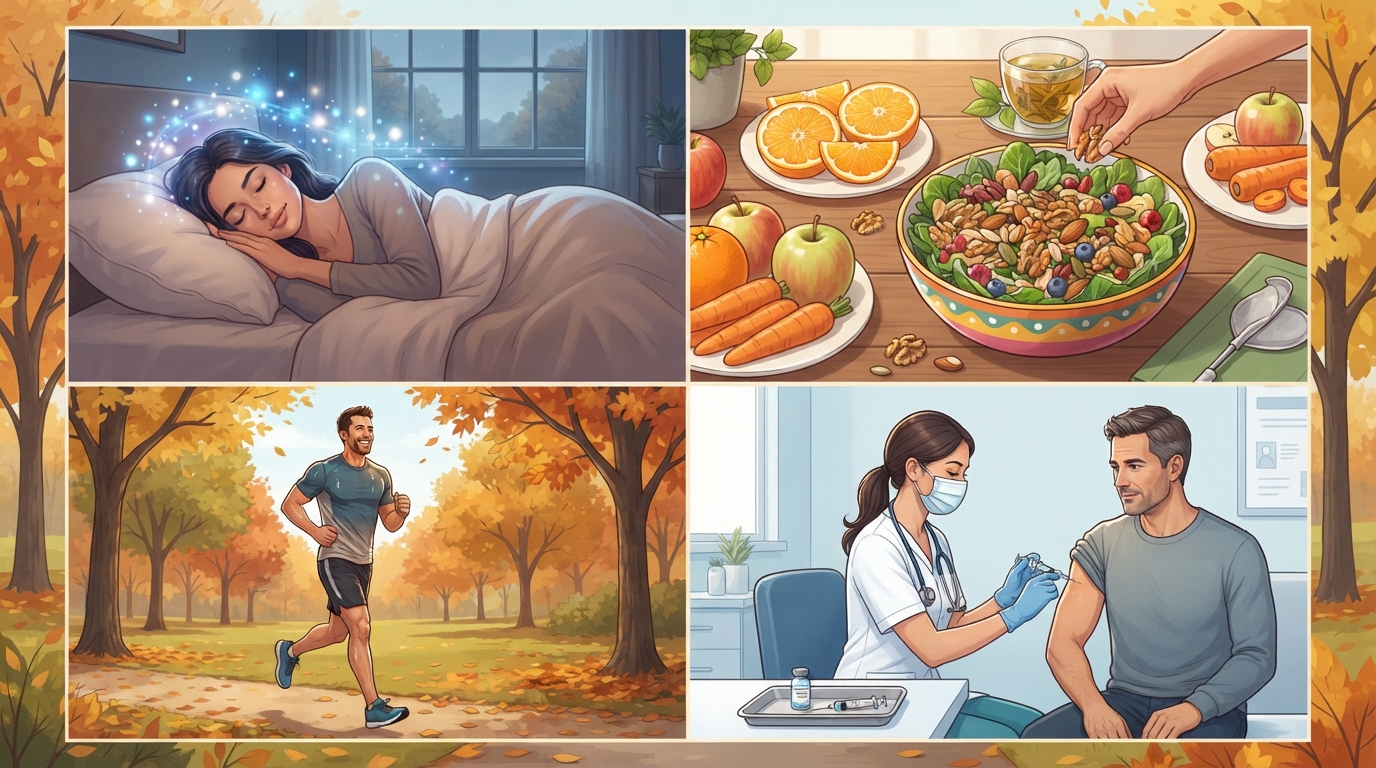
**Get good and sufficient sleep**
Every person has known since childhood that healthy sleep is the key to health. Have you ever wondered why we instinctively do not rush to leave our beds when we fall ill? The point is that during sleep, our body releases a number of hormones, particularly growth hormone and melatonin, which are involved in activating lymphocytes — one of the main protective cells of our body. Therefore, when we fall into a deep sleep, our immunity actively protects us from viruses and bacteria.
For this reason, it is necessary to buy a more comfortable pillow and provide ourselves with at least seven hours of quality night sleep. The room should be ventilated before going to bed, as high oxygen levels aid brain blood circulation.
To form circadian rhythms, it is very important to accustom yourself to sleeping at the same time every day. Then the body itself will determine the number of hours needed for sleep. For example, some people need seven hours to recover, while others need eight. By the way, this is considered a good way to prevent headaches, especially for those suffering from migraines.
**Proper nutrition**
It is very important to provide the body with all types of nutrients — proteins, fats, and carbohydrates. Autumn is not the best time for regular diets.
In addition, more vitamins should be added to the diet; for example, herbal infusions, fruits, fresh vegetables, and nuts can be used. First of all, consume fresh fruits and vegetables, especially seasonal products rich in vitamins.
Fruits and vegetables should be in the daily diet so that the body is supplied with vitamins and helps to strengthen immunity. For example, vitamin C is not stored in the body, which means it must be consumed daily with food.
**Sport — the guarantee of health and good mood**
It has been proven that engaging in sports enriches our blood with oxygen, helps develop endurance, and reduces stress levels. If you do not have time for sports, make walking a habit.
In addition, alternating between aerobic and anaerobic exercises is very beneficial. Different muscle groups experience stress when training in the gym and in the fresh air. This is related to different oxygen saturation. Such alternation not only ensures the harmonious development of muscle tissue but also contributes to the weight loss process.
**Do not miss the annual vaccination**
Everyone needs help, and our immunity is no exception. Thanks to timely vaccination, you can effectively prevent the onset of disease by "introducing" the immune system to weakened and completely safe pathogens, as well as increase its readiness to actively protect itself from real pathogens in the cold season in the future.
The most optimal time for flu vaccination is the beginning of autumn, namely September and October. It should be taken into account that it takes at least 2-4 weeks for full protection to form.
On the eve of the viral season, it is recommended to get vaccinated against the flu annually, and against pneumococcus — the main causative agent of pneumonia — once every five years. In addition, it is necessary to undergo revaccination against the new coronavirus infection.
Flu vaccination not only builds immunity against the virus but also makes a significant contribution to protecting the cardiovascular system in both healthy individuals and people with existing diseases of the cardiovascular system.
According to the American Heart Association, patients with heart disease who received the flu vaccine had an 18 percent lower risk of fatal outcomes compared to those who did not receive the flu vaccine. The risk of death from other diseases was reduced by 28 percent, and the risk of experiencing heart problems in those vaccinated against the flu was reduced by 13 percent.