

Eat right, get enough sleep: recommendations to help prevent colds and flu
Eat right, get enough sleep: recommendations to help prevent colds and flu
It is easier to prevent a seasonal cold than to treat it. To do this, you need to follow simple rules to strengthen your immune system and protect your body from viruses.
### Symptoms of colds and flu
The illness occurs as a result of viruses entering the body, usually through the respiratory system. You can get sick at any time of the year, but the risk increases slightly during the autumn-winter period.
Flu symptoms include: body temperature rising to 38 degrees; fever lasting for more than three days; dry and wet cough; runny nose and nasal congestion.
Preventive measures are equally important for both adults and children, and the recommendations are the same for everyone. It is also worth noting that children can get sick more often than adults. This is common if your child goes to kindergarten or school.
### Get vaccinated at the beginning of the cold season
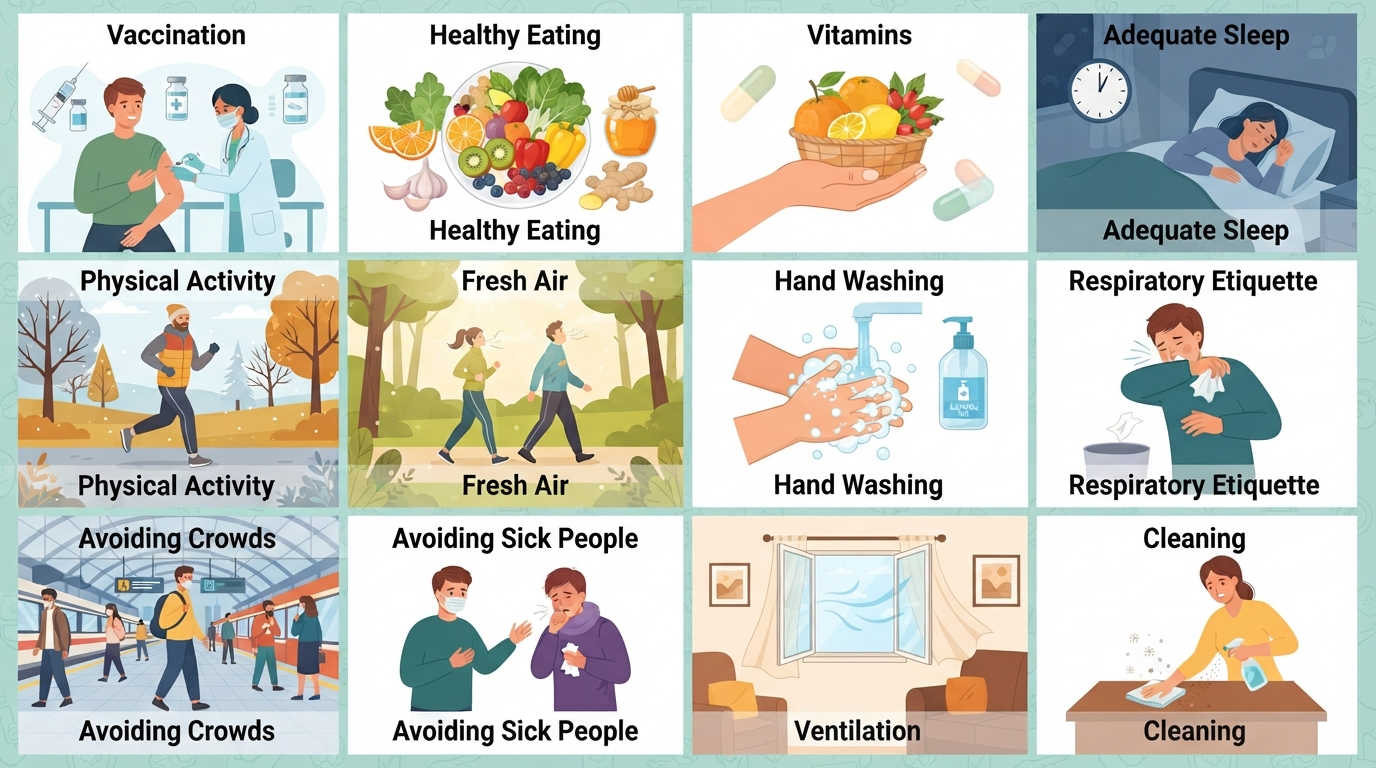
According to the World Health Organization, timely vaccination is the most effective way to protect against viruses. Even if you get sick after being vaccinated, the illness will be much milder, and the likelihood of complications is significantly reduced. To allow immunity to form, it is recommended to get vaccinated three weeks before the start of an epidemic.
Vaccination is primarily recommended for people with weakened immunity, the elderly, children, and those who come into contact with many people at their workplace.
Vaccination is not recommended if you have had an allergic reaction to a previously received vaccine or if chronic diseases have worsened.
### Get enough sleep
Sufficient sleep is important for the proper functioning of the immune system. Adults are recommended to sleep at least seven hours a day, and up to nine hours in the presence of chronic diseases or during periods of stress. Without enough rest, the immune system weakens, the risk of cardiovascular diseases increases, and the body becomes vulnerable to microbes.
### Eat right
Your diet should contain a sufficient amount of vegetables and fruits. Choose brightly colored vegetables; for example, yellow, green, and red products contain large amounts of antiviral substances. Ginger, onions, and garlic are also beneficial, as they contain phytoncides that strengthen the body's defenses.
### Take vitamins
It is best to take tablets with supplements after consulting a doctor, but you can add products containing vitamin C to your menu; for example, consume cranberries, blackcurrants, citrus fruits, kiwi, and rosehips. This substance is destroyed under the influence of high temperatures, so it is best not to put berries and fruits in boiling water. Consume them fresh.
### Try to be physically active
Sports activities that help you stay physically active are beneficial for the proper functioning of the body. After exercising, the body's protective functions decrease slightly, so do not forget to put on dry clothes and stay away from drafts.
### Walk more in the fresh air
Walking is beneficial for people who spend most of their time in stuffy and dusty rooms to saturate the body with oxygen. In addition, it is a good way to reduce stress, improve mood, and change the environment, as a stressful state makes you vulnerable to colds. Therefore, regularly take walks in the nearest park or square.
### Try to avoid crowded places
Keep a distance of at least one meter when communicating with people and wear a mask to protect yourself.
### Avoid contact with sick people
If possible, avoid close contact with anyone who has flu-like symptoms. Use personal protective equipment during communication. It is better to delay non-urgent visits to the clinic until the epidemic subsides, otherwise you may catch an infection from other patients.
### Wash your hands regularly with soap
Lather your hands thoroughly with soap and leave the foam on for twenty seconds to kill all germs. If it is not possible to wash your hands, use an antiseptic.
### Use disposable tissues
When sneezing or coughing, use paper tissues to prevent the spread of bacteria and discard them immediately. When coughing in a public place, cover your face with your elbow, not your palm, to prevent germs from spreading.
### Ventilate the room
The most comfortable indoor air temperature for a person is considered to be between 20 and 22 degrees. At higher temperatures, mucous membranes become vulnerable to viruses. During ventilation, the room air is cleared of accumulated bacteria, dust, and carbon dioxide.
### Do not forget to wet-clean the room
During an epidemic, it is important to dust and mop the floors at least twice a week. Dirt particles collect viruses and microbes, as well as dust that causes coughing. It is advisable to add a special disinfectant to the water to destroy pathogenic microorganisms.
### Take immune-boosting remedies
There are many medicines that help strengthen the body's defense against viruses. You can take medicines only after a doctor's prescription. Medicines are usually prescribed to people who get sick more than three times a year.
### Use folk medicine
These include products containing antiviral components:
Garlic — boosts immunity, has a beneficial effect on the functioning of the heart and blood vessels. It is not recommended for consumption by people with low blood pressure.
Milk with honey has a clear antibacterial effect.
Ginger — contains antioxidants that strengthen the immune system and speed up the recovery process.
Chamomile, mint, and lemon balm help in the fight against viruses. They have anti-inflammatory and soothing effects.
Essential oils — tea tree oil, mint, fir, lavender, and chamomile are beneficial for the immune system. They can be used while taking a bath.
Before using these products, check if you have allergies or individual sensitivities.