

If your child is often sick after summer vacation: secrets to boosting your child's immunity
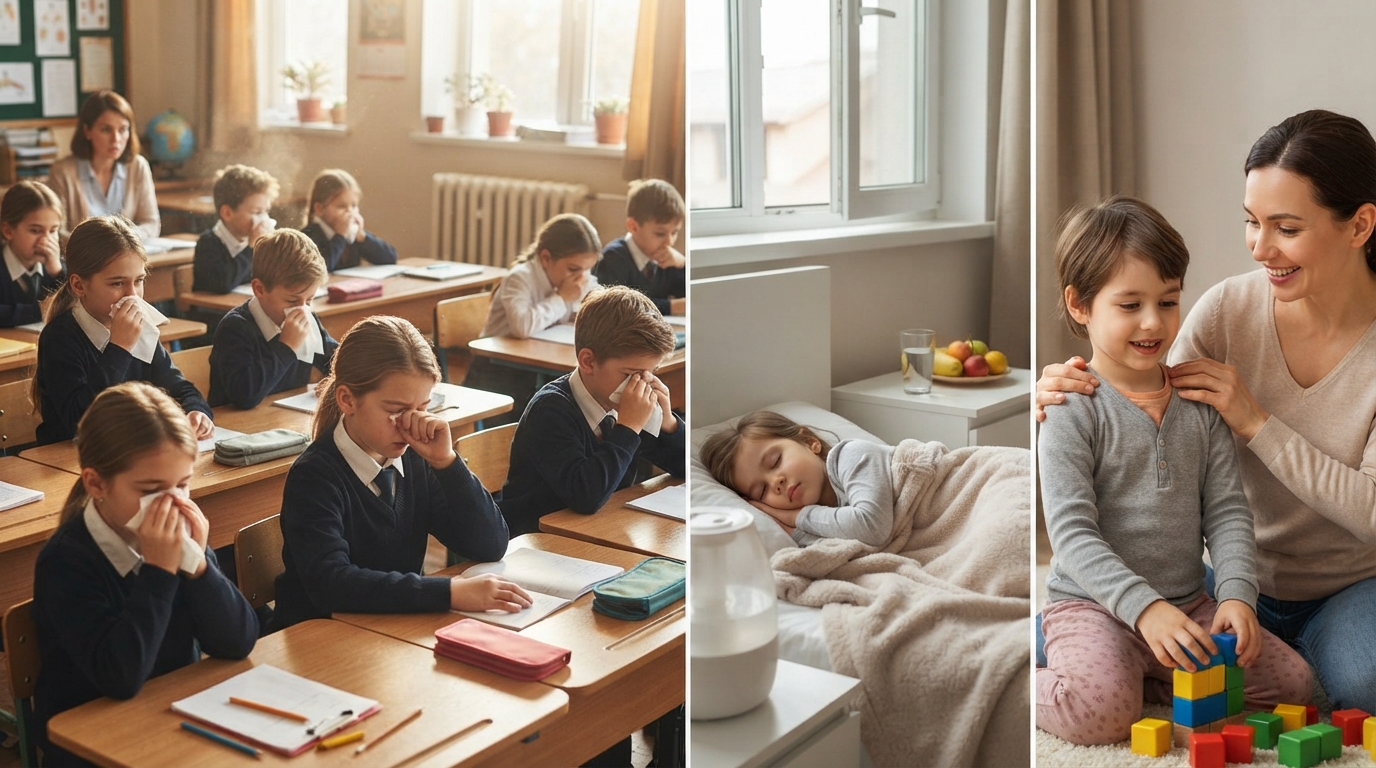
Frequent illnesses in children after summer vacation: ways to strengthen immunity
Colds in children are usually associated with acute respiratory viral infections (ARVI), most often caused by rhinoviruses (sometimes bacteria). This infection is transmitted by airborne droplets: when a sick person coughs or sneezes, virus particles are released into the air. Children can become infected by touching contaminated surfaces, shaking hands, or breathing in virus-contaminated air.
Why do ARVI cases increase at the beginning of the school year?
1. **Children return to a large community:** When school or kindergarten starts, children spend more time with their peers and have closer contact. Viruses accumulate more in closed spaces, such as a classroom or group, than in open spaces, which increases the risk of infection.
2. **Non-hygiene:** Young children have a habit of putting unwashed hands in their mouths or tasting dirty objects such as pens, pencils, and toys. This makes it easier for viruses to spread.
3. **Dry air in the room:** Heating devices (radiators, etc.) reduce the humidity level in classrooms. As a result, children's nasal mucosa dries out and the likelihood of catching viruses increases.
4. **Lack of sleep:** Many students' daily routines are disrupted during the summer holidays. The need to get up early and do more mental work when school starts leads to lack of sleep. Lack of sleep negatively affects immunity, weakening the body's ability to resist infections.
How to increase children's immunity?
* Regularly remind your child to wash hands frequently and avoid touching their nose, mouth, and eyes with dirty hands.
* Ventilate the rooms regularly.
* Vaccinate your child and yourself, because vaccination is the most effective way to prevent infectious diseases, including seasonal flu.
* Make sure your child gets enough sleep. Children aged 6 to 12 years should sleep 8-12 hours a day, and adolescents aged 13 to 18 years should sleep 8-10 hours.
* Help your child develop a habit of going to bed and waking up at the same time every day. It is important to adhere to this regimen even on weekends.
* Limit screen time an hour before bedtime: the child should not play on the phone or watch TV before going to bed.
* Help your child be physically active, because regular physical activity strengthens the immune system.
What methods of preventing colds are ineffective?
Many drugs offered in pharmacies for the prevention of flu and ARVI are ineffective.
* **Vitamin C:** Taking vitamin C does not protect against viral infections or significantly shorten the duration of the illness. The difference between those who took the vitamin and those who did not is only 8-14 percent.
* **Antivirals:** There are hundreds of types of rhinoviruses, and no drug provides equal protection against each of them. Taking antiviral drugs to prevent colds is not recommended as a preventive measure in international medical recommendations. They are often advertised by drug companies, but their effectiveness has not been proven.
* **Oxolin ointment:** This ointment is said to create a physical barrier in the nasal mucosa, preventing viral particles from entering the body. In fact, this ointment blocks the natural protective fibers in the nose, interfering with their function. In addition, despite the fact that the ointment has been used for more than 50 years, there is no single study confirming its effectiveness.
* **Dressing your child too warmly:** A person only gets sick when a viral infection enters the body, clothing has nothing to do with it. Wearing several layers of clothing at a temperature of +15 °C will not protect you and your child from infection. Dress your child according to the weather.
What to do if your child gets sick?
At the first signs of illness, it is necessary to leave the child at home to avoid infecting others. The immune system will overcome the virus on its own within a few days. At this time, the following recommendations can be followed to improve the child's condition:
* Give antipyretics when the body temperature exceeds 38.5 °C (the dose is determined by body weight).
* Rinse the nose with saline solution to moisten the mucous membrane of the nose and throat.
* Ventilate the room and use humidifiers.
* Make sure that your child gets plenty of rest and drinks enough fluids.
When should you see a doctor?
If your child has any of the following symptoms, seek medical attention immediately:
* Difficulty breathing or very rapid breathing.
* Signs of dehydration.
* Fever lasting more than four days.
* If the condition does not gradually improve and lasts more than 10 days.
* If chronic diseases worsen.
In such cases, it is necessary to call an ambulance.