

The tiger that stunned a seaside town
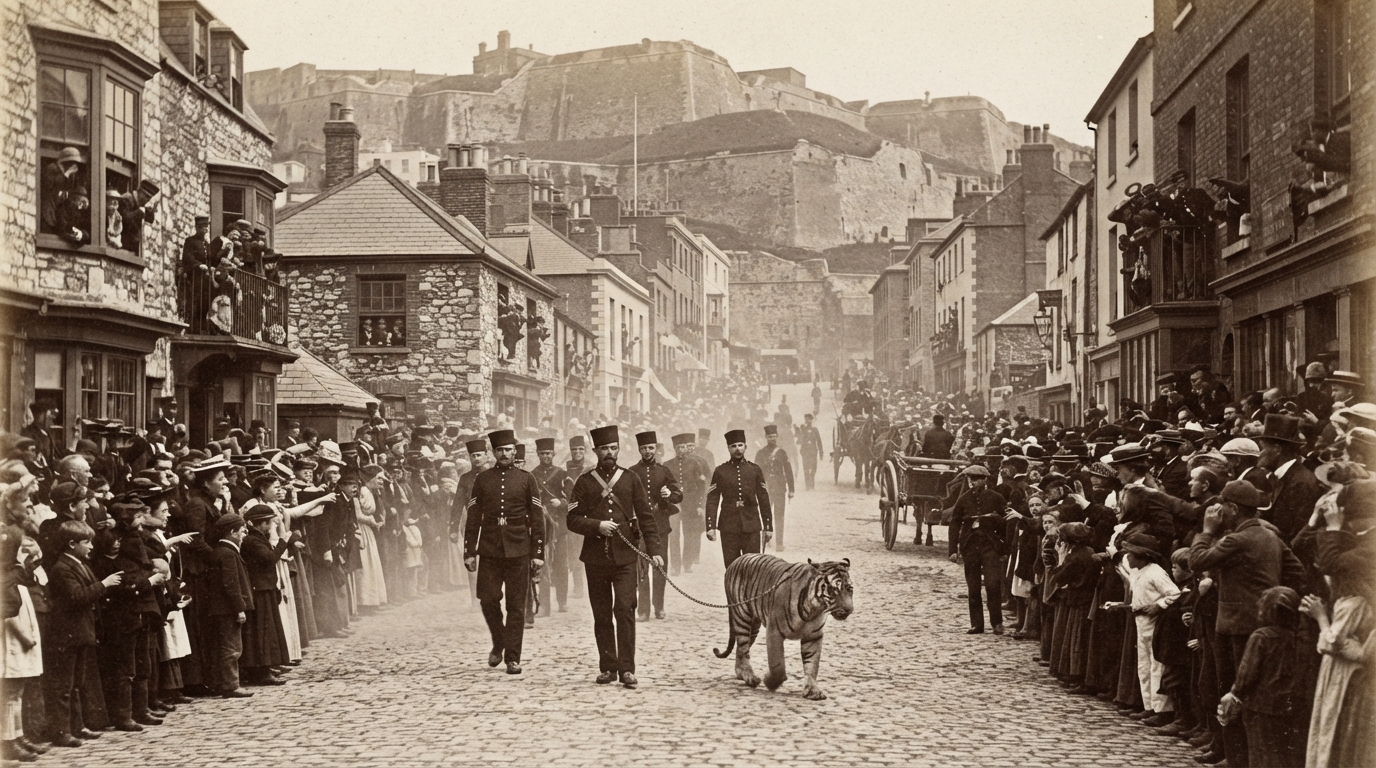
Plassey the tiger arrived in Kent with the Royal Madras Fusiliers and was kept as a regimental pet.
**The tiger that stunned a seaside town**
Bengal tiger cub Plassey was one of the town's more unusual residents
A tiger brought to the UK in the 19th Century caused a stir before later becoming a familiar resident of a military barracks, according to a local historian.
Phil Eyden has told the story of a Bengal tiger cub named Plassey, which British soldiers brought to Dover.
Eyden said the troops took in the cub after shooting its mother on a hunting expedition. The adult tiger had been guarding two six-week-old cubs in the Terai foothills of India, an area now known for its wildlife and tiger reserves.
The soldiers from the 5th Lancers gave one of the cubs to the 102nd Royal Madras Fusiliers, which took the animal to England, where it became a regimental pet at Dover's Western Heights.
In the 19th Century, seeing a tiger was like seeing a mythological beast, Eyden said.
Looking back on how Plassey's mother was killed, Eyden said: "I think guilt didn't really enter into the world of a Victorian officer."
He said soldiers at the time viewed the animal as a mark of prestige.
The soldiers named the tiger after the 1757 Battle of Plassey between troops from the British East India Company led by Robert Clive and the last ruler of Bengal.
Eyden, a volunteer with the Western Heights Preservation Society, said that when the tiger first arrived in Dover, it was marched from the docks up to the citadel and around 3,000 people came to watch.
One woman "flew into a panic", he told Secret Kent.
"She fled home and wrote to the colonel saying 'I can't leave home because of this, I'm too frightened it's going to come and attack me'."
Eyden said that at the time, seeing a tiger would have been like seeing a "mythological beast or a dinosaur, something you only read about… so to her it was like seeing a monster from the abyss".
At one point, the mayor became involved and asked for the tiger to be removed from Dover because people were shopping in Folkestone, Eyden said.
The region in India is known for its parks and tiger reserves
Plassey lived with Paymaster Sergeant George Hartopp, who exercised the animal on a chain each day and walked it around the table at regimental dinners and guest nights.
Eyden said Hartopp later died of tuberculosis.
The historian believes that after Plassey's owner died, no-one else wanted to take on a Bengal tiger that was three-quarters grown by then.
Plassey spent seven years with other tigers in a cage at London Zoo and died in 1877, Eyden said.
Plassey's skull remains on display at the National Army Museum in London.