

Why are parakeet numbers on the rise?
Parakeets are a green feathered bird native to northern India.
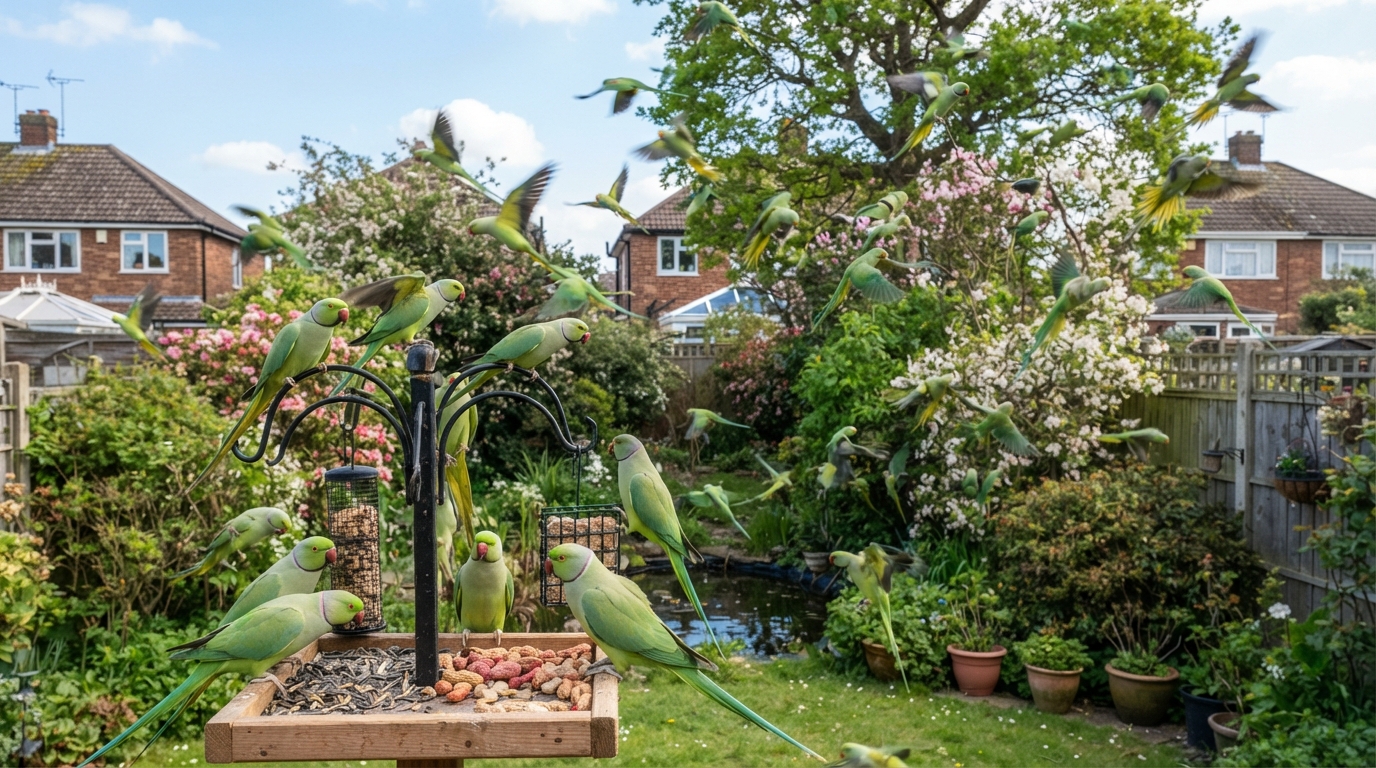
Why are parakeet numbers on the rise?
The green-feathered exotic bird could become a regular sight in the county
Parakeets are a familiar presence in gardens, where they feed on blossom or drink from ponds, and they have been established in London and across south east England since the 1990s.
But experts say the population of the non-native, exotic, green-feathered bird, known for its high-pitched call, has now grown tenfold in Essex over the past decade.
Jon Carter of the British Trust for Ornithology told the BBC: "We've noticed in Essex that the population has expanded tenfold and they are increasing quite a lot."
So why are parakeet numbers rising so sharply?
According to the Natural History Museum, external reports of them in the countryside first began to appear in the late 19th Century.
They have long been popular cage birds and are currently estimated at around 15,000 pairs, according to the British Trust for Ornithology.
Carter said the birds have begun spreading beyond London.
He said: "They are just expanding generally, they tend not to go very far from where they hatch and they are quite colonial.
"So they build and become bigger numbers where they are and then they start spreading out.
"It's part of a slow spread out into London, they are well into Kent now and they are starting to get into the East now, so we are seeing a few in the west side of Essex."
Speaking to BBC Essex breakfast radio presenter Sonia Watson, Carter said there have been several urban myths about how the birds came to inhabit parts of the UK.
One rumour claims they escaped from the set of the 1951 film The African Queen, filmed in West London, while another says musician Jimi Hendrix released a pair on Carnaby Street, in the centre of the capital.
But it is more likely that deliberate releases created the colonies seen today.
Carter added: "They have almost certainly just escaped or been deliberately released from people who have had them as pets, they have been very very popular pets and cage birds for decades now.
"They've just got out, bit by bit."
A British Trust for Ornithology spokesperson said parakeet numbers are steadily rising and spreading, with the species now firmly established in and around London/South East England.
The exotic birds made a new home for themselves in Coton Orchard in Cambridge in 2024 after they were seen there for the first time.
A flock of ring-necked parakeets was also spotted feeding on the wall of a 19th Century barn, echoing Amazonian feeding habits, on a farm near Welwyn in Hertfordshire in January.
The birds have been seen in a range of places including Peterborough, and as far north as Scotland.
There are now an estimated 15,000 pairs in the UK.
Carter said parakeets are able to survive in England because of milder winters, adding: "You are going to be seeing more of them.
Carter added: "The milder winters that we have now will certainly help them survive the winter."
Parakeets are also excellent mimics, said the Essex Wildlife Trust.
Jack Baddams, from BBC Springwatch and a bird expert, said the exotic birds adapt well to colder climates.
The birds, which are used to the heat of India, have adapted to the UK sun quite well, explained Jack Baddams, researcher for BBC Springwatch and bird expert.
But he added: "They will do better where it's warmer, and the East of England is the hottest and driest part of the UK, so from a climate perspective they will do better in those regions because of the weather.
"It's a very alien world for them and very far removed from their natural habitat."
He said they adapt best to urban areas or suburban landscapes because they rely on bird feeders for food, which has also helped bring them east.
Baddams also said they prefer artificial landscapes.
"Our natural landscape does not support them in the way they need to because they are not adapted to it - they have not evolved here.
However, Carter said: "We are yet to see what impact they will have on native birds so we'll be keeping an eye on that.
"They don't seem to be having a massive negative impact [on native birds] but as they increase, they might well do in the future."
But he said they are monitoring the effect parakeets could have.
"They could become a pest if they get into fruiting areas and commercial fruit growers.
"At the moment they do seem fairly benign."