

Head of extinct thylacine sells for £60k at auction
Originally thought to be a fox, it was later identified as a rare animal that died out in the 1930s.
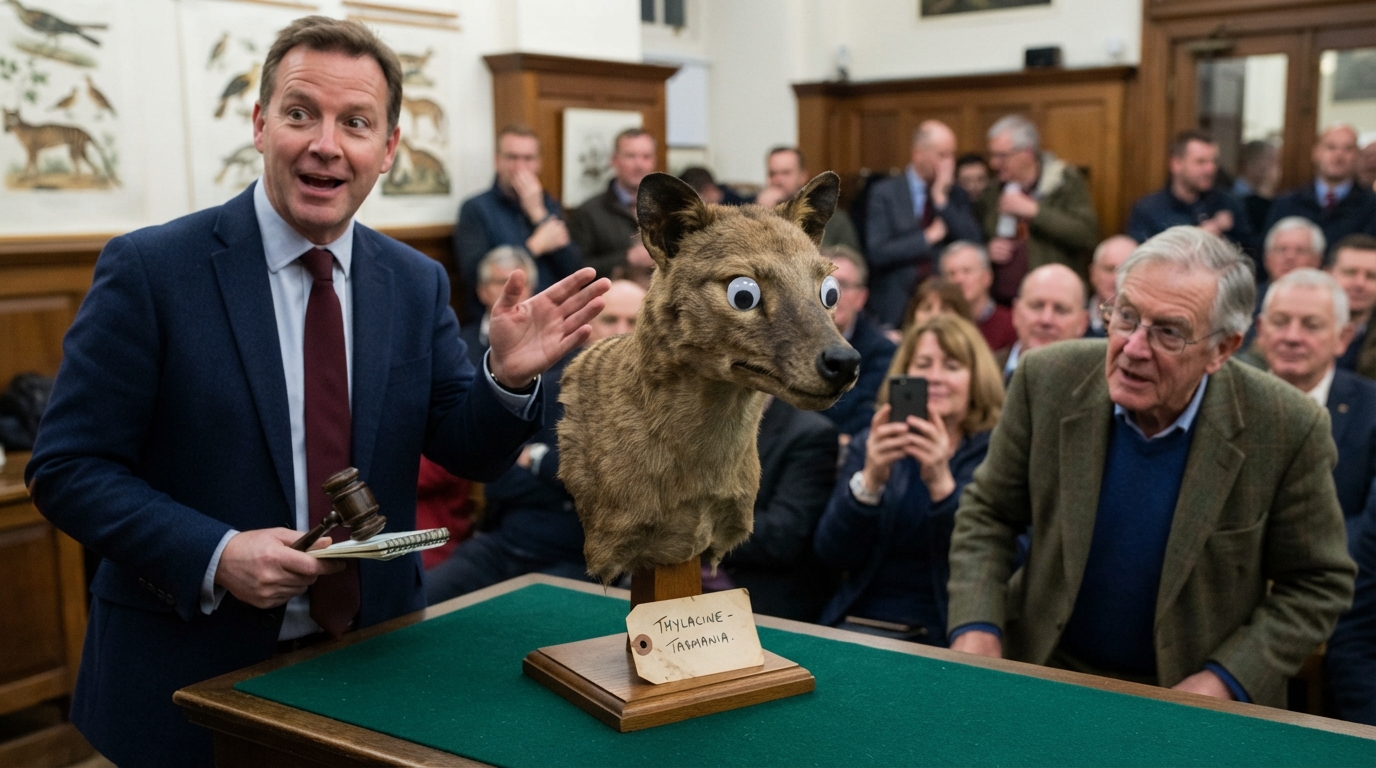
An antique taxidermy item, initially thought to be a fox and bought for a mere £50 at an antiques market, has fetched £60,000 at auction after being identified as the mounted head of an extinct thylacine.
The specimen, sometimes referred to as a Tasmanian Tiger, is one of only 101 known taxidermy examples of the creature. It garnered significant attention when it went under the hammer at Auctioneum in Bristol.
Auctioneer Andrew Stowe described the scene: "Bids quickly jumped into the tens of thousands, and simply kept on going up. The room went silent, everyone crowded in to watch. It was an amazing moment to witness."
The thylacine was a carnivorous marsupial with dog-like characteristics, native to New Guinea, Australia, and Tasmania. While most died out approximately 2,000 years ago, a population persisted in Tasmania into the 20th Century before being driven to extinction by hunting, disease, and habitat destruction. The last known individual died in Hobart Zoo in 1936.
Today, thylacine taxidermy, pelts, bones, and other artifacts are highly prized by zoologists, scientists, and collectors. Complete mounted heads are particularly rare outside of major museums and scientific institutions. The thylacine was officially declared extinct in the 1930s.
Stowe expressed his surprise at the discovery: "It was quite a shock to discover we were sitting on something so special." He added that the vendor had initially purchased the item "simply because the novelty googly eyes attached to it made them laugh."
"When we broke the news that it was actually a thylacine, they were in complete shock," Stowe continued. "Even replicas of skulls or bones sell for thousands of pounds [so] to find a complete item like this, is almost unheard of, especially here in the UK."
The specimen was acquired by James Cranfield, a taxidermy and natural history collector, who hailed the piece as "the find of a lifetime." Cranfield stated his intention to ensure the head would be accessible to the academic and scientific community.