

The Director of the National Center for Climate Change explained the reasons for the prolonged smog in the capital
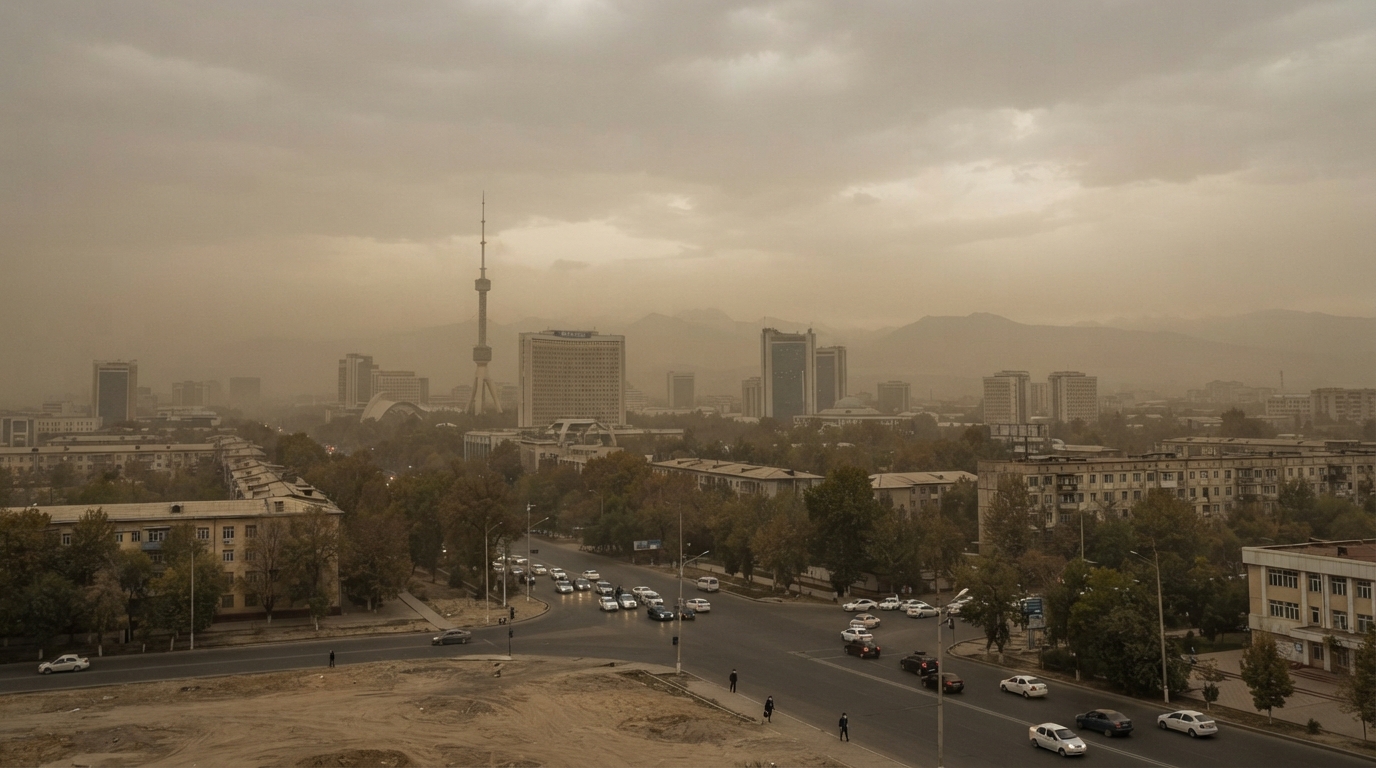
Director of the National Climate Change Center names reasons for prolonged smog in the capital
The air pollution observed in Uzbekistan and, in particular, in Tashkent, is caused, among other things, by adverse meteorological conditions and natural factors, including a deficit of precipitation, wind, and disruption of natural air exchange processes. This was reported by Doctor of Philosophy in Technical Sciences and Director of the National Climate Change Center Farrux Sattarov.
As of October 26 of this year, 3.9 millimeters of precipitation fell in the capital, compared to the monthly norm of 23.7 millimeters — meaning the figure turned out to be almost 6 times below normal. The lack of moisture slows down the natural washing away of dust particles and contributes to their accumulation in the atmosphere. In addition, according to scientific observations, over the past decade during the cold half of the year, the number of adverse weather conditions associated with strong winds and a lack of precipitation has increased by 57 percent compared to previous periods, which also hinders the self-purification of the air basin.
Specialists from the National Committee on Ecology and Climate Change compared data from ground monitoring stations with satellite imagery for the period from October 1 to 26 based on the international computer system for modeling atmospheric composition, SILAM. The analysis confirmed a direct link between the arrival of dust masses and an increase in the Air Quality Index (AQI): while during the precipitation on October 4–5 the index was 66–71, in the subsequent dry days the indicators worsened.
According to images from the European platform EUMETSAT and the meteorological satellite "Meteosat", an accumulation of large dust masses was recorded on October 25 and 26 over Tashkent and the Tashkent region, as well as partially over the Syrdarya and Jizzakh regions. According to expert forecasts, the influence of the dust front and adverse conditions associated with air pollution may persist until the beginning of next week.