

Natural dust accounted for 64% of PM2.5 pollution in Tashkent in early October
Natural dust accounted for an average of 64% of PM2.5 pollution in Tashkent in early October, the Hydrometeorological Research Institute said. Average PM2.5 concentrations in September-October fell by 28%, while PM10 concentrations decreased by 37% compared with the same period in 2025.
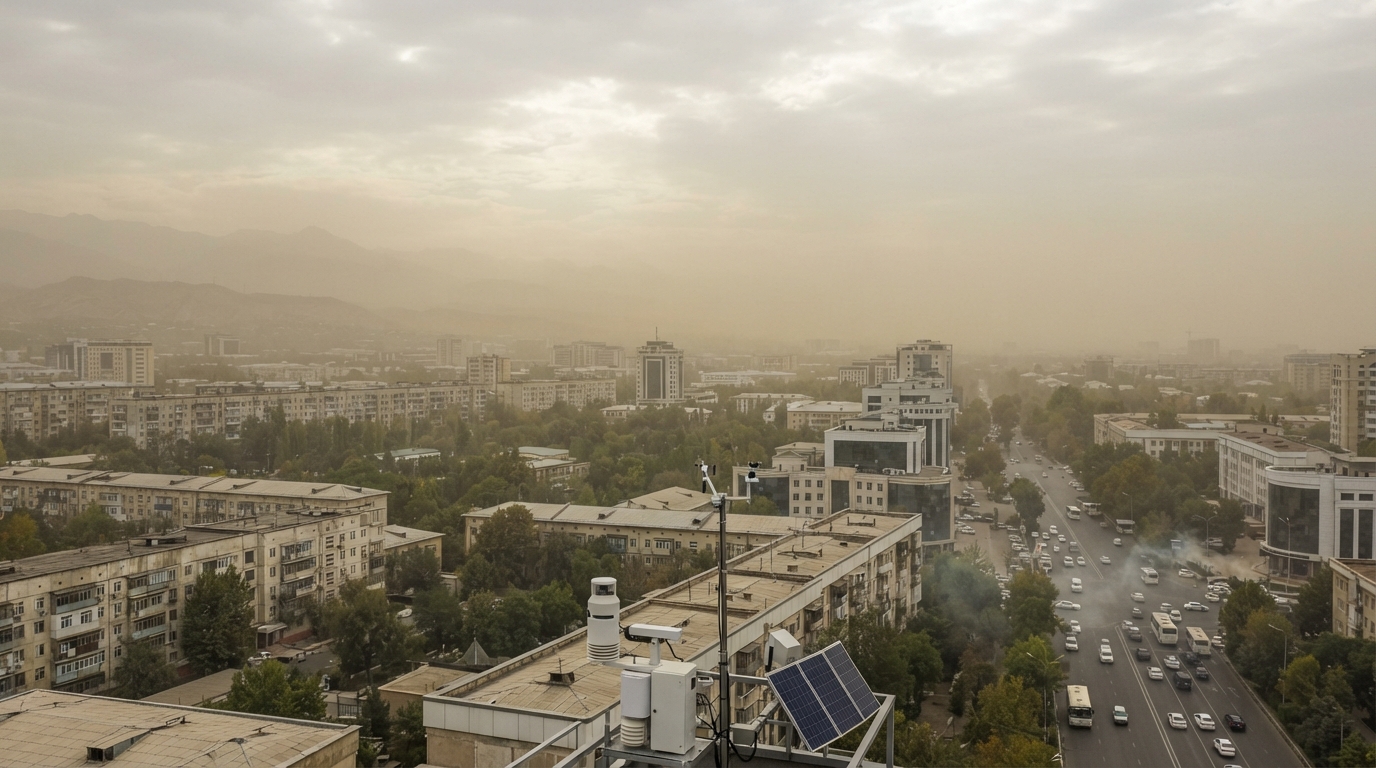
Natural dust made up 64% of PM2.5 pollution in Tashkent in early October
Natural dust was the leading source of PM2.5 pollution in Tashkent from 28 September to 6 October, Hydrometeorological Research Institute (NIGMI) under Green University director Doniyor Turgunov said at a briefing on 21 October about the causes and impacts of autumn air pollution.
An analysis of PM2.5 samples taken in the Yunusabad, Almazar and Mirzo-Ulugbek districts found that natural dust components averaged 64%, with a range of 52% to 78%. On 13−14 October, dust components accounted for 47−52%.
Data from automatic monitoring stations in Tashkent show that average PM2.5 concentrations dropped by 28% and PM10 concentrations by 32% from the start of the year to 19 October, compared with the same period in 2025.
From 1 September to 19 October, PM2.5 concentrations declined by 28%, while PM10 concentrations fell by 37%. In the first 19 days of October, the respective decreases were 40% and 56%.
Turgunov said the air quality index (AQI) reached the “unhealthy” level on 11 days during the same period in 2025, while there were no such days this year. The number of days when PM2.5 levels were classified as “moderate” or better rose from 21 to 38.
The NIGMI director said autumn air pollution is driven by several factors:
Meteorological conditions. In autumn, daylight hours shorten and the Earth’s surface cools quickly at night, causing a near-surface temperature inversion, where a layer of warm air acts as a lid over colder air near the ground. The atmospheric mixing layer drops from 2−3 km in summer to several hundred meters, while winds weaken. As a result, emissions and pollutants build up over the city. Persistent high-pressure systems on the edge of the Siberian anticyclone can keep these conditions in place for several days.
Natural dust. Central Asia is located within one of the world’s largest dust belts. Dust carried from the deserts of the Caspian region, Kyzylkum, Aralkum and southern Balkhash spreads across the region. September and October are generally relatively dry months. With little precipitation, soil dust is easily lifted into the air.
Combustion processes. According to a study by the World Bank and the Committee for Ecology, the annual contributions of different sources to PM2.5 pollution in Tashkent are as follows: windblown dust — 36%; building heating — 28%; transport — 16%; industry — 13%. The rest comes from urban dust and waste burning. These shares vary by season.
According to the World Bank’s 2025 report, Air Quality Management in Central Asia, soil and desert dust accounts for 20−50% of annual PM2.5 pollution in Central Asian cities, a much higher share than in other regions of the world.