

In Tashkent, the concentration of PM2.5 in October decreased by 40% compared to last year
The concentration of fine particulate matter PM2.5 in Tashkent during the first 19 days of October 2026 decreased by 40% compared to the same period last year. This was announced at a briefing at the Media Content Preparation Center, citing data from automatic monitoring stations. According to Doniyor Turgunov, Director of the Scientific Research Hydrometeorological Institute at Green University, during this period […]
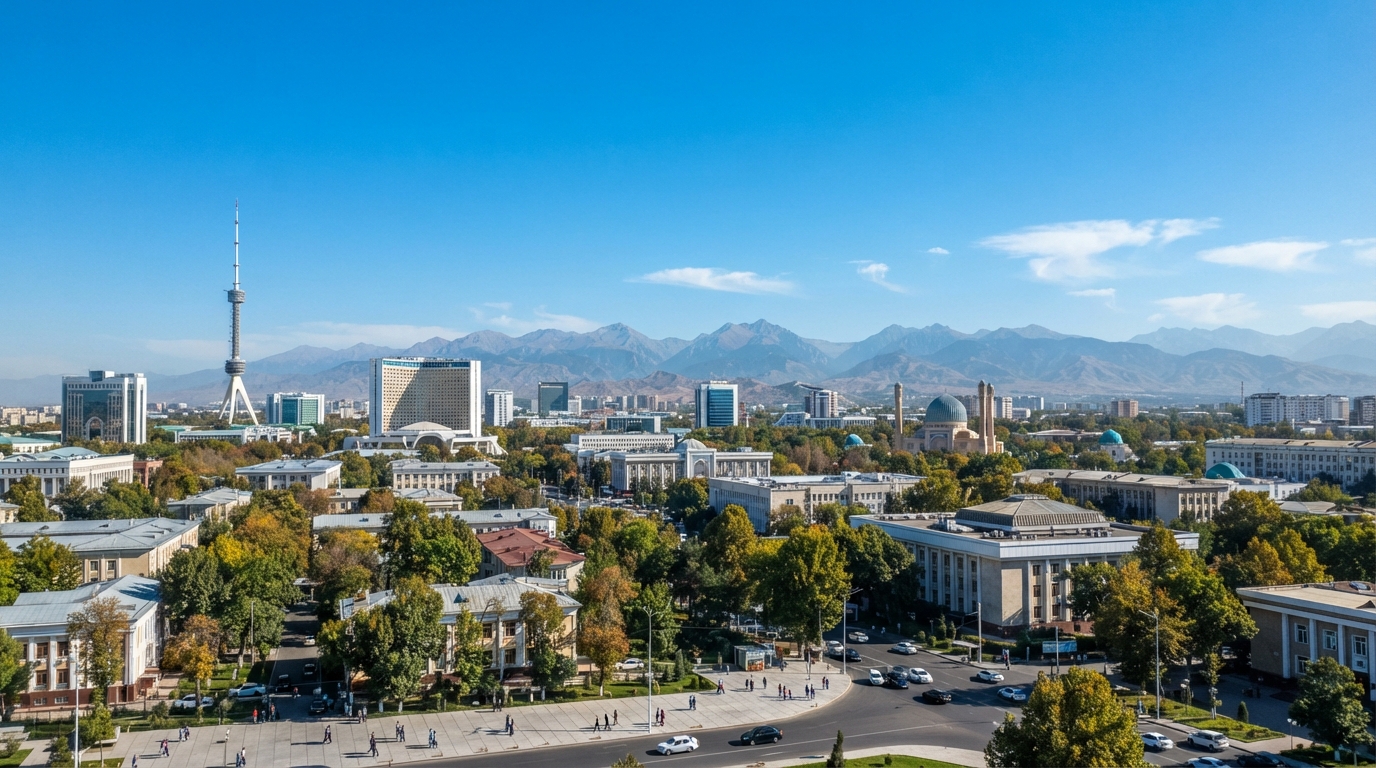
In Tashkent in October, PM2.5 concentration decreased by 40% compared to last year
During the first 19 days of October 2026, the concentration of fine particulate matter PM2.5 in Tashkent decreased by 40% compared to the same period last year.
This was reported at a briefing at the Media Content Preparation Center, citing data from automatic monitoring stations.
As noted by Doniyor Turgunov, Director of the Hydrometeorological Research Institute at Green University, during the same period, the concentration of PM10 also decreased — by 56%.
Overall, from January 1 to October 19, the average level of PM2.5 in Tashkent fell by 28%, and PM10 by 32% compared to the same period in 2025.
In autumn, air quality is affected by natural dust, building heating, transport, and industrial emissions. According to a study by the World Bank and the Ecology Committee, windblown dust accounts for 36% of the annual sources of PM2.5 in Tashkent, building heating accounts for 28%, transport for 16%, and industry for 13%.
In early October, from September 28 to October 6, the share of components associated with natural dust in PM2.5 samples ranged from 52% to 78%, averaging 64%. On October 13–14, this indicator was in the range of 47–52%.
Furthermore, in 2026 in Tashkent during the period under review, there were no days with an unhealthy air quality level according to the AQI index. The number of days when air quality was assessed as moderate or better based on the PM2.5 indicator rose from 21 to 38.