

In Tashkent, the concentration of PM2.5 particles has decreased by 25% since the beginning of the year
In Tashkent, the concentration of PM2.5 particles has decreased by 25% since the beginning of the year
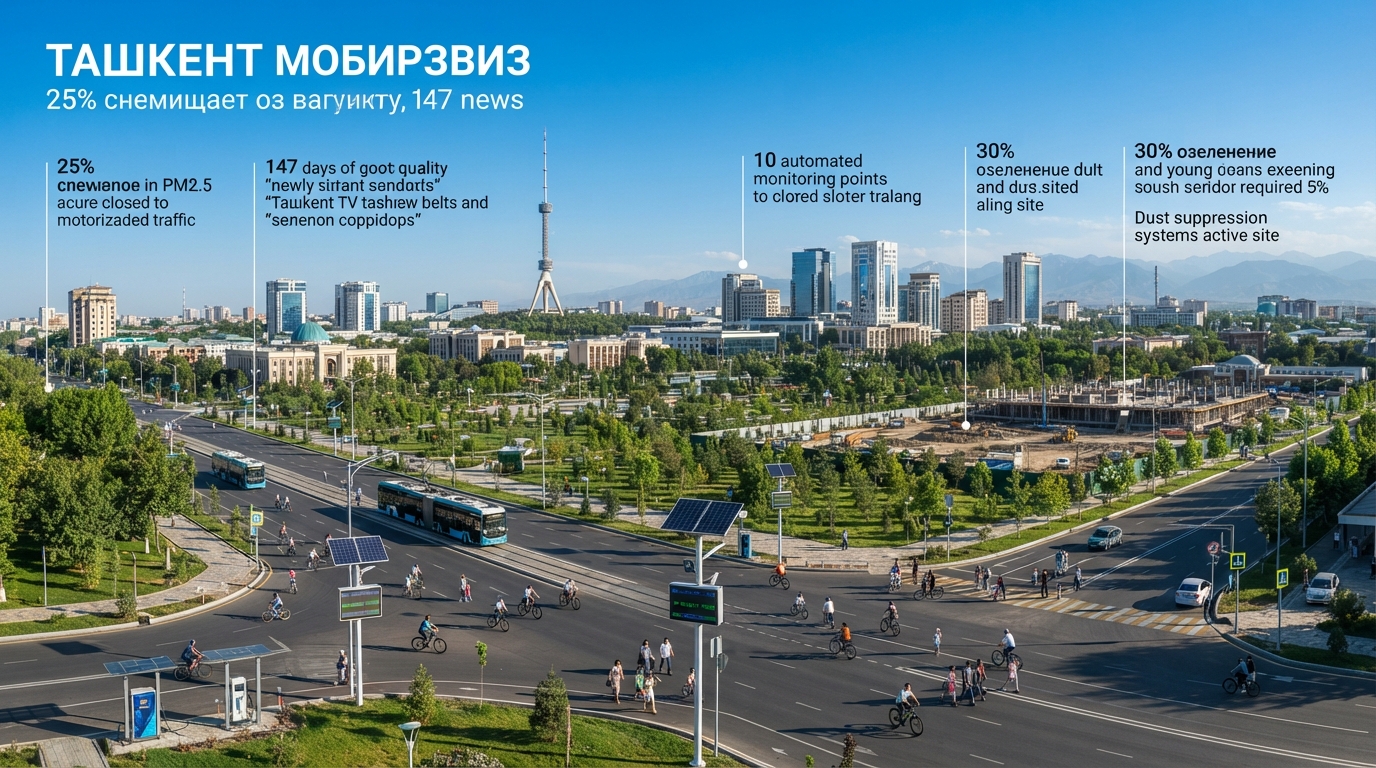
Since the beginning of 2026, the level of fine particulate matter PM2.5 in Tashkent has decreased by 25% compared to last year. This was reported by the Committee for Ecology, which linked this result to the implementation of the "Clean Air" program.
According to the agency, the number of days with good air quality increased from 81 to 147. In addition, in the spring, the capital experienced a period of about a month when the air quality was assessed as good.
To reduce emissions, 459 automatic monitoring stations were installed at enterprises, more than 550 production facilities were inspected, and 186 dust and gas cleaning units were modernized. By the end of the year, there are plans to upgrade another 30% of enterprises.
Over 280,000 vehicles underwent ecological control. Thanks to these measures, the emission of 2.5 thousand tons of harmful substances was prevented. Drivers were issued more than 2.2 million eco-stickers. In addition, the "Car-Free Day" campaign allows for a reduction in emissions of nearly 50 tons in just 24 hours.
Automatic monitoring of PM2.5 concentration is conducted at 10 points in Tashkent. The "Eco-Control" online platform is also operational. Large construction sites are required to landscape at least 30% of their territory.
A "green belt" of 330 hectares is being created in the Tashkent and Syrdarya regions, and a 33-kilometer-long "green corridor" will stretch along the Small Ring Road.
The Committee for Ecology intends to reduce emissions by another 2%, decrease the number of days exceeding the PM2.5 limit by 7%, and equip 40% of construction sites with dust suppression and monitoring systems.
As of 10 a.m. today, the air in Tashkent was assessed as "moderately polluted" — the city was in the yellow zone.