

Deterioration of air quality in Tashkent may be observed until the end of the week
The deterioration of air quality in Tashkent in recent days was influenced by meteorological conditions — low wind speed and temperature inversion. Such phenomena may be briefly observed at night and in the morning until the end of the week, the Committee for Ecology warned.
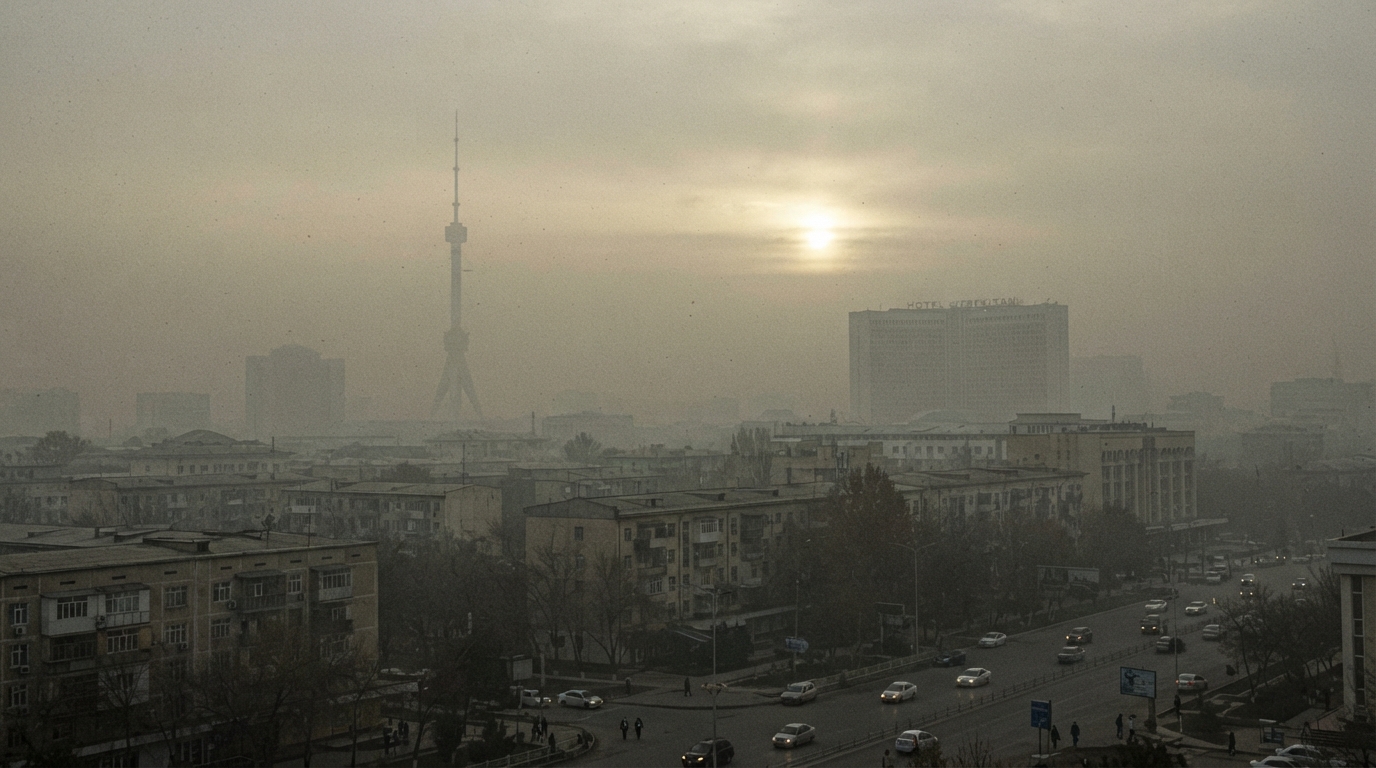
Deterioration of air quality in Tashkent may persist until the end of the week
Air quality in Tashkent may briefly deteriorate during the night and morning hours until the end of the week.
According to the agency, on the afternoon of October 6, air quality across most of Tashkent was at the "moderate" level according to the international AQI index. After 20:00, the indicators worsened, and during the night and morning hours, an "unhealthy for sensitive groups" level was recorded over a wider area. In some districts, an "unhealthy" level was briefly noted.
From 17:00 on October 6 to 10:00 on October 7, the average concentration of fine PM2.5 particles across the city was 43.5 µg/m³, and PM10 was 97.2 µg/m³. The average AQI value for this period was 117, which corresponds to the "unhealthy for sensitive groups" level. According to the national indexing, the average concentration of PM2.5 was at the "green" level, and PM10 was at the "yellow" level. At 10:00 on October 7, the average PM10 indicator across the city rose to the "orange" level.
"The deterioration in air quality was influenced by unfavorable meteorological conditions that limited the dispersion of pollutants. Wind speeds of about 1 m/s and a strong nighttime temperature inversion contributed to reduced air exchange and vertical mixing of air," the committee noted.
From 23:00 on October 6 to 08:00 on October 7, a temperature inversion was observed. The temperature difference in the inversion layer was 1.8–6.7 degrees, which corresponds to a strong inversion. Under such conditions, a layer of relatively warm air forms over the cold air near the surface, preventing the vertical dispersion of pollutants, the committee explained.
"Such phenomena may be briefly observed during the night and morning hours until the end of the week," the committee warned.