

Director of climate center explained dust problem in Uzbekistan
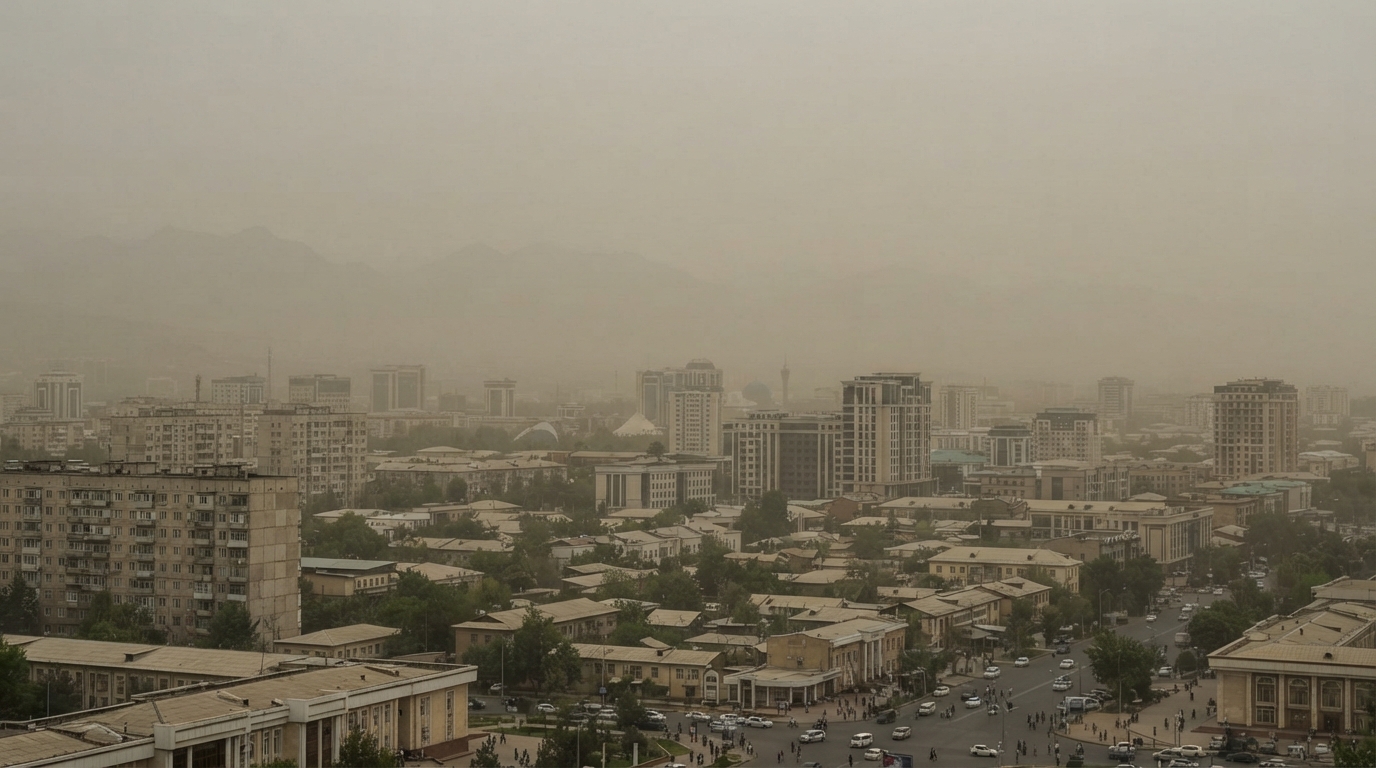
Director of Climate Center Explains Causes of Dust in Uzbekistan
Uzbekistan is located in the middle of the "great desert path" — between the Gobi Desert and the Sahara. Because of this, the dust problem naturally occurs very often here.
This was stated at a press conference by Farrukh Sattarov, Director of the National Climate Change Center. According to him, dust also comes from China, Kazakhstan, and Afghanistan. In addition, the republic is located far from the sea, which also significantly affects the level of dustiness.
"There are only two landlocked countries in the world whose neighbors are also landlocked. <...> And the water issue is on our agenda as one of the most acute problems," the expert said.
Urban planning was also discussed at the press conference. Participants asked whether the wind rose in Tashkent could have been disrupted due to ill-considered development. Sattarov noted that an environmental expertise center operates in the country. However, its requirements are not always met.
"Unfortunately, there are problems with fulfilling the requirements specified in this environmental expertise. <...> For example, they obtain a document from the construction expertise for four floors, but build higher <...>. And we have this problem. To deny it, as they say, would be wrong," Sattarov pointed out.
According to the center's director, legislation in this area is being tightened. Last year, a law on environmental expertise was adopted, to which strategic expertise was added. Starting this year, bylaws have been adopted, and the expertise of facilities during the construction of urban and industrial zones, covering large areas, is being established.
It was also noted that during a temperature inversion, about one ton of fine PM2.5 particles can be present in the air of Tashkent if the height of the inversion layer is approximately 200 meters. With weak winds, such particles disperse worse and can accumulate near the ground surface, increasing the concentration of pollutants.