

The authorities intend to involve 200 thousand residents of Kashkadarya in profitable agriculture
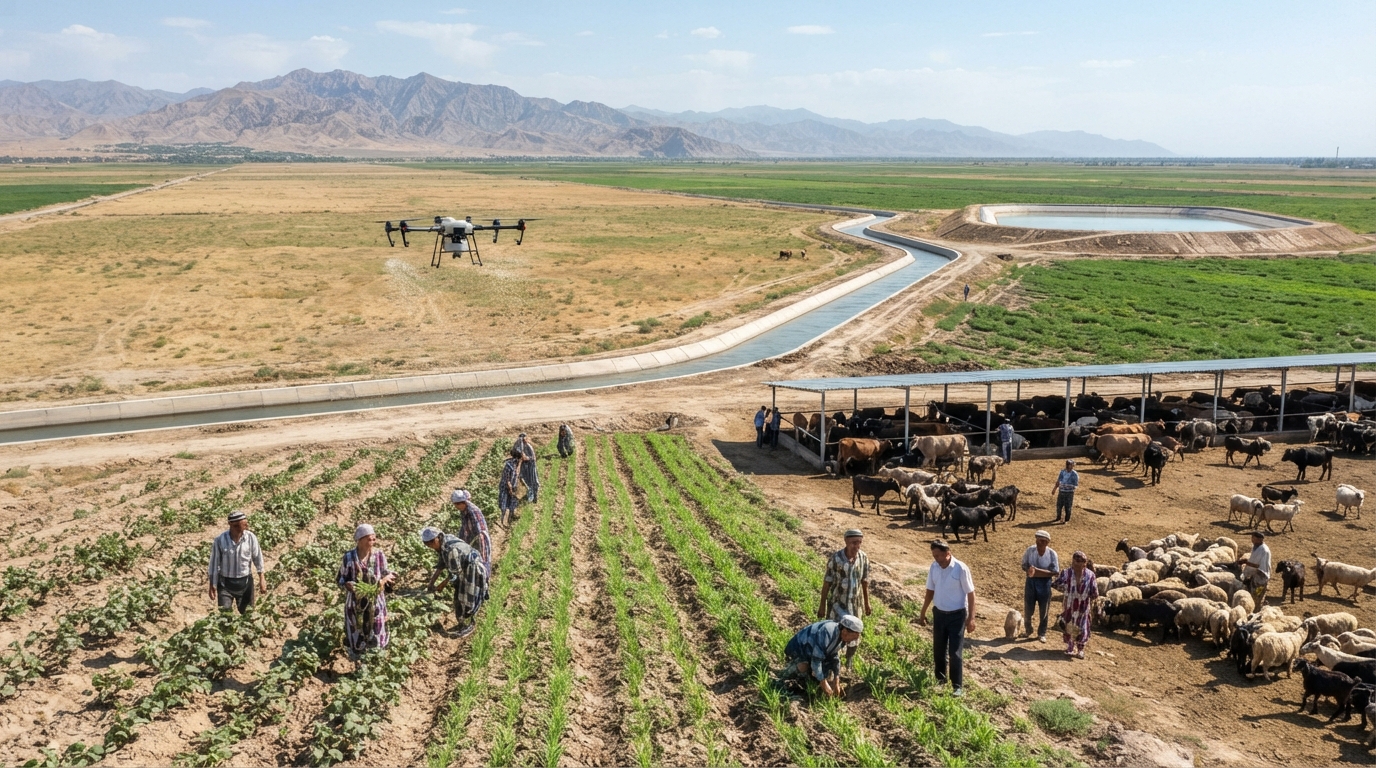
Authorities plan to involve 200 thousand Kashkadarya residents in profitable agriculture
In the Kashkadarya region, 200 thousand people will be able to earn additional income through the development of agriculture. Drones will be used to sow drought- and salt-tolerant forage crops on 100 thousand hectares of pastureland.
As announced at a presidential meeting on the region's development, the work will be carried out in eight districts following the Egyptian experience and in cooperation with the World Bank. In addition, the task has been set to create complexes for 10 thousand head of cattle and 50 thousand head of small livestock. A zero VAT rate will apply to the sale of imported livestock to the population.
In the Guzar district, 10 thousand hectares of land will be brought into cultivation. Half of the area will be occupied by cotton, and the remaining part by forage crops. The lands will be handed over to dekhkan farmers, and a cluster system will also be established. To bring the land into use, an instruction was given to prepare a package of benefits within a week. According to satellite data, another 30 thousand hectares were identified in the region that can be brought into cultivation.
The President drew attention to the fact that delivering water to the fields is complex and expensive. Therefore, next year, 265 kilometers of canals will be lined with concrete and 20 pumps will be upgraded. 550 billion sums will be allocated for these works. In 2027, water-saving technologies will be implemented on 75 thousand hectares in cooperation with farmers.
This year, four small reservoirs with a capacity of 50 thousand cubic meters each were built in Koson, Nishon, Kamashi, and Mirishkor. By June 1, two more such facilities will be built in each of five districts.
At the meeting, Shavkat Mirziyoyev stated that Kashkadarya could join the ranks of the country's leading regions in one to two years. To achieve this, according to the head of state, district khokims and banks must create an environment that encourages knowledge, provides opportunities for labor, and supports initiatives.