

Tashkent’s “Green City” corridor sees 45% rise in bus speeds
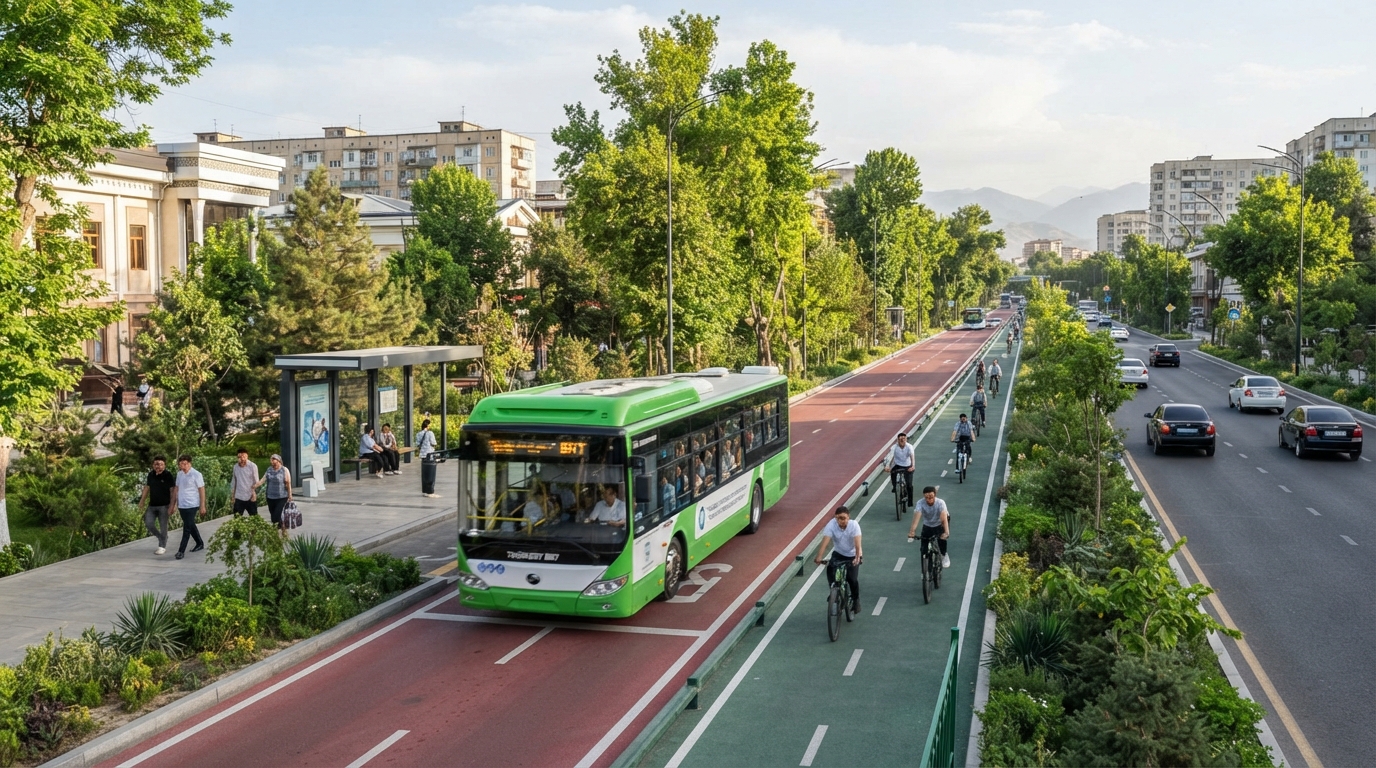
Tashkent’s “Green City” corridor sees 45% rise in bus speeds
Since its launch in 2025, the “Green City” transport corridor on Tashkent’s Shota Rustaveli Street has shown gains in transport efficiency, air quality and public satisfaction, according to monitoring results presented at seminars in Nukus and Urgench, the Transport Ministry said.
The findings were shared as part of a grant project called “Tashkent – Accelerating Investment in Low-Carbon Transport,” carried out by Uzbekistan’s Ministry of Transport together with the United Nations Development Programme (UNDP) and funded by the Global Environment Facility (GEF).
The study looked at the economic, environmental and social effects of the BRT corridor introduced on Shota Rustaveli Street in 2025. The project involved upgrades to street infrastructure, the addition of a dedicated bus lane and bicycle lanes, and the establishment of extra green landscaping areas.
Daily public transport passenger flow also rose by 8,052 people, or 9%.
Air pollution monitoring sensor data indicated better air quality along the corridor. According to the reported results, nitrogen dioxide (NO₂) concentration dropped by 102%, while carbon monoxide (CO) declined by 33%.
The project’s social impact was measured through a survey of 610 residents and passengers using the corridor.
The reported satisfaction rate with the reconstruction works and the transport corridor reached 90%. The results are being presented as part of the project’s wider monitoring of environmental, economic and social indicators linked to low-carbon transport development in Tashkent.