

Scientists have identified the ecological risk behind global greening
Satellite observations have shown that along with an increase in vegetation cover in arid regions, its year-to-year variability has also intensified. According to a new study, vegetation grows rapidly during wet years, while suffering more severely from water scarcity during dry years.
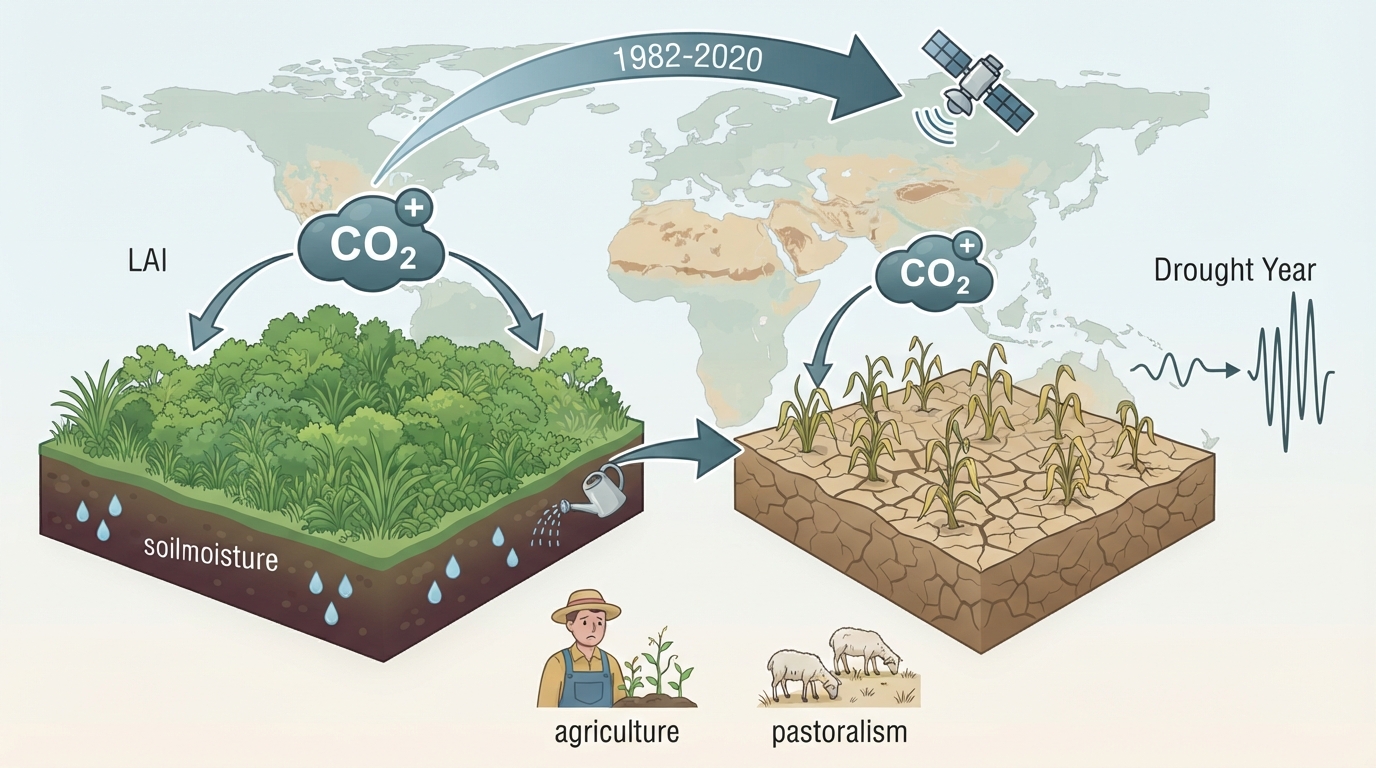
Scientists have identified the ecological risk behind global greening
In a study published in the journal Nature Climate Change, scientists analyzed satellite data from 1982–2020. To assess the state of vegetation, they used the leaf area index. This indicator represents the total area of leaves relative to the land area on which they grow.
According to Naked Science's review of the study, the interannual fluctuations of this index increased in 82 percent of arid regions. That is, the gap between vegetation cover in wet and dry years has widened.
When vegetation increases, the demand for water also rises
According to the researchers' likely explanation, the increase in atmospheric carbon dioxide may allow plants to use water more efficiently and produce more leaves. However, more resources are also needed to sustain the enlarged plant.
Therefore, if a drought occurs after a wet year, plants may struggle to maintain their biomass with the available water. Scientists emphasize that additional data is needed to determine these mechanisms.
Models failed to reflect the observed change
The 13 leading global vegetation models reviewed by the authors failed to reflect the increase in interannual variability identified in the observations.
Such instability could pose challenges for rain-fed agriculture and pastoral farming. Estimating crop yields and the amount of pasture forage beforehand will become more complicated.
Scientists say that sharp fluctuations in plant productivity could be an early sign of larger ecological changes. However, the study does not definitively determine whether arid regions will necessarily turn into wet ecosystems or in which direction the changes will proceed.