

El Nino has been found to have intensified dramatically over the past 40 years
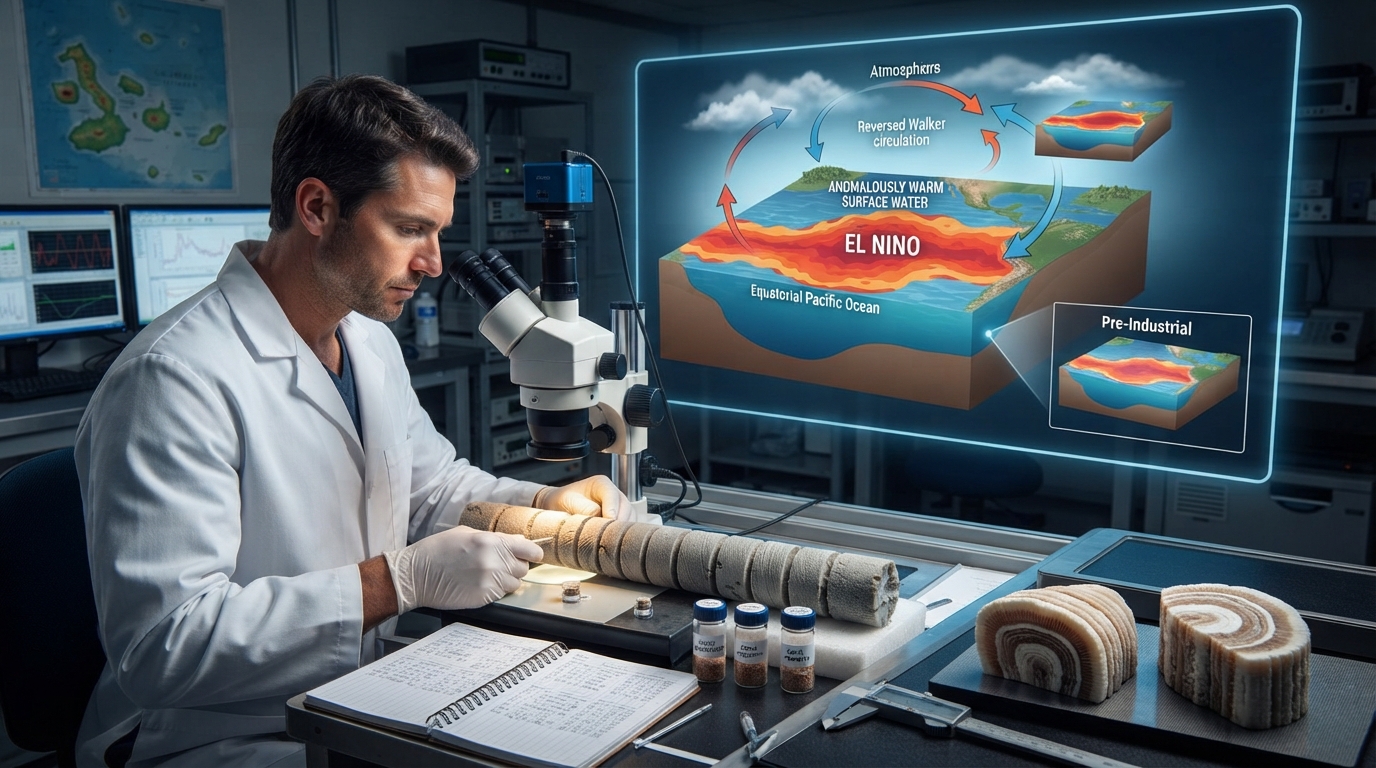
El Niño has become more intense in the past 40 years. According to a new study published in the journal Science, TechInsider reports that El Niño has intensified since the Industrial Revolution, and has become more intense in recent decades than in the previous millennium.
Researchers have reconstructed a nearly thousand-year history of water temperatures in the eastern Pacific Ocean by studying modern and ancient coral remains from the Galapagos Islands. The chemical composition of coral skeletons changes depending on the water temperature at the time of their growth, making them a kind of "climate archive" that allows us to determine month-by-month changes in ocean temperatures.
According to the study, temperature variability associated with the El Niño-Southern Oscillation (ENSO) over the past 40 years has been 36.5 percent higher than in the pre-industrial era. This increase was 16.2 percent compared to the period 1851-1982. It is important to note that the 36.5 percent increase does not mean that each El Niño event has increased by that much, but rather that it is an overall increase in ocean temperature fluctuations associated with the ENSO cycle. According to the scientists, "most of the increase was due to the frequency and intensity of strong El Niño events."
The researchers compared the data with natural variability from pre-industrial times in 12 climate models. The changes in modern times were higher than those that could be explained by natural factors. Scientists say this strengthens the evidence that human-induced global warming is strengthening El Niño.
El Niño is a natural climate phenomenon associated with higher-than-normal sea surface temperatures in the equatorial Pacific Ocean, which can increase droughts, heavy rainfall, floods and wildfires in different regions of the world.
A strong El Niño is expected to form again in the Pacific Ocean in 2026. In July, it was reported that the water temperature in the world's oceans reached a record high, and El Niño is considered one of the factors influencing the anomalous warming in the ocean. The UN has warned that 49 million people could face the risk of severe famine as a result of a strong El Niño. The event is expected to have a serious impact on agricultural productivity and food security. It was previously reported that the effects of El Niño could also be felt in Central Asia, increasing the risk of heavy rainfall and flooding in the region.