

Scientists have found a possible way to detect Alzheimer's disease through a blood test
Scientists have discovered a potential way to detect Alzheimer's disease using a blood test
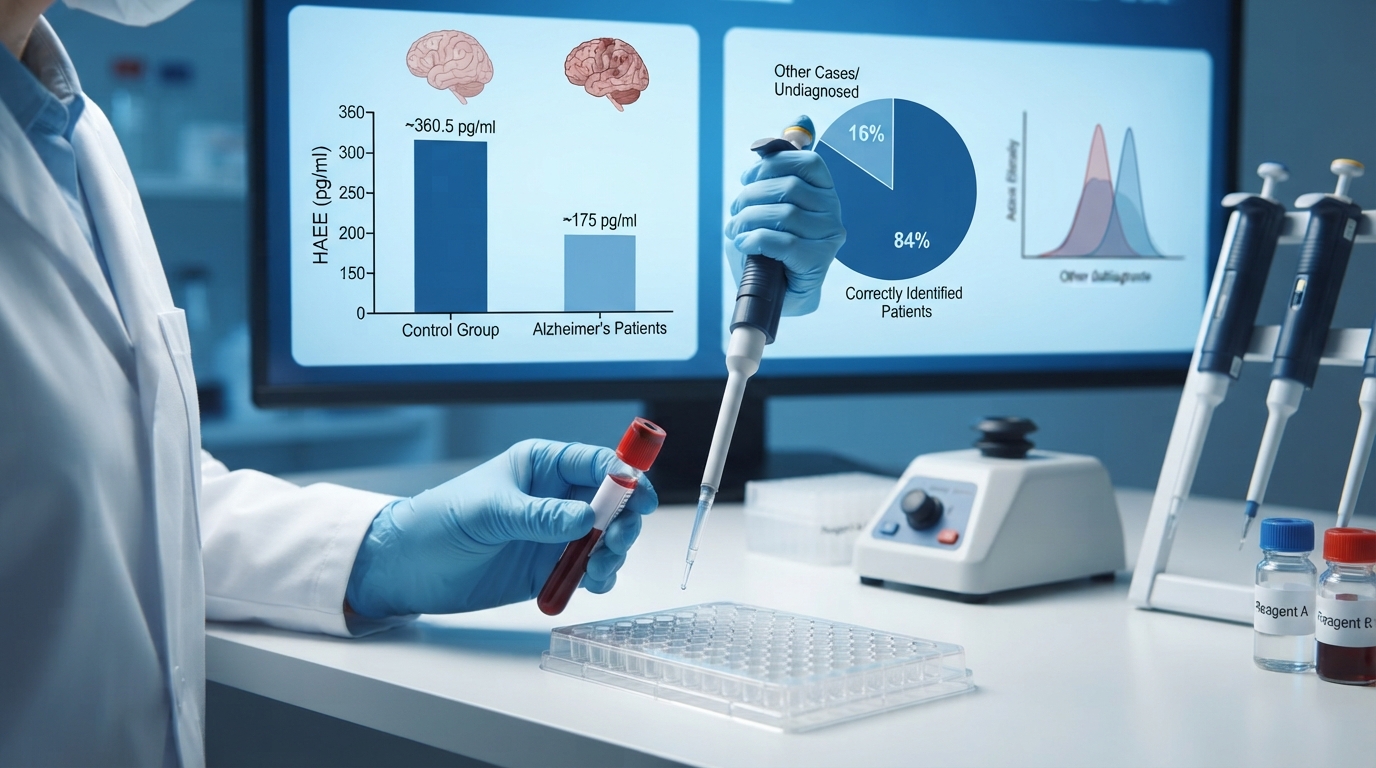
In people with Alzheimer's disease, blood levels of the substance HAEE were nearly half of those found in individuals without identified memory and thinking impairments. Researchers reached this conclusion after studying blood samples from 350 people. In their view, this substance could help create a new test for detecting the disease in the future.
The study was conducted in four Russian cities — Moscow, Saint Petersburg, Tomsk, and Nizhny Novgorod. It involved 200 patients with Alzheimer's disease and 150 people in a control group.
Scientists measured the content of the HAEE peptide — a small compound consisting of four amino acids. In the control group, its average concentration was 360.5 picograms per milliliter of blood, compared to 175 picograms in the patients. At the same time, the level of the substance was not directly linked to the severity of the disease: researchers did not identify noticeable differences between patients at different stages of the illness.
Initially, the peptide was studied as a potential agent against beta-amyloid — a protein that can accumulate in the brain in Alzheimer's disease. In laboratory experiments, the peptide prevented the formation of aggregates of this protein. In earlier animal studies, scientists also tested its possible effect on such deposits.
However, the detection of HAEE in human blood was an unexpected result. Now, researchers believe that its concentration could be used to look for signs of Alzheimer's disease via a blood test.
How reliable the new method is
To evaluate the potential of such a test, scientists calculated how well it distinguishes patients with Alzheimer's disease from people without an established diagnosis. At the chosen threshold value, the test correctly identified about 84% of patients, but its ability to rule out the disease in people without a diagnosis was noticeably lower.
This means that the test could prove useful in the future, but currently it cannot independently confirm or rule out Alzheimer's disease.
The study also has limitations. Patients were diagnosed based on clinical signs, without mandatory confirmation through special brain scans or biological markers. Therefore, the participants may have included individuals with other forms of dementia. In addition, the age of participants in the two groups differed somewhat.
Scientists also suggest that the decrease in HAEE levels may be associated with changes in the body as the disease develops. However, it is not yet known whether a lack of this substance contributes to the disease or is itself a consequence of the ongoing processes.
The authors suggest that in the future, synthetic HAEE could be used to develop a treatment that compensates for its deficiency.