

Scientists have created a substance that is 3,500 times sweeter than sugar but does not raise blood glucose levels
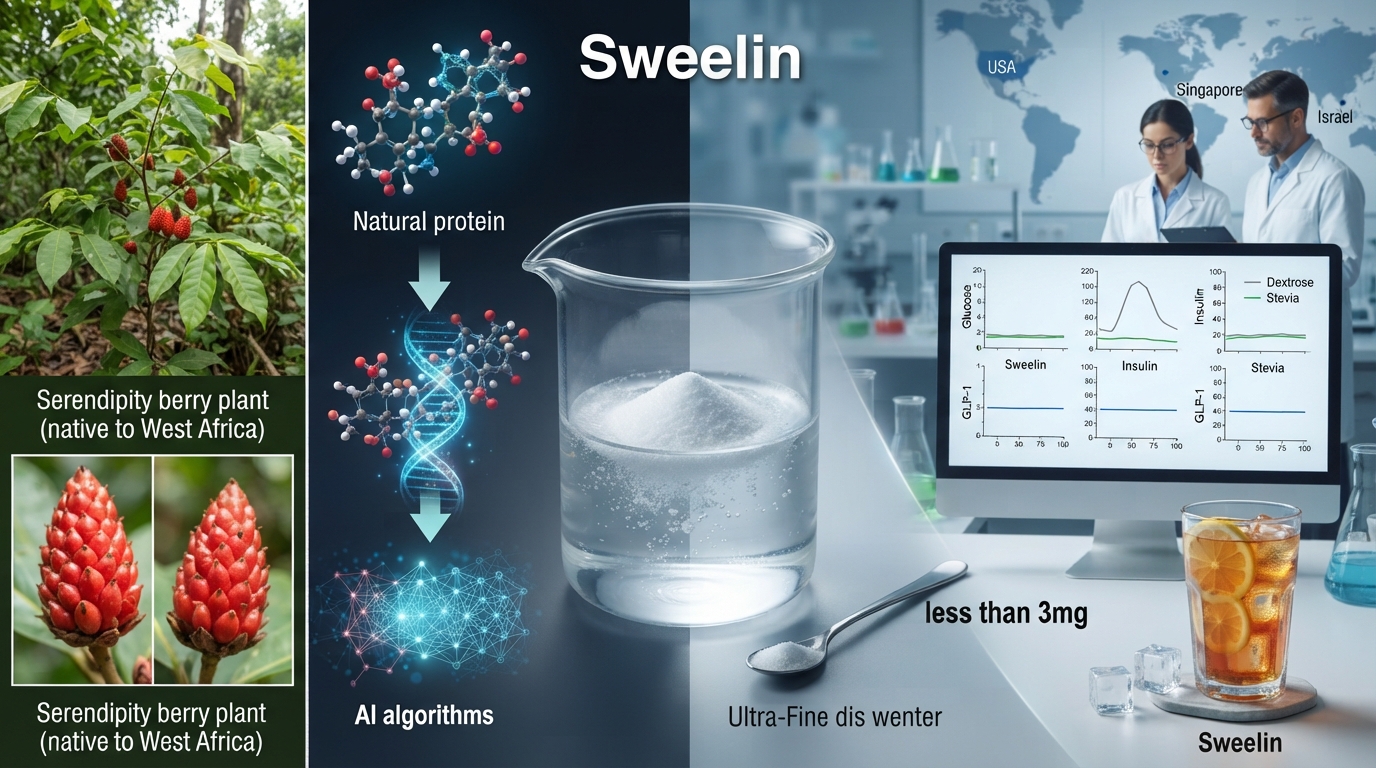
Scientists have created a substance that does not raise blood glucose levels, but is 3,500 times sweeter than sugar.
Specialists from the biotechnology company "Amai Proteins Ltd." have developed a new sweetener called "sweet protein". Despite the fact that this substance, called Sweelin, is 3,500 times sweeter than regular sugar, it was found in clinical trials that it does not raise blood glucose and insulin levels.
The basis of the new sweetener is a natural protein found in the serendipity fruit, which grows in the tropical forests of West and Central Africa. Using artificial intelligence algorithms, scientists were able to change the structure of this protein.
Sweet proteins are found in some rare tropical fruits and are at least 1,000 times sweeter than sugar. According to initial assumptions, such a high sweetness was formed by nature in order to attract primates.
**Even a small amount is effective**
Sweelin is produced in the form of a white powder that is easily soluble in water. Due to its extremely high sweetness, less than 3 milligrams of the substance is enough for one serving of iced tea. According to the developers, this heat-resistant product allows you to reduce the sugar content in some recipes by up to 70 percent.
**Clinical trials and results**
The effect of the new substance on the body was tested in a double-blind randomized clinical trial involving 19 volunteers. Participants consumed drinks with Sweelin, stevia and dextrose on different days with a one-week break. To ensure impartiality, neither the volunteers nor the study authors were told which drink contained which substance.
Glucose, insulin and GLP-1 hormone levels were monitored for 120 minutes after drinking the drink. Sweelin showed similar results to stevia: the overall glucose response was 31 times lower than dextrose, and the insulin response was 81 times lower.
There was also no increase in the level of the hormone GLP-1, which is normally activated after a meal. Experts note that this factor is important for patients suffering from type 2 diabetes, prediabetes and obesity.
**Large-scale research on this substance may continue**
It is too early to draw any final conclusions about the long-term health effects of Sweelin, since the study was short-term and was directly funded by Amai Proteins.
Nevertheless, the US Food and Drug Administration did not object to the statement about the safety of Sweelin. Currently, this sweetener is available in the US, Singapore and Israel. Scientists say that large-scale research needs to continue to fully assess the long-term effects of the substance on the human body.