

Air purification can also affect brain function - study
The results of the study were published in the scientific journal Scientific Reports. The scientists conducted the experiment not in laboratory conditions, but in the daily living environment of the people.
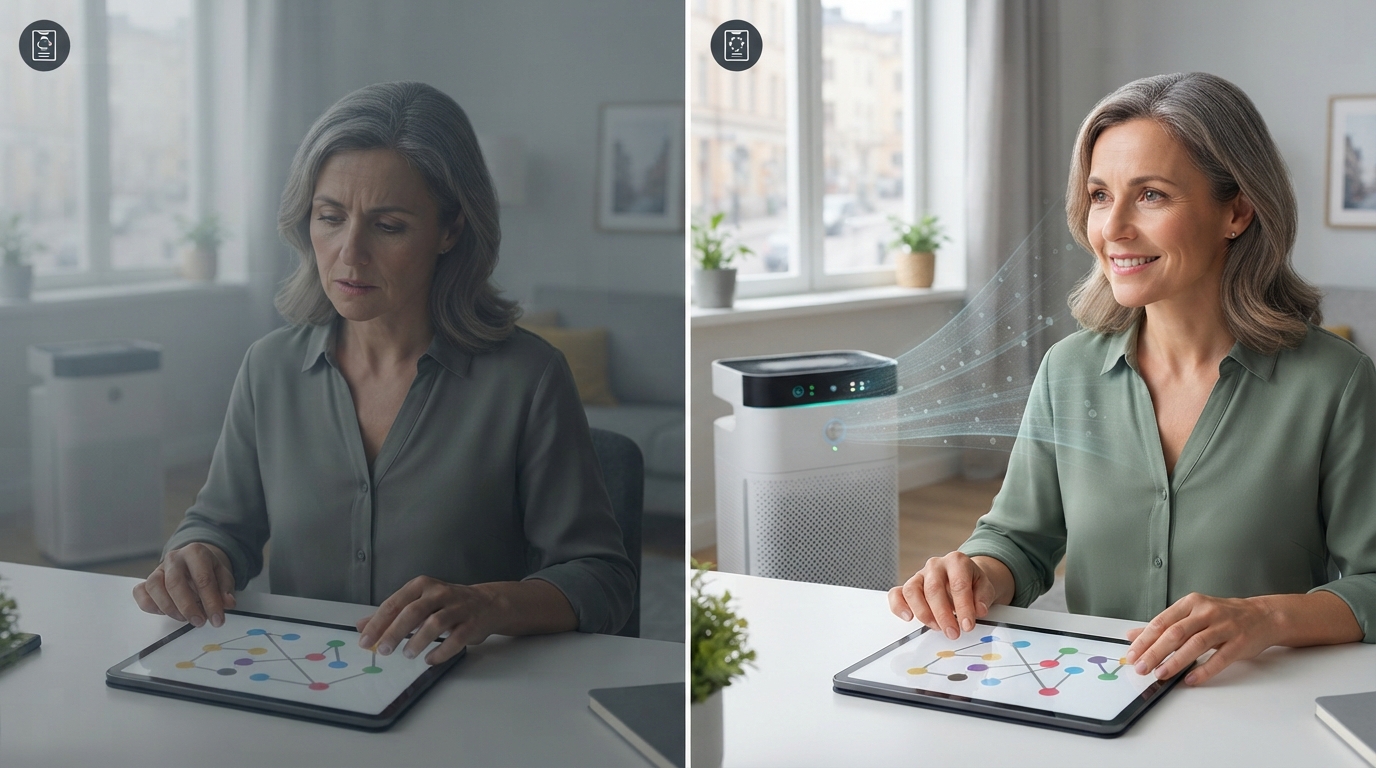
Air purification can also affect brain function — study
American scientists have found that using HEPA-filter air purifiers for 30 days increased the speed of performing tasks related to executive functions of the brain and mental flexibility in people aged 40 and older. During the study, when the air purifier was operating, the concentration of fine particles in the room dropped on average from 5.2 to 2.5 micrograms/cubic meter.
Reducing the amount of fine particles in the air can have a positive effect not only on the cardiovascular system, but also on certain cognitive abilities of a person. An experiment conducted by American scientists showed that using a simple air purifier with a HEPA filter for one month significantly increased the speed of performing certain mental tasks in participants aged 40 and older.
The human respiratory system retains particles larger than 10 micrometers relatively well. The ability to clear particles with a diameter of 2.5–10 micrometers is much lower. Particles with a diameter of 2.5 micrometers and smaller, known as PM2.5, can pass through the lungs into the bloodstream.
The source notes that such particles can lead to excessive activation of platelets, resulting in difficult blood circulation, increased blood pressure, and risk of blood clot formation. Exposure to fine particles is also linked to an increased risk of heart attack and stroke.
This time, scientists were interested in the effect of microparticles in the air on human cognitive functions — namely, the ability to think, plan, and manage actions in changing conditions.
Study participants were selected from among people living up to 200 meters away from highways. The purpose of this was to observe the effect of air purification more clearly, as the concentration of fine particles in the air breathed by people living far from roads is usually lower.
The tests were conducted from September to April. People with cardiovascular diseases and vape users were not included in the study.
Participants were divided into two groups. Real HEPA-filter air purifiers were installed in the homes of the main group, while the control group received devices that looked identical to such devices but did not actually purify the air.
The air purifiers operated only in living rooms. Whether the devices actually worked or not was monitored based on data from special electronic logging equipment, rather than the participants' words.