

"Selfies and photos prevent the brain from storing memories" - scientists
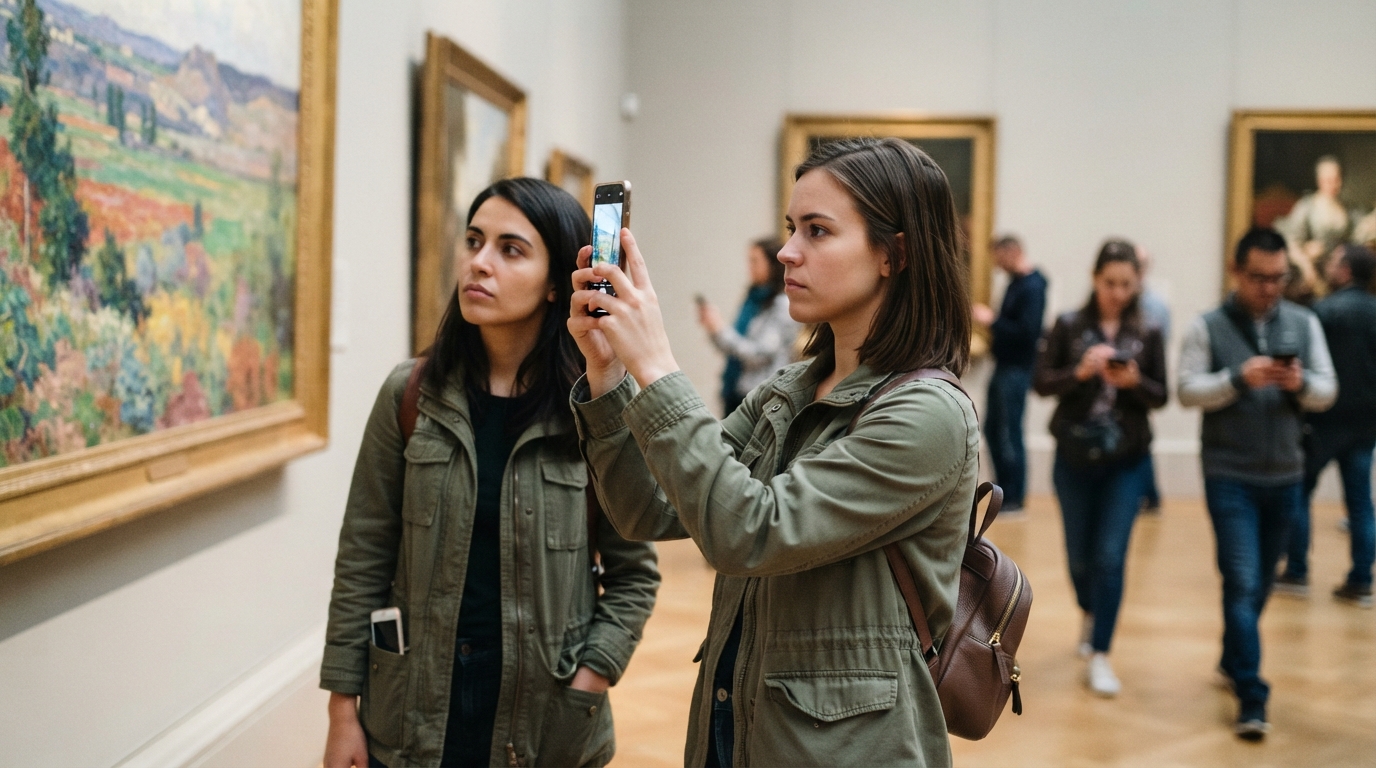
Scientists say that taking selfies and taking pictures interfere with the storage of memories in the brain. Researchers from Binghamton University found that people remember images they took worse than those they just looked at. The results of these experiments were published in the journal Memory & Cognition.
The study involved 892 people. In one experiment, volunteers were shown images of works of art and were asked to simply look at them or take screenshots of them. After ten minutes, the participants were asked to find similar images that they had seen before.
The participants processed the images they took more poorly in memory. Interestingly, this effect persisted even when people were warned in advance about the upcoming test and were given the opportunity to use the screenshots they took.
This may be due to a process called “cognitive facilitation.” When a person captures an event on camera, the brain seems to receive a signal: it does not need to remember all the details, because they are already stored on the phone. As a result, attention is partially shifted from the event itself to the process of taking the photo. Even the certainty that the photo will be needed later did not make people remember the event better, the scientists explained.
The researchers also tested another possibility: could taking photos compensate for the memory loss with some other advantage? However, the participants who took photos did not perform significantly better on other tasks, including math problems and memory tests.
The authors note that these results do not mean that the habit of taking photos is harmful to memory. Other studies have shown that in some situations, taking photos can actually help us remember events. However, the new study supports the evidence that constantly recording events can take away some of the brain's resources needed to form memories.