

Human brain tissue grown in a laboratory has been transplanted into a mouse
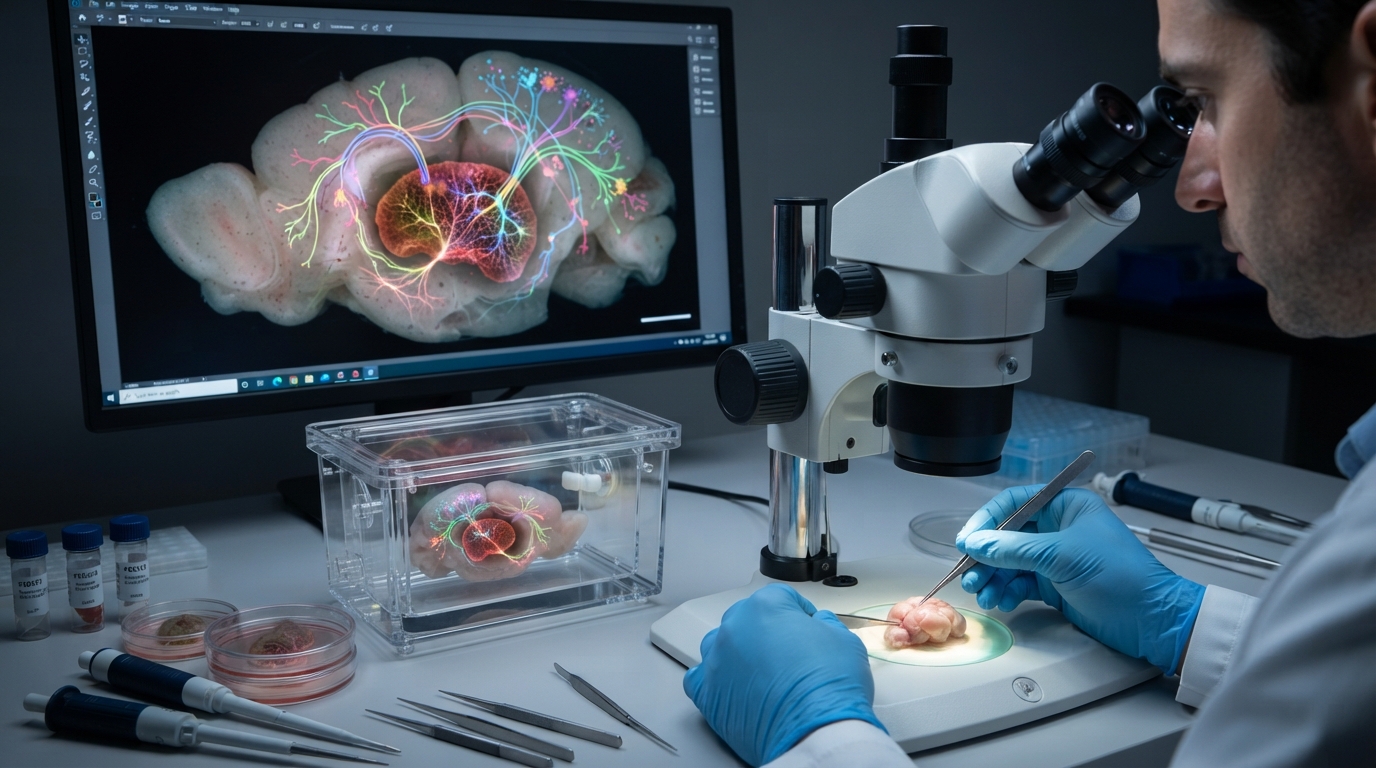
Laboratory-grown human brain tissue has been transplanted into mice
Scientists have transplanted laboratory-grown human brain tissue into genetically engineered mice. Researchers consider this a significant milestone in studying human brain development. They believe this method could accelerate the study of the causes of severe diseases such as autism, epilepsy, cerebral palsy (CP), and schizophrenia.
It was revealed that after the brain tissue was transplanted into the mice, it exhibited key features of brain development and formed neural networks. Mice lacking a large part of the cerebral cortex were selected for the experiment. Scientists say that due to ethical reasons, it is impossible to study living human brain tissue, which is why this method is highly significant.
Sergiu Pasca, a neurobiologist at Stanford University and author of the study published in the journal Nature, said that this method allows the study of human nervous tissue from genes down to individual cells.
Scientists created small 3D "organoids" in the laboratory that form the main cells of the human cerebral cortex. The cerebral cortex controls processes such as thinking, language, attention, and decision-making. The organoids were grown by converting skin or blood cells into stem cells.
Scientists genetically modified the mice so that their brains and memory areas would not grow. As a result, a space was created in the mouse brain. They transplanted the piece of human brain into this space, where it developed and connected to the mouse's nervous system. Within this tissue, even very rare human cells (von Economo neurons), which are the first to be damaged in dementia, grew.
After that, the scientists placed the mice in a low-oxygen environment. This did not affect normal mice. However, the movement and gait of the mice with human brain tissue were disrupted.
Scientists note that this research provides an opportunity to observe how diseases develop in a living organism. In particular, it will help to understand how the brain is damaged in newborns who suffer from a lack of oxygen during birth.