

Stanford scientists created viruses using artificial intelligence
Stanford scientists create viruses using artificial intelligence
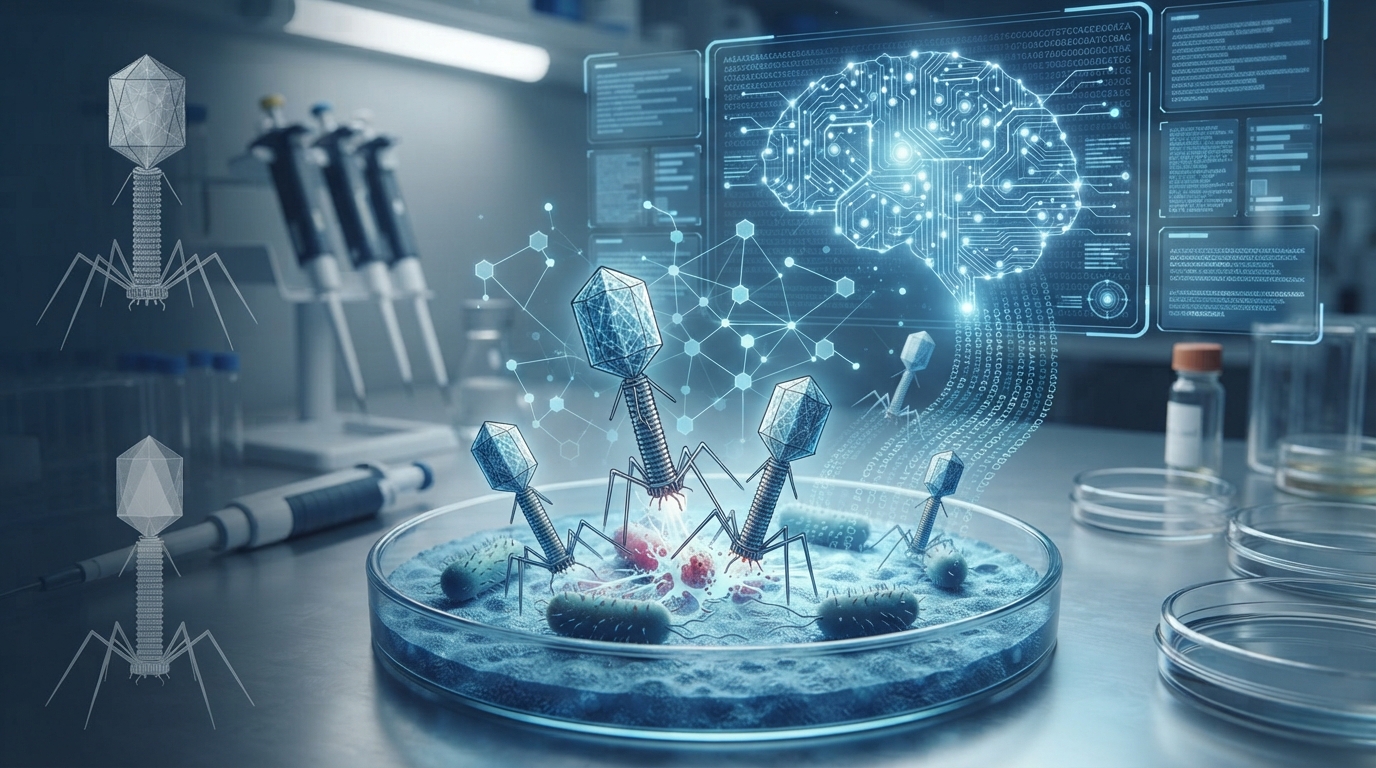
Stanford University researchers have used an artificial intelligence (AI) model to create new bacteriophages that can kill E. coli bacteria. The Stanford Report and The Guardian reported on the results of the experiment.
The results of the study were published in the scientific journal Science on August 6. The scientists used the Evo 2 generative AI model to design the phages. This model has the ability to solve complex biological problems and suggest new DNA sequences.
The researchers took the FX174 bacteriophage, which has the ability to infect E. coli, as a basis and gave the Evo 2 model the task of "generating" new and more effective variants of this virus. As a result, the AI created thousands of potential genomes. The researchers selected about 300 of them for synthesis in the laboratory. Of these, only 16 were effective in practice.
However, this combination of phages was effective against two different strains of E. coli. The phages created are fundamentally different from all natural phages known to science.
This experiment proved that artificial intelligence can create fully functional viral genomes. But the possibility of applying this approach to other viruses is still unknown. In addition, the researchers urge not to conduct such experiments on viruses that can harm humans, animals or plants.
The Evo 2 model itself was trained on the genetic data of 2 million other bacteriophages, excluding viruses that can infect humans or animals.
Using AI to "design genomes" can help create new drugs. But this research also raises important issues such as biosecurity and protection against biological threats, writes The Guardian.
Although it is possible to create viral genomes using AI, mechanisms for controlling and safely using it have not yet been developed. Experts have expressed concern that humanity will not be able to control artificial intelligence.