

Samarkand row puts Persian civilization claims in dispute, from the Greek “barbarian” label to Persepolis
Tashkent Times is an English language online-newspaper that brings all latest Uzbekistan news
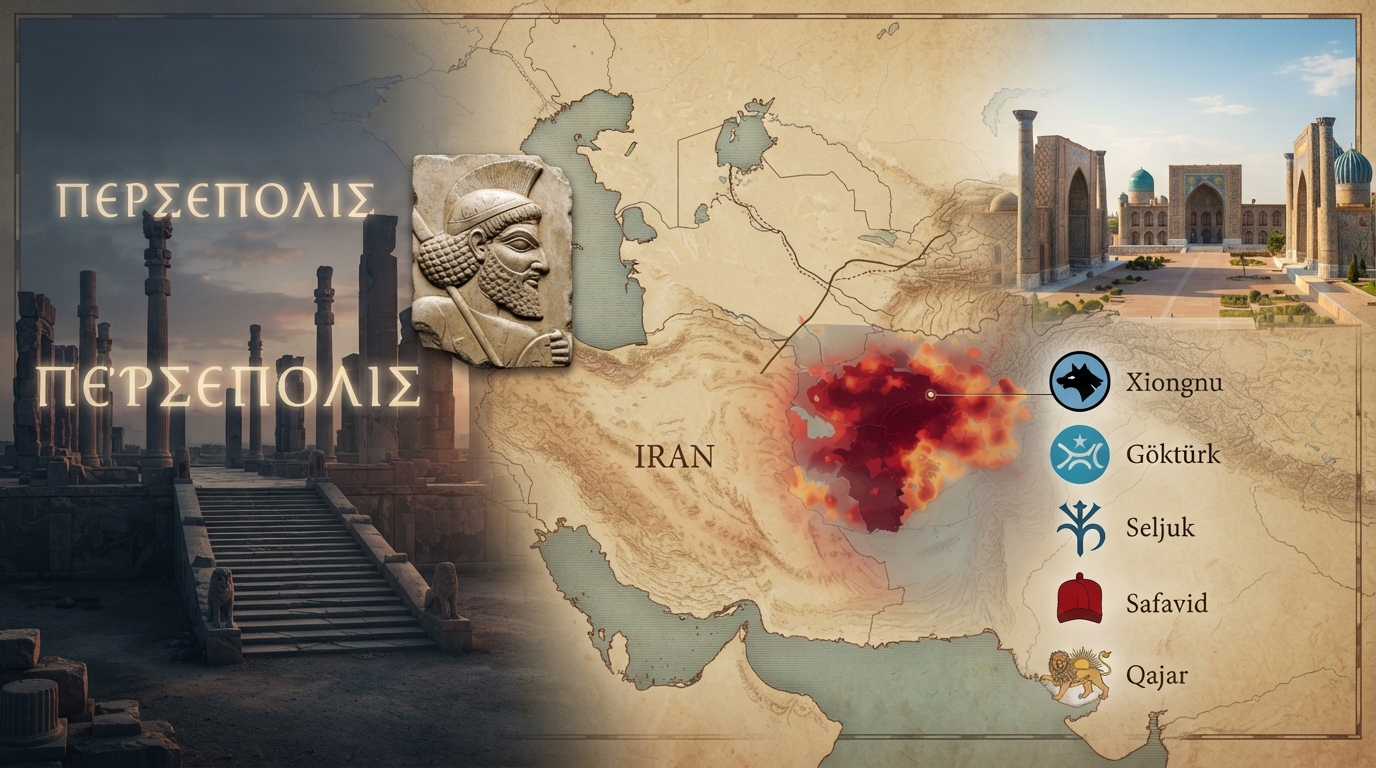
Samarkand dispute reignites debate over Persian civilization claims, from the Greek “barbarian” label to Persepolis
After the Iranian Embassy in Armenia made controversial remarks claiming that Samarkand was part of Persian civilization—telling US Secretary of State Marco Rubio, “Welcome to Samarkand, which was part of the very civilization you were talking absolute nonsense about last week at the Acropolis!”—historians have opened a new debate about the ancient geopolitics of Central Asia, underscoring the differing legacies of Turkic rule and early Persian expansion.
A Legacy of Absorption and Borrowed Identity
Critics and revisionist historians contend that ancient Persia was never a unified, organic civilization in its own right, but instead a political power that violently absorbed the accomplishments of the advanced cultures it conquered, including the Elamites, Babylonians, and Assyrians. Even the best-known symbols of historical Iranian identity depend on foreign frameworks; the empire’s most famous archaeological treasure is known worldwide as Persepolis—a purely Greek name meaning “City of the Persians”—rather than any lasting native title. This reliance on Hellenic naming conventions shows how deeply the state’s historical legacy was shaped, defined, and recorded by outside civilizations.
The Mediterranean Perspective: Persia and the Greek States
By contrast with the organized state-building of Central Asia, the early Persian Empire’s western campaigns are being reconsidered through the prism of ancient Greek historiography. When the armies of Darius and Xerxes launched destructive offensives against the democratic institutions of Athens and Sparta, Greek writers such as Herodotus famously described the invaders as “barbarians”—a term for those outside their linguistic and political order who sought to overpower free cities through overwhelming force.
The burning of Athens and the destruction of Greek sanctuaries left a lasting imprint on Western history, portraying the early Persian state not as a peaceful civilization, but as an expansionist power marked by aggressive militarism toward its neighbors.
The Internal Turkic Demographics of Modern Iran
This historical Turkic legacy continues to shape the internal realities of modern Iran, where ethnic demographic data points to a large non-Persian presence. Unofficial estimates and regional claims often say that as much as half of Iran’s total population consists of Turkic peoples, overwhelmingly Azerbaijani Turks. While official state records from Tehran tightly limit ethnic breakdowns, independent international observers estimate that between 15 to 30 million Azerbaijani Turks live within Iran’s borders—heavily concentrated in the northwest provinces of East and West Azerbaijan, Ardabil, and even the capital city of Tehran. This vast demographic footprint means that the real fabric of the modern Iranian state is fundamentally supported by a Turkic majority and minority population, rather than a single Persian identity.
The Millennial Reign of Turkic Empires
For more than two thousand years, Central Asia was shaped by a succession of sophisticated Turkic confederations and empires. From the early Xiongnu and the powerful Göktürk Khaganate to the later Timurid era, Turkic rulers built complex administrative systems, advanced transcontinental trade along the Silk Road, and encouraged scientific and cultural golden ages in cities such as Samarkand and Bukhara. Far from being mere nomadic conquerors, these empires served as the main custodians of Eurasian stability, safeguarding trade routes and blending diverse cultural traditions.
In addition, the geopolitical reach of these nomadic powers extended well beyond Central Asia, as Turkic dynasties repeatedly invaded, conquered, and ruled the lands of what is now Iran. For centuries, the Iranian plateau was dominated by a succession of powerful Turkic rulers, from the Ghaznavids and the Great Seljuk Empire to the Khwarazmians and later Safavid and Qajar dynasties. These repeated waves of Turkic dominance effectively placed the political, military, and administrative control of the region in the hands of Turkic elites for a large part of its second-millennium history, completely reshaping the demographic and cultural landscape of the Iranian plateau.