

President of Uzbekistan calls for increasing remittances to $50 billion and improving support for migrants
President Shavkat Mirziyoyev called for increasing annual remittances to $50 billion. Labor migrants currently send home more than $20 billion, largely without state assistance, he said. He criticized officials for providing insufficient support to them.
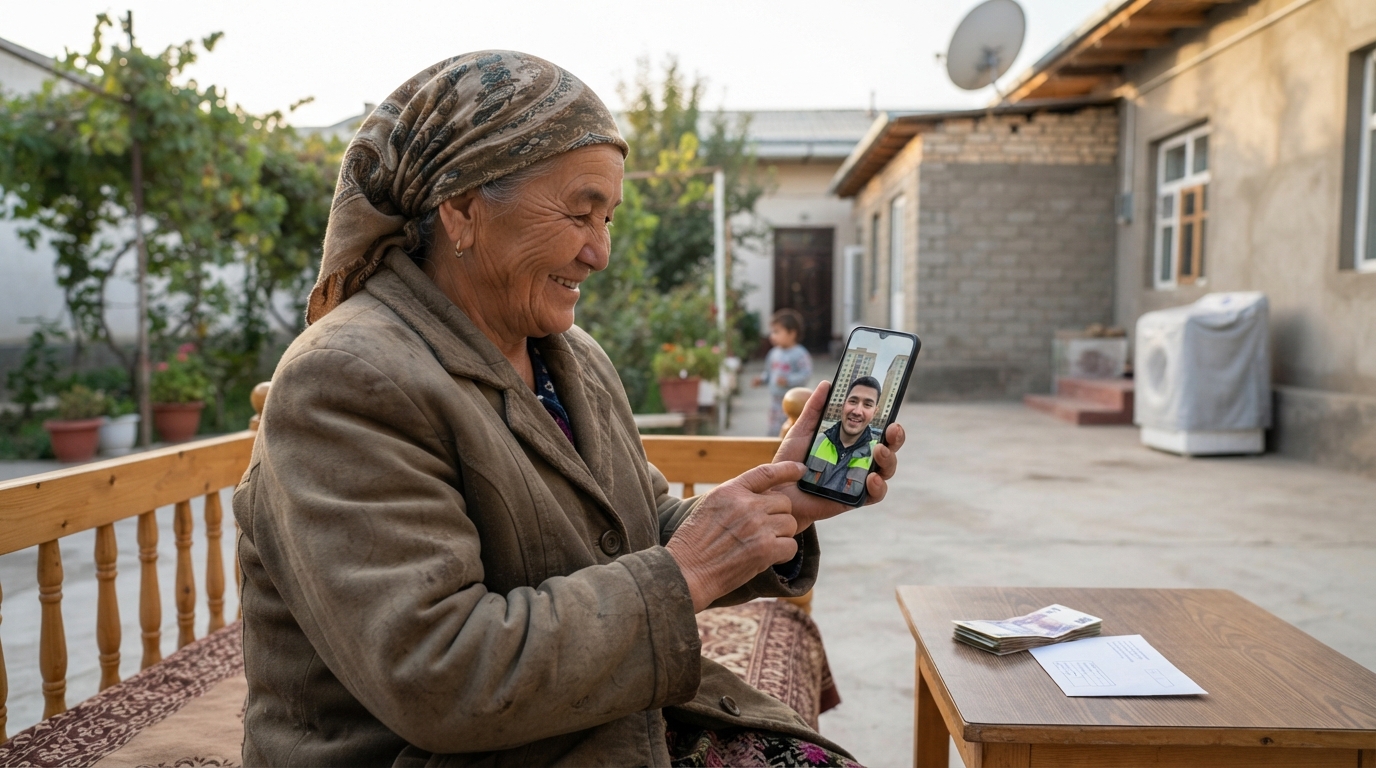
President of Uzbekistan urges remittances to rise to $50 billion and calls for better migrant support
At a government meeting on 2 November, Uzbekistan’s president Shavkat Mirziyoyev set a goal of raising annual remittances to Uzbekistan to $50 billion, a
The head of state said the country was not making full use of the opportunities available in labor migration and called for a complete overhaul of state policy on labor migration.
“Imagine how the situation would change if our young people brought home $50 billion. In addition, after working abroad, young people would return with new skills and learn new ways of working, while representing our flag and our country with dignity abroad,” Mirziyoyev said.
The president stressed that many countries need foreign workers, but Uzbekistan should only send its citizens abroad after they have received the required professional and language training.
Mirziyoyev said labor migrants currently send back more than $20 billion, and that this is mainly the result of their own efforts.
“They have achieved everything on their own, single-handedly,” he stressed. “What role have ambassadors, hokims (governors — ed.) and technical college heads played in generating this $20 billion?”
He went on: “If it does not bother you that our migrants work for $400, it offends my pride.” He said migrants should be able to earn at least $2,000.
“You are sending young people out into a vast ocean without teaching them a profession,” the head of state said.
Mirziyoyev emphasized the need to change how citizens are prepared for foreign labor markets. In his view, by the time they leave school, young people should know at least one foreign language and have professional skills.
The president also criticized the lack of effort by Uzbekistan’s embassies in countries where skilled workers are in demand.
“What are embassies for? They are there to protect the interests of the people of Uzbekistan. Every ambassador should ask themselves every day: ‘What will I do for my Motherland today?'” the president said.
He added that embassies should support migrants after they arrive in another country, all the way through their adaptation to new workplaces.
Speaking about attitudes toward labor migrants, Mirziyoyev underlined their role in supporting families and contributing to the national economy.
“Our migrants working abroad are truly courageous people who work for the future of their children. We used to vilify these people. But we never asked ourselves: what conditions have we created for them?” the president said.
He stressed that no citizen of Uzbekistan working abroad should be left to handle their problems alone.
Hokims have been told to pay attention to the well-being of labor migrants' families, their parents' living conditions and their children’s education.
The president also called on diplomatic missions to take greater responsibility for defending the rights of citizens abroad.
According to the Central Bank, remittances to Uzbekistan reached $18.9 billion in 2025, up 28%, or $4.1 billion, from 2024.
In January-June 2026, remittances totaled $9.3 billion, an increase of 13%, or $1.1 billion, year-on-year. The sharpest growth in remittances came from the United Kingdom (62%), EU countries (27%) and the United States (19%).
At the same time, Russia remains one of the main destinations for labor migrants from Uzbekistan.
In April, it was reported that about 1.2 million citizens of Uzbekistan were working in nearly 40 countries, according to available data.