

Plans for the development of the fuel and energy sector were reviewed under the President
On September 22, President Shavkat Mirziyoyev got acquainted with a presentation on the prospects for the development of the electric power industry and improving project management mechanisms in the fuel and energy sector.
Plans for the development of the fuel and energy sector were discussed under the President
It was noted at the presentation that by 2030, the goal is to bring the volume of the country's economy to 300 billion dollars, and the population is expected to exceed 41 million.
In industry alone, electricity consumption is projected to rise from 38 billion kilowatt-hours to 53.5 billion kilowatt-hours by 2030. The development of electric vehicles and data centers will also place an additional load on the system. For this reason, the need to develop generation capacities ahead of demand, increase the transmission capacity of power grids, and form sufficient reserve capacities was emphasized.
According to the plan, by 2030, the country's generation capacity will be brought to 46.1 gigawatts, creating the capability to produce nearly 129 billion kilowatt-hours of electricity per year. In 2035, it is planned to bring the capacity to 57.2 gigawatts and annual generation to 154.7 billion kilowatt-hours.
Various growth scenarios for electricity consumption were also reviewed during the presentation.
According to calculations, if consumption increases moderately, a sufficient balance between generation and demand will be maintained until 2030. However, if the economy, industry, electric transport, and digital infrastructure develop at a rapid pace, there will be a need for additional generation capacities.
The Head of State emphasized that plans in the energy sector must be formulated taking into account high economic growth rates, and the system must always have sufficient reserve capacity.
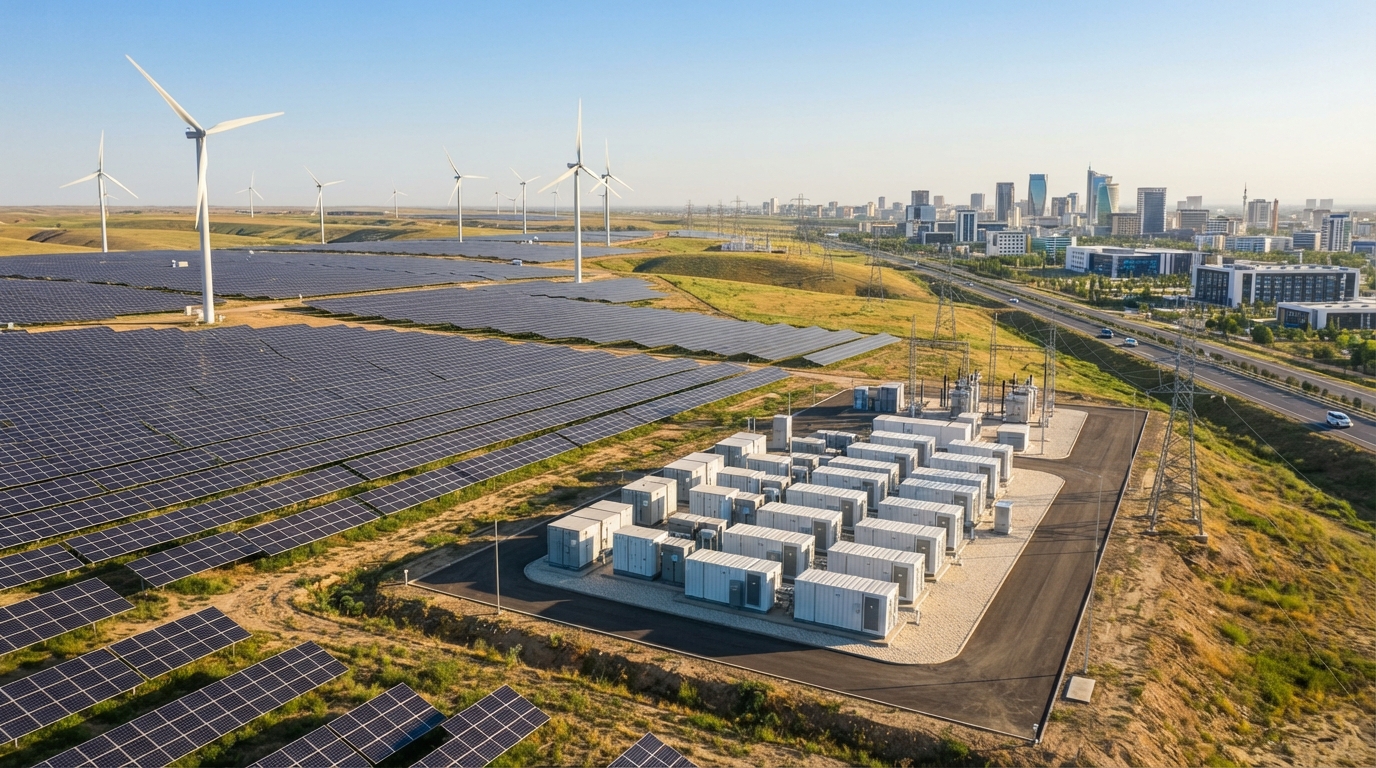
Based on this, proposals for the construction of additional wind power plants and energy storage systems, as well as the acceleration of ongoing solar and wind energy projects, were reviewed.
At the same time, the need to review certain projects with low economic efficiency, unclear sources of financing, or those that have been delayed for a long time was noted. It was determined that when selecting new capacities, the main criteria should be not only their volume, but also the cost of electricity, the possibility of connection to the grid, compatibility with energy storage systems, and the impact on the overall energy balance.
As the share of renewable energy sources increases, the importance of energy storage systems is also growing.