

Petroglyphs and traces of an ancient settlement found in the Nurata Mountains
In the Nurata Mountains, Petroglyphs and Traces of an Ancient Settlement Discovered
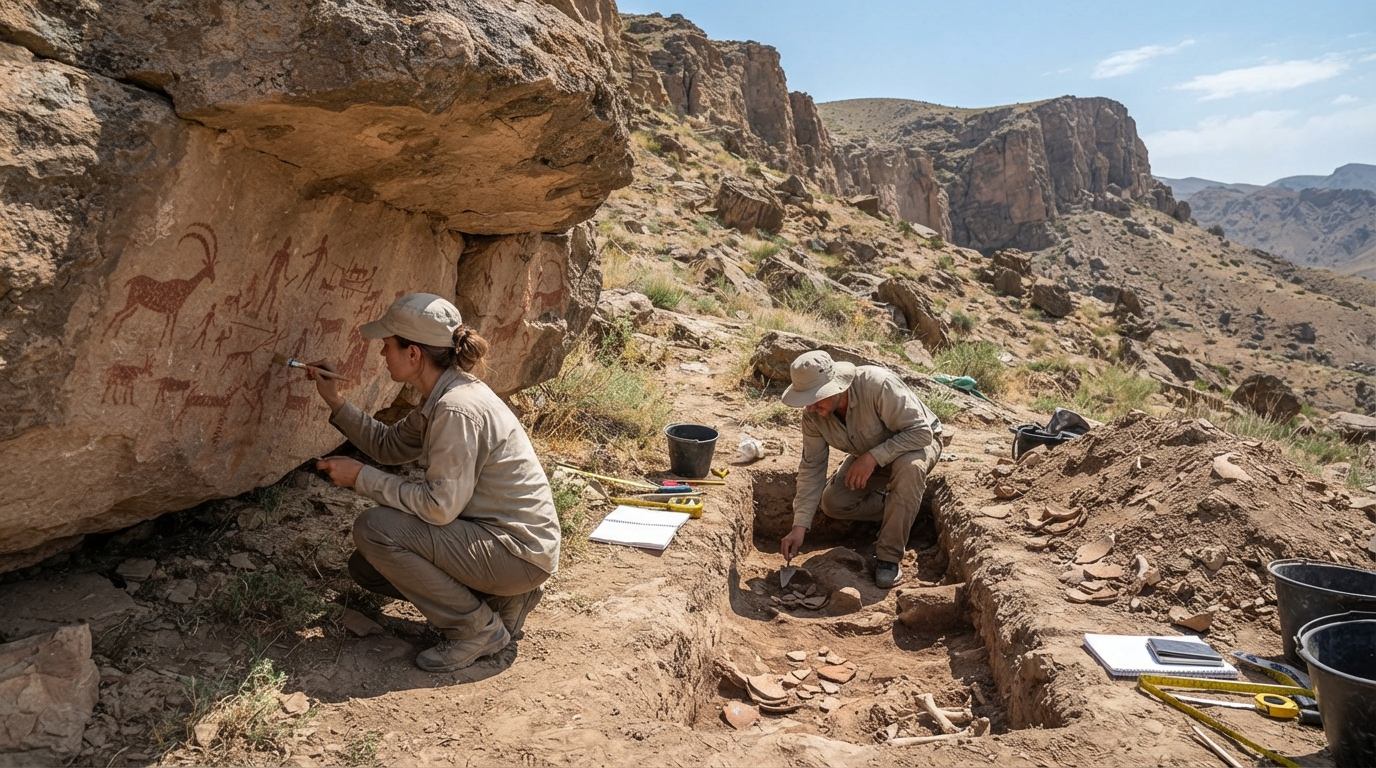
Archaeologists in the Nurata Ridge mountains have found petroglyphs, presumably dating back to the Mesolithic and Neolithic eras, as well as a Bronze Age settlement. These discoveries were made during field research in the Koshrabad District of the Samarkand Region. They will allow for a deeper understanding of how ancient people settled this region and maintained contacts with neighboring tribes.
In October, employees of the Samarkand Archaeological Institute named after Yahya Gulyamov surveyed the mountain and foothill areas of the district. On the walls and ceilings of rock shelters in the Egrijarsay, Khojasay (Badimin), Galajinsay, and Sumbulsay areas, belonging to the Akchabsay mahalla, the researchers identified drawings made with natural ochre. According to preliminary estimates, these images may date back to the Mesolithic and Neolithic epochs.
Another significant discovery was made in the area of the Pangat mahalla. In three locations, archaeologists found and studied fragments of Bronze Age ceramics. At one of the sites, located 700–800 meters east of the Kumolokli village, specialists conducted test excavations measuring 2 by 1 meter.
Underground, archaeologists revealed a cultural layer about 60 centimeters thick, which indicates the existence of a Bronze Age settlement here. During the excavations, numerous fragments of ceramic products and bone remains were found.
The discovered materials require further excavations. They may provide new information about the daily life of the ancient inhabitants of the Nurata Mountains, the characteristics of their lifestyle, and their occupations.
Scientists intend to compare the finds with archaeological materials from other regions. This will help to better understand the history of the settlement of Nurata.
Earlier in the Samarkand Region, archaeologists discovered a presumed 8th-century rulers' palace.