

"Only 12 of us survived from a group of 130 people." Court verdict passed on young man from Fergana who participated in the Russia-Ukraine war
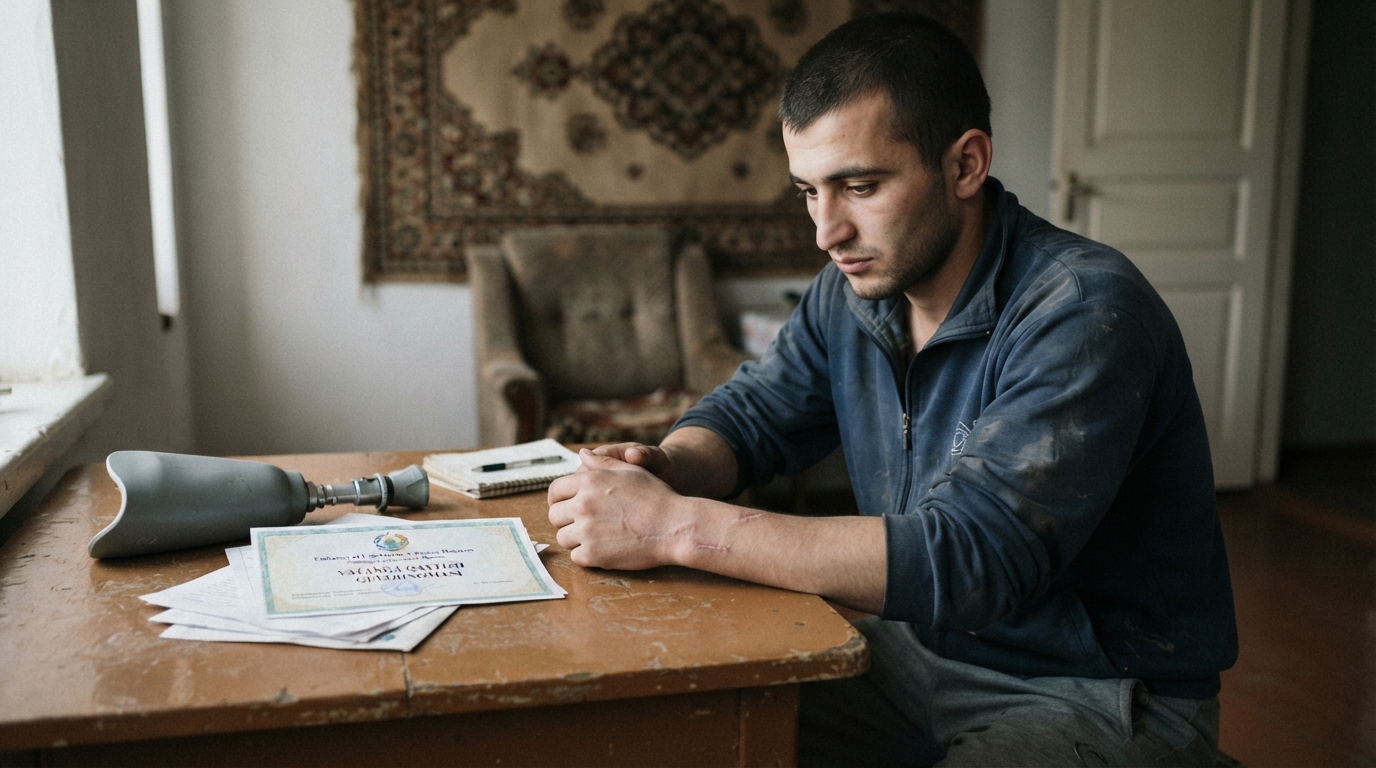
“Out of a group of 130 people, 12 of us survived.” Court verdict passed on a young man from Fergana who participated in the Russia-Ukraine war
In the Quva district of Fergana region, a court verdict has been handed down to a 25-year-old young man who fought against Ukraine in the ranks of the Russian Armed Forces.
It was revealed that R.B. went to the Russian Federation on November 4, 2023, for work purposes and initially worked in a gravestone manufacturing workshop. In late December, he moved to join his father, who was working in the city of Balashikha, Moscow Oblast.
There, he heard that an acquaintance of his, a citizen of Belarus, had signed a contract with the Russian Armed Forces and was participating in combat operations in Ukraine. At his suggestion, he signed a contract on February 23, 2024.
At that time, I was in a difficult financial situation, and my head was spinning thinking about how to pay off my many debts. At that moment, signing the contract seemed like the most correct path, R.B. said in his testimony.
After signing the contract, R.B. underwent military training in late February and early March. Following this, on March 10, he was sent to combat operations in the Luhansk region of Ukraine.
“We entered the battlefield with a group of 130 people”
He initially participated in battles with the help of military hardware. Later, he entered the battlefield as part of an infantry group of 130 people. As a result of a counter-offensive by the Ukrainian military, 117 people in the group were killed.
Myself and 12 other people returned alive. After returning from the battlefield, we were given three days of rest. Then we were sent to other combat operations as part of another infantry group of 48 people, R.B. says.
On April 15, 2024, his right arm was wounded as a result of a Ukrainian army drone attack. After that, he was treated in a hospital for two weeks and was sent back to the combat zone on April 30. Despite also being wounded in the leg by a shell strike in subsequent battles, he participated in the war as part of a defense group until the autumn of 2024.
Diagnosed with necrosis of the pelvic bones of both legs
In September 2024, R.B. was sent to a military hospital in Moscow for a medical examination. Doctors diagnosed him with necrosis of the pelvic bones of both legs and stated that surgery was necessary. After that, he returned to the military unit and served mainly in headquarters work, rather than in combat operations.
On April 16, 2025, the pelvic part of his left leg was operated on at a military hospital in Moscow. After undergoing treatment for two months and being on temporary medical leave, he returned to the military unit again in June.
In July, after his contract expired, he was discharged from the ranks of the Russian Armed Forces. He then went to Moscow and waited for his turn to have his second leg operated on. At that time, he lived in a rented apartment with his mother and sister.
Since I am not a Russian citizen, even though my turn came, I was not allowed to undergo the second surgical operation. After waiting for a long time to no avail, I decided to return home to Fergana with my family. Since I had lost my documents, in March-April of this year, I applied to the Embassy of Uzbekistan in Moscow for assistance, R.B. said in his testimony.
Ten days after the embassy issued him a “Certificate of Return to the Homeland” on May 1, 2026, namely on May 11, he returned to Uzbekistan.
On May 20, district internal affairs department officers called him in for an interview. During the interview, he spoke about the circumstances related to his military service in Russia and participation in combat operations. He also voluntarily handed over the military documents in his possession.
In court, R.B. expressed sincere regret for his actions and asked for leniency.
The Quva District Criminal Court found R.B. guilty under Article 154, Part 1 (Mercenarism) of the Criminal Code. Applying Article 57 of the Criminal Code, he was sentenced to 3 years of restriction of liberty.