

Ketsin as a lever of democracy
Six years since the October events in Kyrgyzstan: how the 2020 change of power shaped the country's future
Ketsin as a lever of democracy
Exactly six years ago, on October 5, 2020, the announcement of the parliamentary election results in Kyrgyzstan triggered a major political crisis. According to initial counts, out of 16 parties, only four political associations made it into the Jogorku Kenesh, including the pro-government "Birimdik" and "Mekenim Kyrgyzstan". The opposition's disagreement with the voting results, along with allegations of unprecedented bribery and pressure on citizens, brought people onto the streets of Bishkek and set off a chain of events that, in just ten days, led to the resignation of President Sooronbay Jeenbekov and the transition of the country's leadership to Sadyr Japarov.
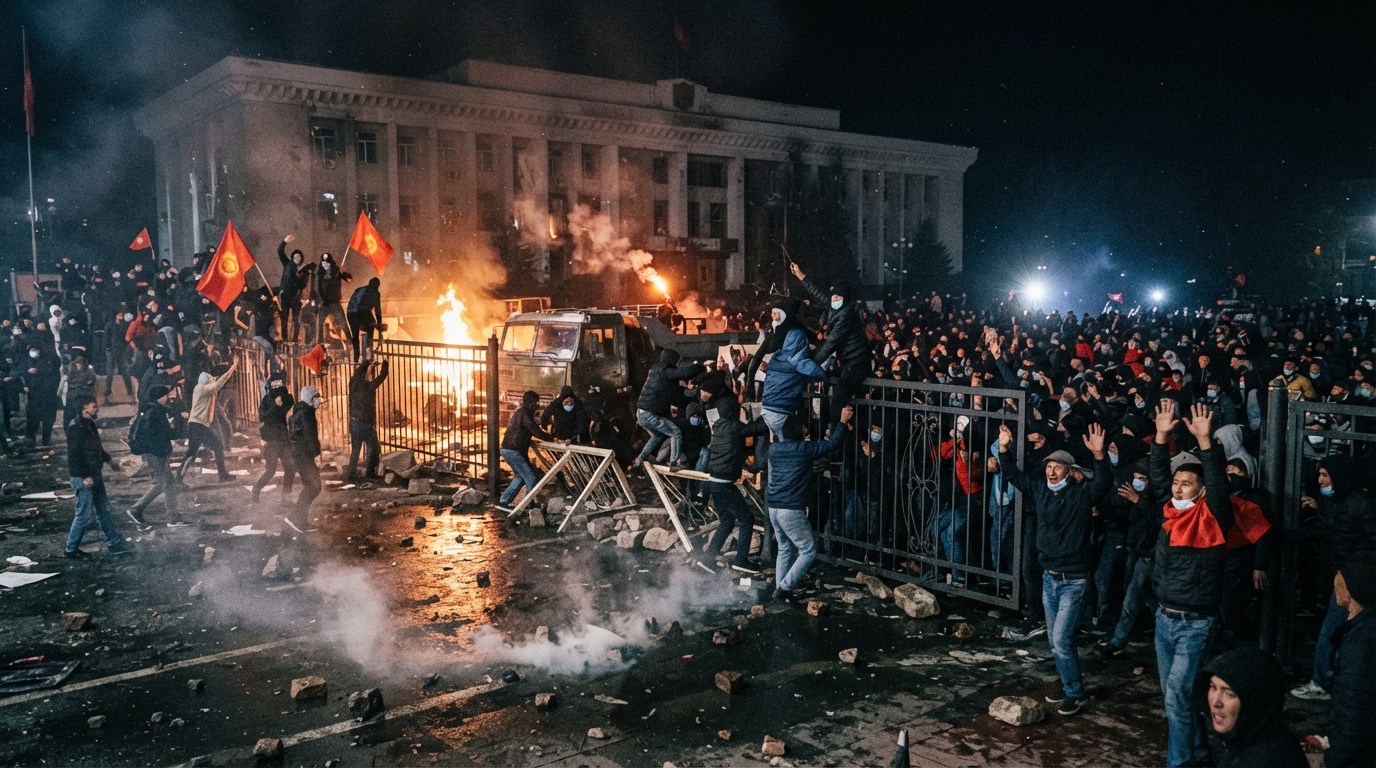
The protest, which began on the central Ala-Too Square with the participation of supporters of the "Respublika", "Ata-Meken", "Chon Kazat", "Meken Yntymagy", and "Zamandash" parties, escalated into fierce clashes near the White House by the evening of October 5. The police used special means, stun grenades, and water cannons, while the protesters responded with stones, setting official vehicles on fire, and attempts to storm the gates of the government complex. At the height of the unrest, the heads of law enforcement agencies left their workplaces, and by three o'clock in the morning on October 6, the White House came under the control of the protesters. That same night, protesters stormed the building of the State Committee for National Security (GKNB) pre-trial detention center, releasing former President Almazbek Atambayev from custody, as well as Sadyr Japarov, who immediately addressed his supporters on the square with a speech.
By the afternoon of October 6, the former vertical of power had virtually collapsed: the Central Election Commission annulled the voting results, the head of the Cabinet of Ministers Kubatbek Boronov, the speaker of parliament, and the mayor of the capital left their posts, and Jeenbekov announced a ban on the use of weapons against protesters. Amidst inter-opposition confrontation and clashes between various factions, Japarov's supporters pushed through his approval for the post of prime minister.
The final point in the confrontation was made on October 15, 2020, when Sooronbay Jeenbekov resigned, motivating his decision by a desire to avoid bloodshed. Following the voluntary recusal of the speaker of parliament, the functions of acting head of state passed to Japarov, who subsequently consolidated his status with a victory in the presidential election in January 2021. Those October unrests, which resulted in the death of one person and injuries to about a thousand citizens, went down in the history of Kyrgyzstan as the "third revolution," fundamentally reshaping the entire architecture of the republic's political system.