

International BTEC qualifications will be introduced in 45 more technical colleges in Uzbekistan: training will cover 3,500 students
International education company Pearson and the Agency for Professional Education of Uzbekistan are expanding their cooperation in the field of training qualified specialists.
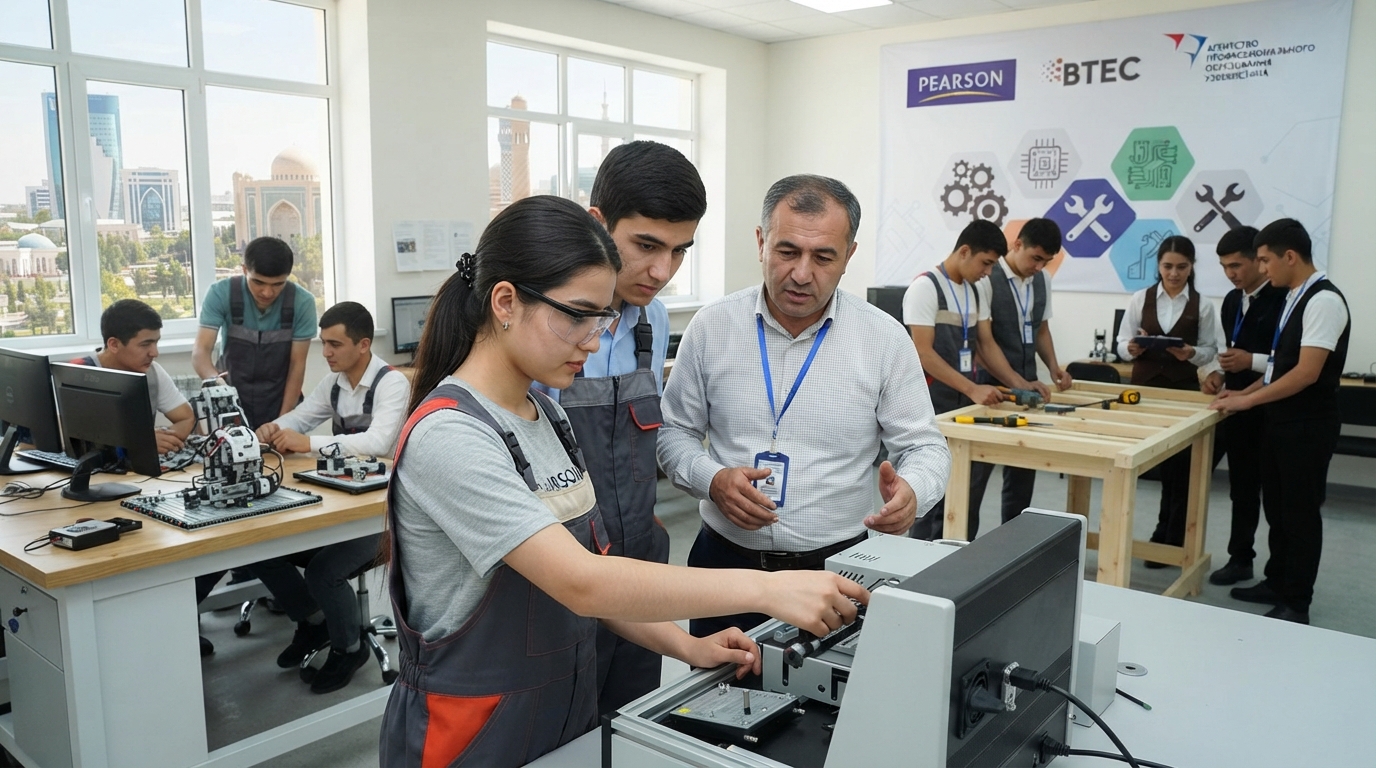
International BTEC qualifications to be introduced in 45 more technical colleges in Uzbekistan: training to cover 3,500 students
International education company Pearson and the Agency for Professional Education of Uzbekistan continue to expand their cooperation in training qualified personnel.
At the new stage of the program, international professional BTEC qualifications will be introduced in 45 more state technical colleges across the country. It is expected that in the 2026/2027 academic year, an additional 3,500 students will begin studying under these programs.
The project is being implemented within the framework of the "Uzbekistan-2030" national development strategy and aims to update the vocational education system, improve the quality of specialist training, and expand employment opportunities for youth.
BTEC programs will cover fields of priority importance for the country's economy. Among them are engineering, information technology, construction, tourism, hospitality, healthcare, and social care.
Special attention within the framework of cooperation is paid to teacher training. Pearson, together with the Agency for Professional Education, is working to ensure that educational institutions and teachers are prepared to implement the new educational programs.
Over 380 teachers from the vocational and technical education system have already completed week-long training sessions in Tashkent. The training focused on improving teaching methodologies, approaches to assessing knowledge and skills, as well as student support systems.
A special emphasis was placed on completing practical assignments simulating real professional situations. This very approach forms the foundation of BTEC programs, which are oriented toward developing applied competencies demanded by employers.
Pearson Vice President for Vocational Qualifications Jane Baker noted that expanding the program will give young people from different regions of Uzbekistan the opportunity to earn internationally recognized qualifications.
"A technical college student in Samarkand or Nukus should have the opportunity to earn a qualification that is recognized by employers in Tashkent or abroad. That is precisely what BTEC offers. This year, more than 380 teachers underwent training jointly with the Agency for Professional Education and will now implement BTEC in their educational institutions. Every student who completes the course becomes another qualified specialist for the industries driving Uzbekistan's growth," said Jane Baker.
Director of the Agency for Professional Education Azimjon Khusanov also emphasized the importance of the cooperation for integrating the national vocational education system into the international educational space.
"Our partnership with Pearson is an important step in aligning Uzbekistan's vocational education system with international standards. By integrating globally recognized qualifications, we equip youth with practical skills that meet the demands of both local and international labor markets and respond to the needs of modern industries," he stated.
Pearson BTEC qualifications are recognized in more than 70 countries worldwide. Their educational model is built on practical assignments and the assessment of professional competencies, allowing students to gain knowledge and skills that can be immediately applied in their future work.
Such qualifications are in demand among employers and educational institutions, opening up additional opportunities for graduates for professional growth and continuing their education in higher education institutions.
Expanding the program to 45 state technical colleges will be the next step in scaling international educational standards in Uzbekistan. In the future, there are plans to increase the number of participating educational institutions and reach even more young people in different regions of the country.
In a broader sense, the cooperation with Pearson reflects Uzbekistan's ambition to make vocational education more practice-oriented and closely linked to the needs of the economy.
This is especially important against the backdrop of technological changes and the growing demand for specialists with specific professional skills.
Thus, the implementation of BTEC programs is designed to expand opportunities for youth to receive a competitive education, improve the quality of personnel training, and strengthen the connection between the vocational education system and the labor market.