

In Uzbekistan, electricity payments will be restricted due to water supply debts. How this will work
From January 1, 2027, consumers in Uzbekistan who have not settled their debts for drinking water and sewerage may have their ability to pay for electricity restricted. However, the restriction will not be applied immediately after the debt arises, but only after a recovery procedure through a notary or a court.
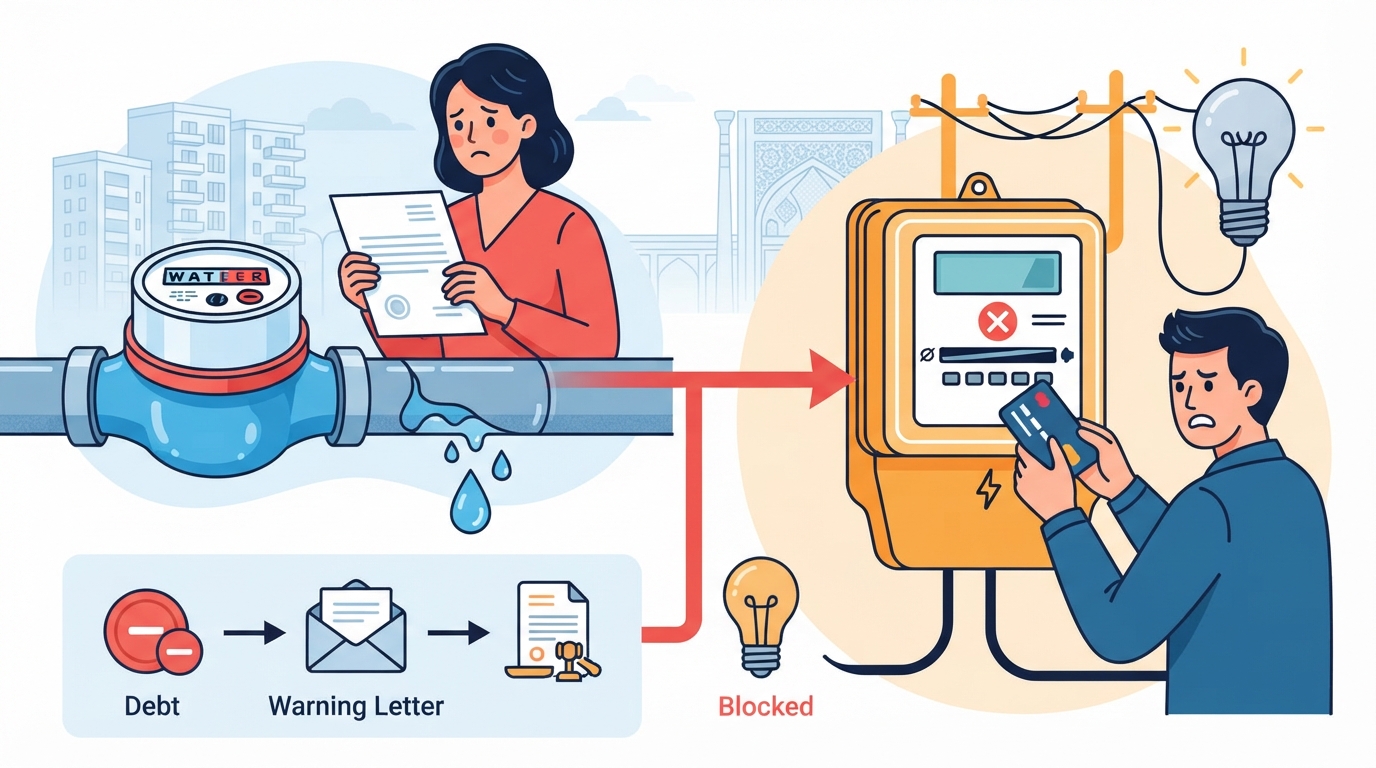
Electricity payment to be restricted for water debts in Uzbekistan: How it will work
In Uzbekistan, the procedure for collecting debts for drinking water supply and sanitation services will change from January 1, 2027. This was announced by the Uzsuvtaminot company, which clarified the conditions for restricting electricity payments for debtors.
Islom Abdullaev, First Deputy Chairman of the Board of the company, also spoke about the new procedure at a press conference on October 30 in Tashkent.
"If the debt for drinking water supply and sanitation services is not paid within the established period, the issue of its recovery will be resolved through a notary or court. If the obligations are still not fulfilled after this, the ability to make payments for electricity will be restricted," he reported.
At the same time, the company emphasized that the mere occurrence of a debt will not lead to an immediate restriction on electricity payments.
According to the explanation by Uzsuvtaminot, debt collection will take place in several stages.
First, the consumer will be sent a written warning about the existence of the debt. If the debt is not settled within five business days after the warning, the collection procedure will begin.
The further procedure will depend on the amount of the debt:
After the notary or court procedure, an enforcement document is issued, which is transferred to the Bureau of Compulsory Enforcement (MIB).
If the consumer fails to comply with the requirements of the enforcement document within the period established for voluntary compliance, the acceptance of payments for electricity will be automatically restricted.
To restore the ability to pay for electricity, it is necessary to settle the debt for drinking water and sanitation.
Thus, the mechanism does not entail the direct shutoff of electricity for a water debt, but rather a restriction on the ability to top up the electricity balance. However, for consumers with prepaid meters, the inability to top up the balance may lead to the termination of the electricity supply once previously deposited funds are exhausted.
The new procedure is provided for by Presidential Decree No. UP-140 dated July 24, 2026, dedicated to the development of drinking water supply and sanitation systems.
The document establishes that from January 1, 2027, upon failure to comply with the requirements of the enforcement document within the established period, the acceptance of payments for the debtor's electricity is automatically restricted. An exception is made for families included in the Unified Social Register (Social Register). The restriction will not apply to them.
Uzsuvtaminot stressed that consumers are given time to voluntarily settle the debt and that the restriction on electricity payment is the final stage of the collection procedure.
In Uzbekistan, a mechanism for restricting electricity payments is already used to collect debts for other utility services.
From August 1, 2025, a procedure began to be implemented under which consumers with debts for household waste removal have their ability to pay for electricity restricted. After the debt is settled, the restriction is lifted.
In addition, from July 1, 2026, a procedure has been in effect in Tashkent providing for the restriction of electricity payments in case of arrears on mandatory contributions for the maintenance of common property in apartment buildings.